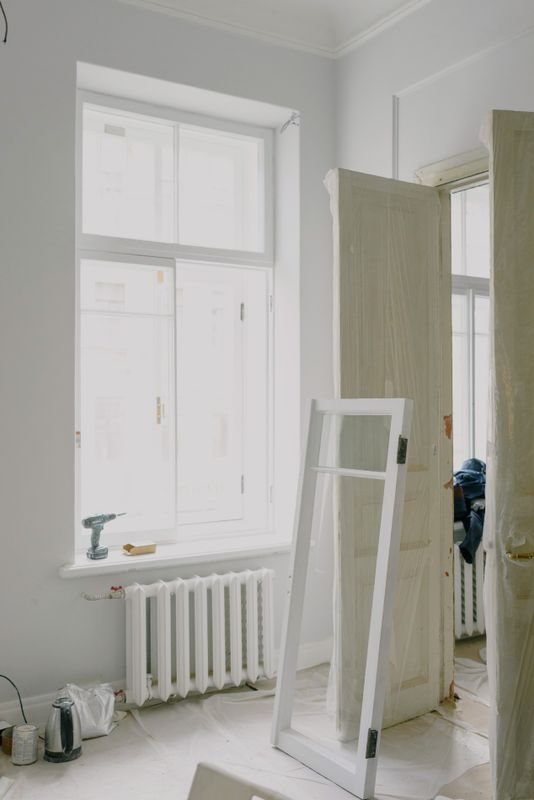
Inspect first and classify each unit as repair, upgrade or replace. Sound original windows may benefit from maintenance, weatherstripping, glazing repair or a compatible secondary layer. When replacement is justified, select the frame, glass, opening style, screen, seals, drainage and wall junction as one tested configuration.
1. Kitchen Recommendation: Easy-Reach Casement Windows
A side-hung casement works well above a farmhouse sink or worktop because it can catch useful air and can be operated with a simple handle. Keep the opening direction clear of exterior paths, taps, shelving and curtains. Where cooking and food preparation attract insects, coordinate a removable screen from the start.
The sill needs particular attention. Water, cleaning and condensation can damage an already weak reveal, so use a durable finish and make the perimeter joint accessible for inspection. Preserve a generous view of the garden without making the opening so large that glare or summer heat becomes difficult to manage.
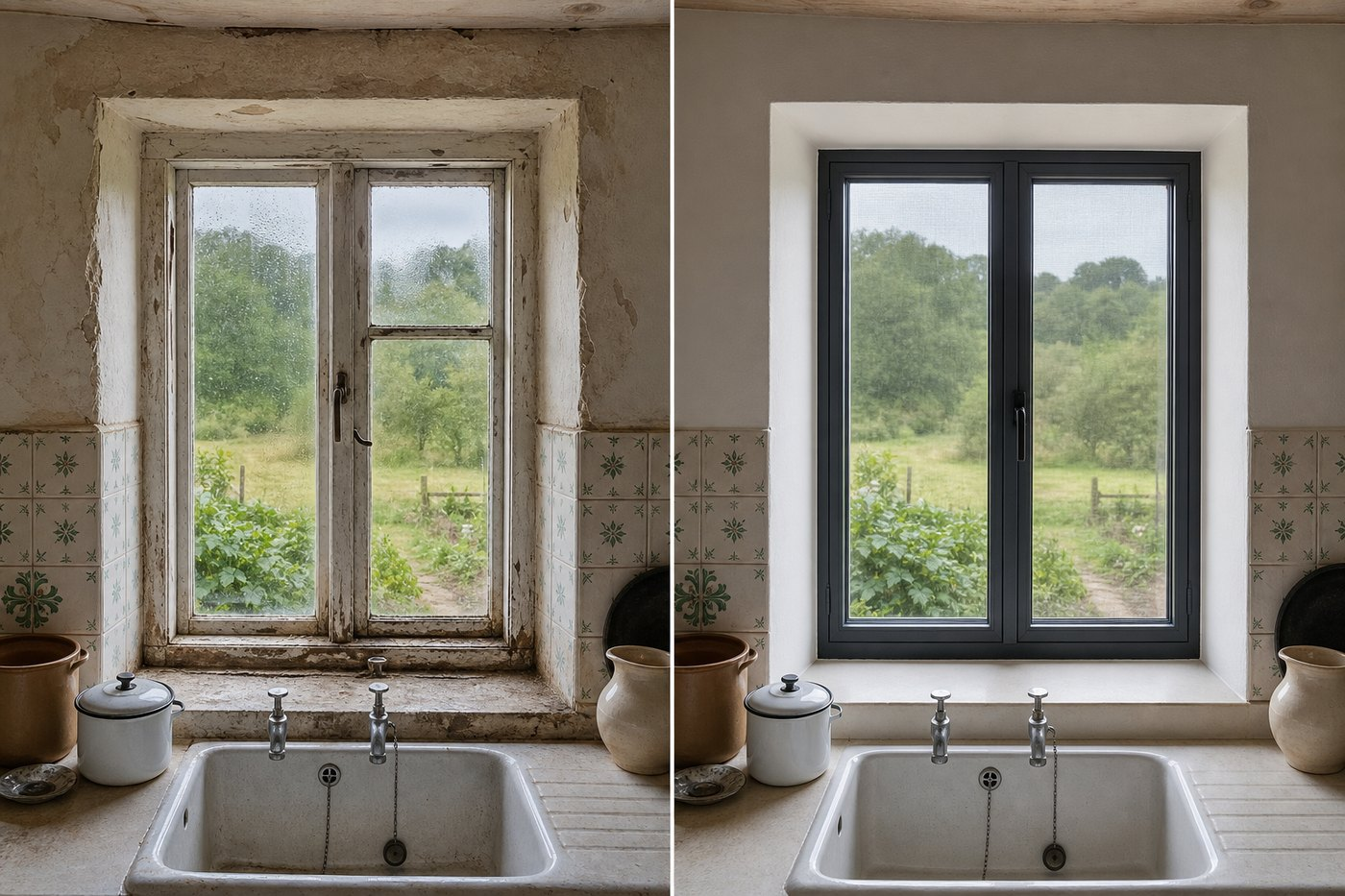
Before and after – a failing single-glazed kitchen casement is replaced within the same deep farmhouse reveal.
2. Bedroom Recommendation: Quiet, Well-Sealed Windows
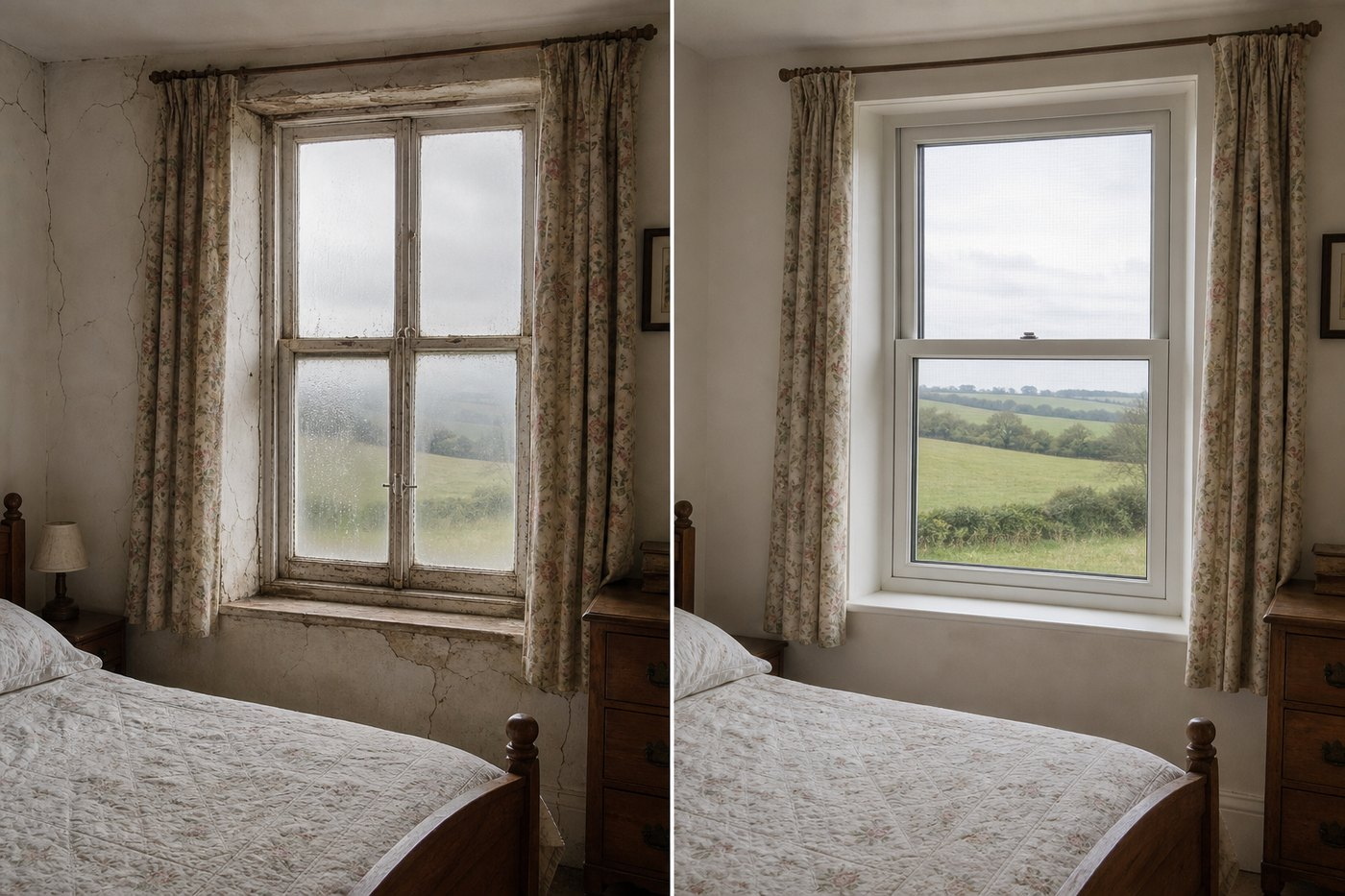
Bedrooms benefit from windows that close securely and limit unwanted air leakage while still providing controllable ventilation. Casement, tilt-and-turn or well-detailed sliding units may all be suitable, depending on the opening and local practice. Retaining the original vertical proportions often helps a replacement look natural on the facade.
Consider early morning sun, privacy from farm tracks, external noise and the position of the bed. A larger pane is not automatically better. Balanced glass areas, curtains or shutters, insect screens and safe opening restrictors can create a calmer sleeping environment.
Before and after – the new bedroom window preserves the rural view and original proportions while improving fit and clarity.
3. Bathroom and Utility Recommendation: Top-Hung Obscure Windows
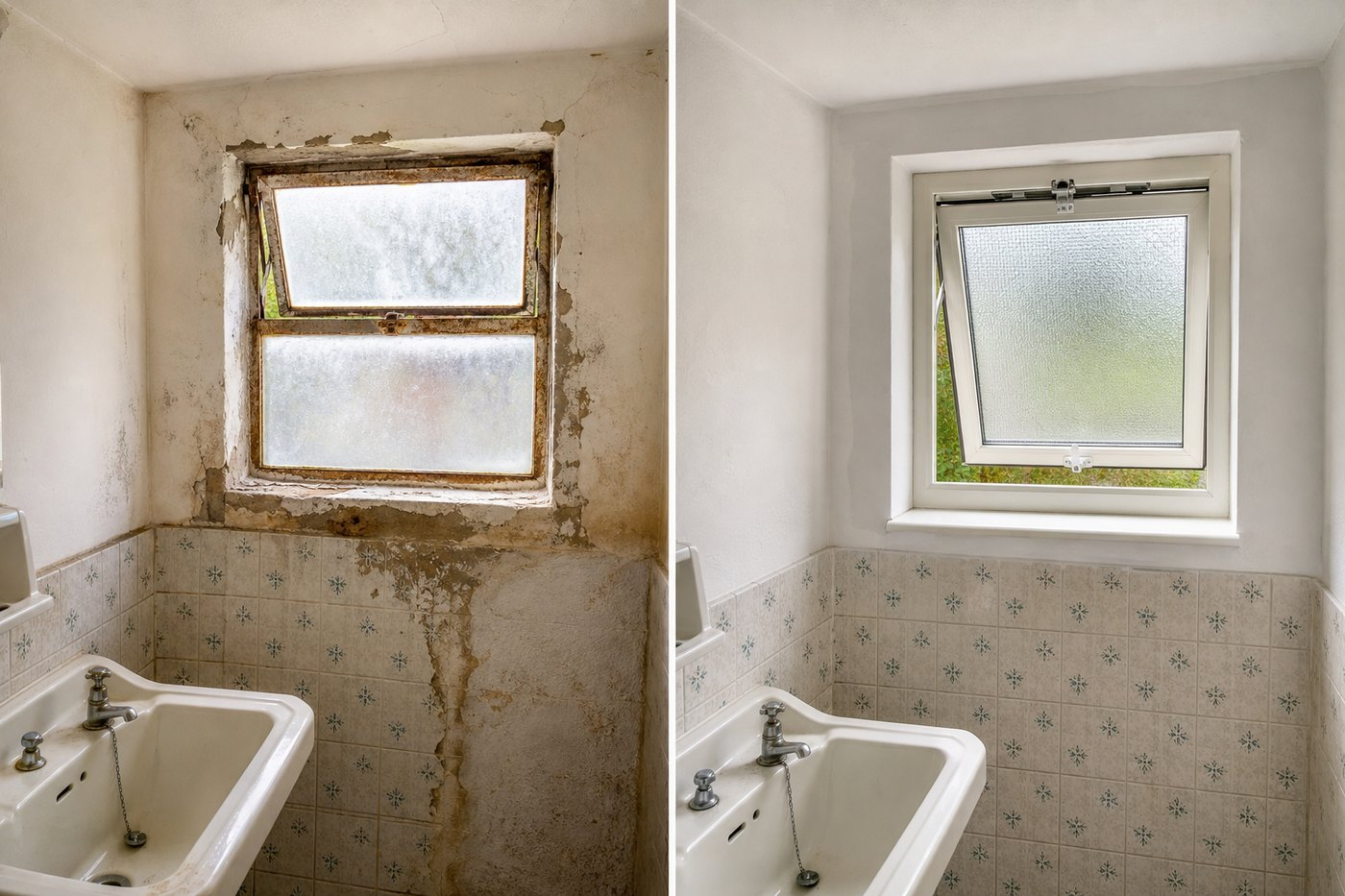
A compact top-hung window with obscure glass can provide daylight and controlled ventilation while protecting privacy. It suits bathrooms, washrooms and utility spaces where a side-hung sash could clash with fittings or an exterior passage.
The wall around an old wet-room window often needs as much work as the frame. Repair loose plaster, resolve water entry and form a clean sill before decorating. An operable window can support fresh air, but mechanical extraction and humidity management may still be needed.
Before and after – a rusting washroom window is replaced with a compact top-hung obscure-glass unit in the same opening.
4. Living Spaces: Protect the View Without Ignoring Exposure
Fixed glazing can frame fields or a courtyard, while nearby operable sashes provide ventilation. This combination can reduce unnecessary hardware and create a clear view. The glass area, orientation and available shade must still be reviewed so the room does not gain excessive heat or glare.
On windy elevations, product size, frame stiffness, drainage and installation become especially important. Request documentation that applies to the exact configuration and confirm that the wall, lintel and sill can support it. Avoid choosing by frame appearance alone.
5. Insect Screens, Shutters and Shading Are Part of the Window
Screens should be removable for cleaning, compatible with handles and easy to replace. External shutters can provide shade and weather protection where they suit the local building tradition, while internal blinds and curtains support privacy and glare control.
Plan these elements before ordering. A handle that hits a screen, a shutter that cannot fold past a downpipe or a blind that blocks ventilation is a coordination problem, not a minor finishing detail.
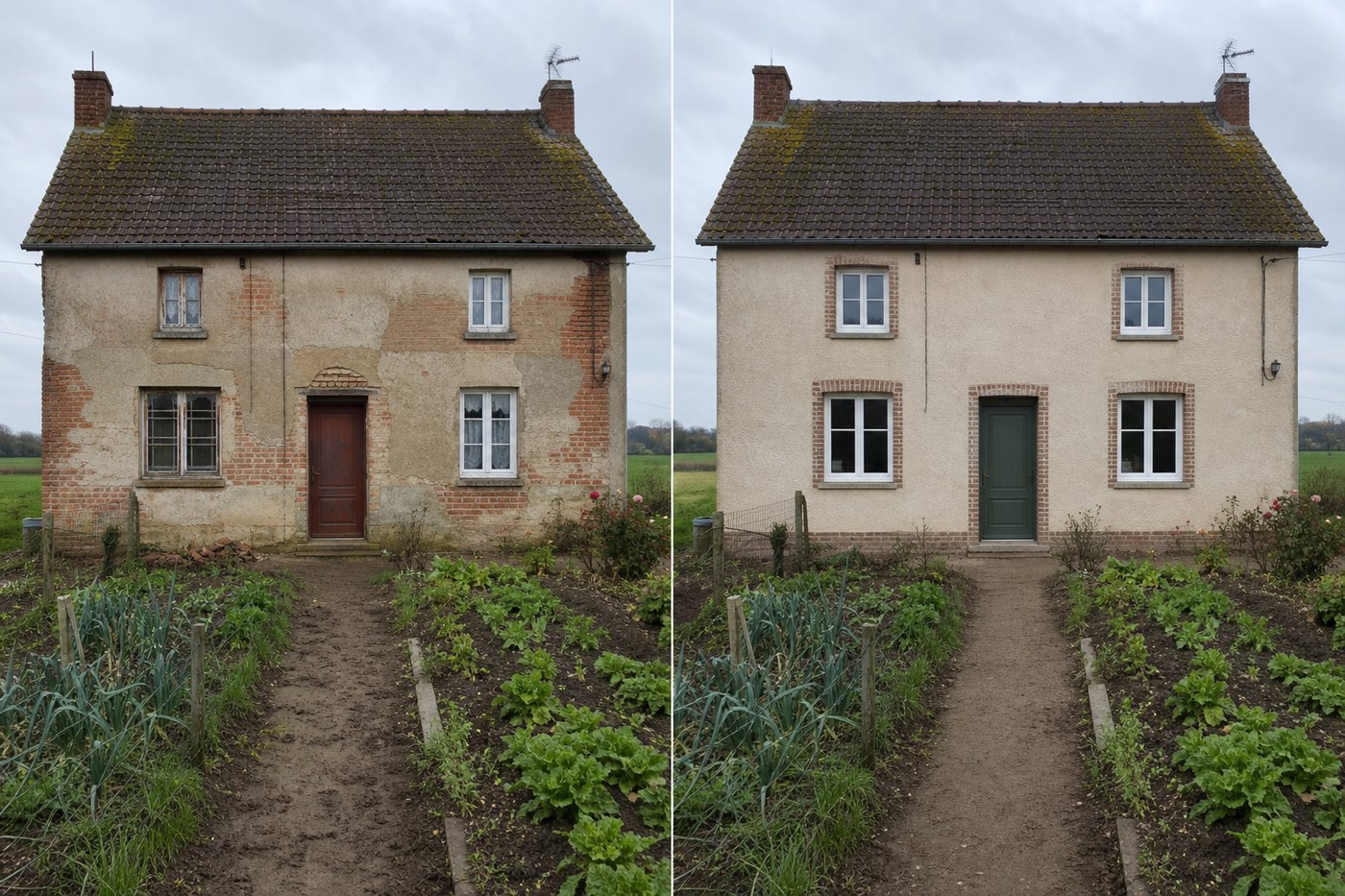
Whole-house before and after – coordinated window proportions improve the facade while the farmhouse and working garden remain recognizably rural.
6. Installation Is Part of Window Performance
Older rural walls are rarely uniform. Brick may be soft, lime mortar may be loose, and previous repairs can hide voids or timber packers. The installer should confirm fixing locations, sill support, flashing or water-control details, insulation around the frame and compatible interior and exterior seals.
Inspect the work before the reveals are closed. A straight frame, controlled fixing pressure, continuous support and correctly formed perimeter joints help the window operate as intended. Final decoration cannot compensate for a weak wall junction.
During installation – the exposed brick-and-lime opening reveals the packers, sill protection and perimeter work hidden by the final finish.
Typical Window-Type Comparison
This is a qualitative design comparison, not a certified performance rating. Verify the exact product, size, glass, exposure and installation detail.
| Window type | Ventilation | Rural advantages | Important trade-offs | Typical rooms |
| Casement | Strong and directional | Good sealing potential; works well with screens | Needs exterior clearance and suitable hardware | Kitchens, bedrooms, living rooms |
| Top-hung / awning | Controlled and compact | Useful for privacy and high-level openings | Reach, cleaning and drainage need planning | Bathrooms, laundries, utility rooms |
| Sliding | Moderate | No projecting sash; practical near paths | Tracks, interlocks and screens need maintenance | Bedrooms, living areas, tight spaces |
| Fixed | None | Clear countryside view and fewer moving parts | Requires separate ventilation and safe cleaning access | Living rooms, stairs, combination windows |
| Louvre | High | Useful in selected sheltered warm-climate areas | Check rain, air, acoustic and security performance carefully | Verandas and selected service spaces |