Quick answer: Reduce sun glare through windows by controlling the bright line of sight, not simply making every pane darker. Start with adjustable blinds, solar shades, layered curtains or a small change to the work area. For persistent glare, assess exterior shading, compatible window film or replacement glazing using visible transmittance and solar heat gain data. Keep enough daylight for comfortable use.

Glare is different from general brightness. It occurs when a bright window, reflected sun patch or direct beam is much brighter than the task you are trying to see. That can make a screen difficult to read, create uncomfortable contrast in a living room or shift across a workspace during the day. The best solution targets the angle and schedule of the problem while preserving useful daylight and views.
Contents
- Diagnose the glare before buying anything
- Eight ways to reduce sun glare
- How to choose without making the room dark
- When film or new glazing makes sense
- Frequently asked questions
Diagnose sun glare through windows first
Observe the room on a clear day and record when the glare starts, which pane it crosses and when it disappears. Stand at the actual seat, desk, television or work surface. A photograph taken from that position can show whether the problem is direct sunlight, a bright sky view or reflection from another building, floor or light-coloured surface.
- Direct beam: a sharp patch of sun reaches the eyes or screen.
- Bright-window contrast: the whole window is much brighter than the task area.
- Reflected glare: sunlight bounces from glass, metal, water, flooring or a neighbouring façade.
- Screen reflection: the window or bright interior surface appears on a monitor or television.
Also note whether heat, fading, privacy or security is part of the complaint. One product may address several goals, but the glazing and attachment still need to suit the window system. Glare alone does not prove that the glass must be replaced.
Eight ways to reduce sun glare through windows
1. Change the viewing angle or task position
For a desk or television, the fastest test is to rotate the screen so it sits roughly perpendicular to the window rather than facing it. Move the seat out of the direct beam or raise the monitor slightly. This costs nothing and can reveal how much shading is actually needed.
2. Use adjustable blinds to redirect light
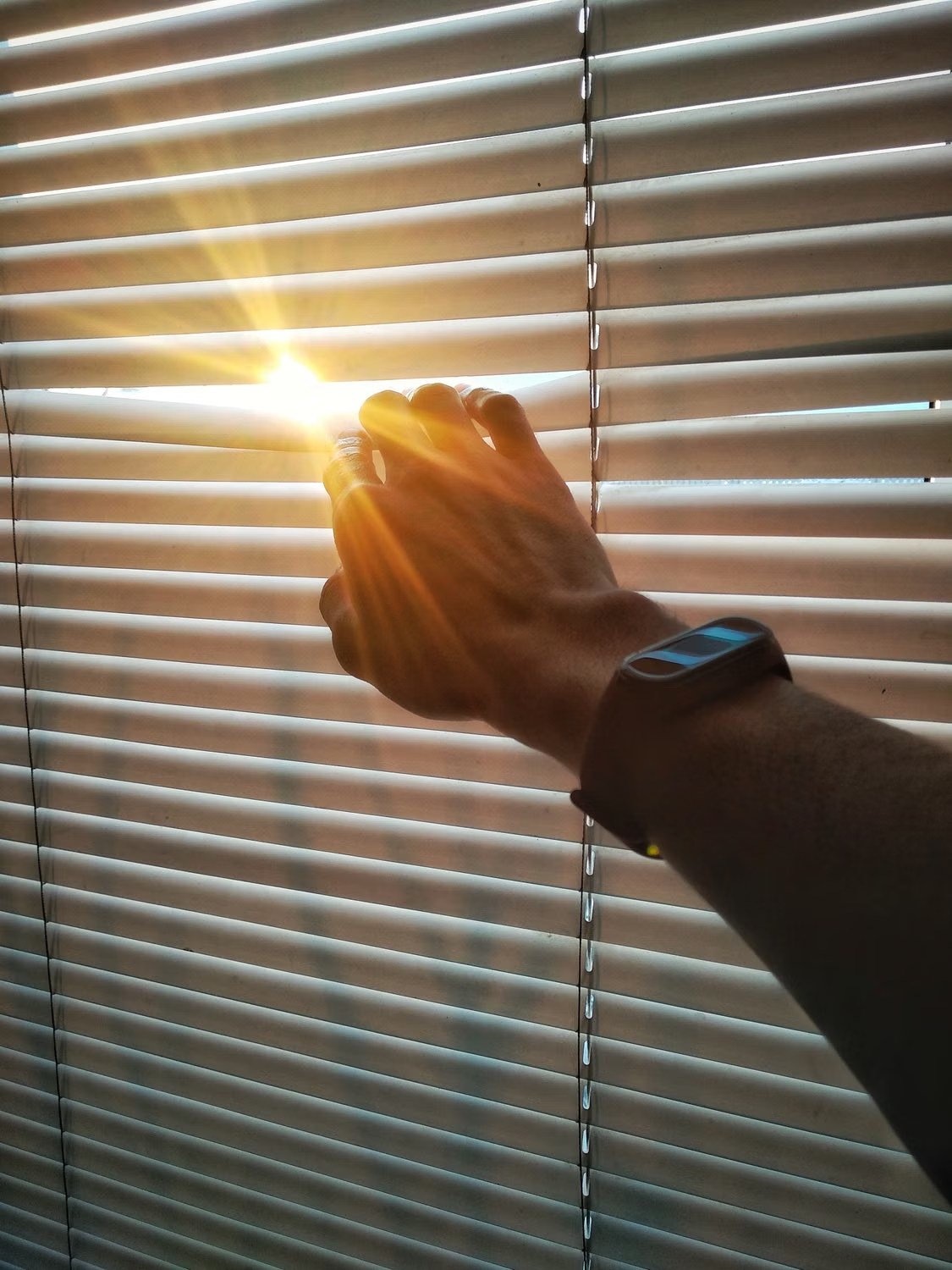
Horizontal or vertical blinds let you tilt the slats, blocking the bright sky or direct sun while keeping part of the window open to daylight. Adjust the angle as the sun moves instead of closing the blind completely. Choose cordless or properly secured controls where children can reach the window.
3. Install a solar shade with an appropriate openness
Solar roller shades reduce the intensity of the view while allowing some outward visibility. A more open fabric preserves more view but may leave direct glare; a tighter fabric controls more light but appears darker. Ask for physical samples and view them at the problem window during the relevant time of day.
4. Layer sheer and opaque curtains
A sheer curtain diffuses bright daylight for general use, while a lined or blackout layer can close when the sun becomes severe or a screen needs high contrast. The combination provides more control than one heavy curtain used all day. Keep fabric clear of wet sills, moving hardware and heat-producing equipment.
5. Add exterior shading where the building allows it
Awnings, fins, overhangs and exterior screens intercept sun before it reaches the glass. Exterior shading can be effective when the glare follows a predictable solar angle, but it affects the façade, wind loading, drainage, access and possibly building approvals. Engage the property manager or qualified designer before fixing anything outside.
6. Use compatible window film for a persistent pane
Solar-control or glare-control film can reduce visible light and reflections without replacing the window. The correct product depends on glass type, coatings, pane construction, orientation and desired appearance. Confirm compatibility and warranty terms with both the film and glazing suppliers; unsuitable film can create thermal or visual problems.
7. Select glazing by visible transmittance and solar data
When windows are already due for replacement, compare complete product data rather than choosing “dark glass” by appearance. Visible transmittance, commonly shown as VT, indicates how much visible light passes through the window system on a scale from 0 to 1. Solar heat gain coefficient addresses transmitted solar heat, which is a related but different property.
A low VT can reduce daylight as well as glare. The right balance depends on orientation, exterior shade, room depth and the work being done inside. Request a sample or visual mock-up when colour and daylight quality matter.
8. Control reflective surfaces inside the room
Glossy desks, pale polished floors, glass tables and white walls can redirect a bright patch into the eyes or a screen. A matte desk surface, rug, repositioned mirror or local task light may solve the secondary reflection without altering the window. Clean screens and use device anti-glare settings only as supporting measures.

How to reduce glare without making the room too dark
Choose the least restrictive layer that solves the actual problem. A narrow strip of shading, partial blind closure or adjustable screen may be enough when glare occurs for only one hour. A permanently dark film across every pane can reduce useful daylight long after the sun has moved.
- Map the glare window. Record time, pane, viewing position and sun direction.
- Test a temporary control. Use removable card, a curtain or a sample shade to find the necessary coverage.
- Protect the view. Decide which sightlines should remain open when glare is absent.
- Compare day and night privacy. Reflective or sheer products can behave differently after dark when interior lights are on.
- Check ventilation and operation. Attachments must not block handles, restrictors, drainage or safe window access.
- Review cleaning. Confirm how blinds, fabric, film and glass can be maintained without damage.
- Mock up before committing. Evaluate the proposed material on the actual orientation and at the problem time.
The U.S. Department of Energy notes that shades, blinds, exterior sunscreens and other window attachments are used for glare, privacy and solar control, but their results depend on product type, mounting, climate, orientation and occupant use. Treat generic savings or comfort claims as estimates unless they are supported by project-specific data.
When should you consider film or replacement glazing?
Start with adjustable interior control when the problem is limited to one position or short period. Consider professionally specified film when the same pane produces persistent glare and the existing glass is compatible. Consider new glazing when the window is already being replaced, several performance goals must be addressed together, or attachments cannot meet the project’s daylight, appearance and maintenance needs.
Ask for visible transmittance, solar heat gain coefficient, reflectance, colour appearance and film/glass compatibility. If the proposal claims heat, energy, acoustic or safety performance, request the relevant test data for the complete product—not just a sample of glass or film.
Common glare-control mistakes
- Choosing the darkest material without checking daylight loss.
- Installing film before confirming compatibility with coated or insulated glass.
- Ignoring the sun path and treating every pane equally.
- Using an interior blind where exterior reflection is the real problem.
- Blocking handles, egress, drainage or window cleaning access.
- Expecting a sheer curtain to provide reliable night privacy.
- Relying on a small sample viewed away from the actual window.
Frequently asked questions
Do sheer curtains reduce window glare?
Sheers diffuse bright daylight and can reduce contrast for general room use. They may not stop a direct sun beam or provide enough control for a monitor. Layer them with adjustable blinds, a solar shade or an opaque curtain for stronger conditions.
Will window film make my room dark?
It depends on the film’s visible-light transmission, the existing glass, orientation and room depth. Some products are relatively clear while others are reflective or dark. Review a sample on the actual pane and compare it during glare and non-glare hours.
Are blinds or window film better for glare?
Blinds provide adjustable control and are a good first step for changing sun angles. Film is fixed and can address a persistent pane without daily operation. Some rooms benefit from compatible film plus a light interior shade for peak conditions.
Does low-e glass stop glare?
Low-emissivity coatings are designed primarily to manage heat transfer and solar properties; different products transmit different amounts of visible light. Do not assume “low-e” defines glare performance. Compare the complete window’s visible transmittance and appearance.
Need a daylight and glazing discussion for your project?
Share the window orientation, room use, photos taken during the glare period, required view and any heat or privacy concerns. Forge Windows can discuss suitable aluminium window and glazing configurations for the project. Contact Forge Windows with the opening dimensions and design brief.