Article summary: Comparing blinds inside a sliding door with separately …
After dinner in a Singapore condo, the balcony door may still be useful for the view while the family wants to close the room off visually. Sliding glass doors with built-in blinds can look like a tidy answer. The less obvious question is what happens when you want a different covering, or a control stops doing its job.
Decide how closely you want the covering tied to the glazing. Compare the exact blind construction, its everyday controls and its service arrangement with a separately hung covering. The phrase “blinds inside” does not, by itself, tell you what can be accessed or changed later.
Start with the construction behind the label
There is a useful distinction in Pella’s explanation of its own patio-door blind options. It describes an integrated arrangement that can be accessed if problems arise, alongside another arrangement in which the covering is permanently enclosed between glass panes. These are that manufacturer’s specific designs; the labels should not be treated as interchangeable specifications for every supplier.
For a sliding glass door with blinds inside, get the proposed model identified clearly. Is there intended service access, and who is permitted to use it? If the covering needs attention, what would be assessed or replaced? Keep that answer with the quotation and product information. A photograph showing neat slats cannot resolve the construction question.
Try the control you would use each evening
During a normal demonstration, notice what the control actually does. Does it adjust the slat angle, move the covering out of the view, or offer different functions? Relate the demonstration to the way you want to use the room, rather than assuming that every display behaves alike.
Say if you expect to change the setting several times a day, or if different family members will use it. Work through those ordinary actions with the proposed system. If the demonstration uses a different model, keep that distinction visible until the actual configuration has been explained.
Then follow the same control into the service conversation. Find out whom you would contact, what model details they would need and how the next step would be determined. Intended service access is not an invitation to open glazing or dismantle the covering yourself.
Keep the alternative in view
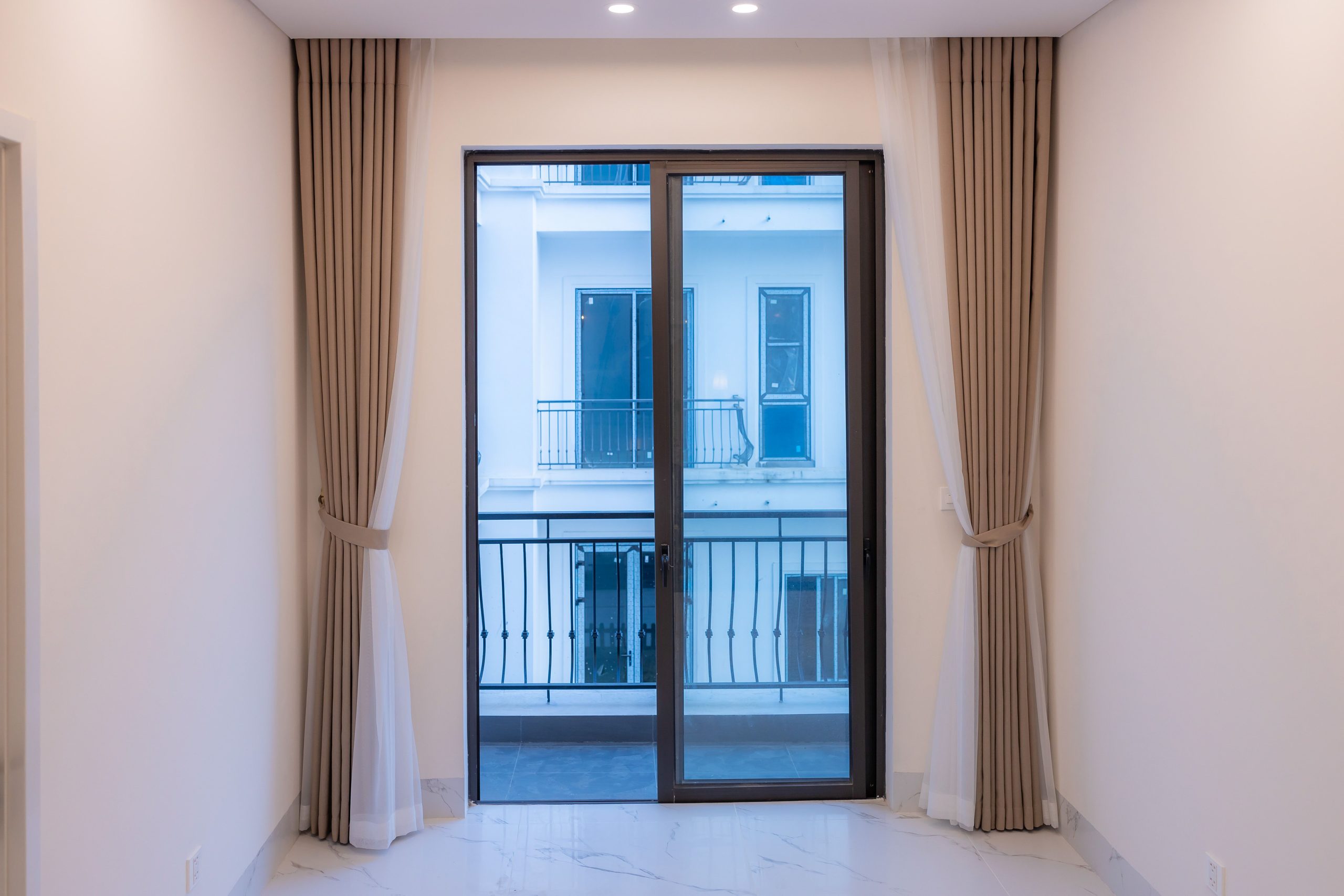
Separately hung curtains or blinds form a different comparison: the covering remains a room-side item rather than the specified glass-and-blind arrangement. Consider whether changing that part of the room later matters to you. You may like the covering now but want a different fabric or appearance when the room’s use changes.
That preference still needs a practical layout. Look at where the covering hangs when the door is used, how its control is reached and what the household would keep around it. This is a choice about the relationship between the door and its covering, not a guarantee that any curtain or blind will suit any opening.
Make the comparison before choosing the complete door
When considering privacy for sliding glass doors, separate the desired everyday use from claims about a particular system. Compare a named integrated option with an independently hung option, including the control and future service information that matters to your household.
If you are retaining an existing covering during other work, our guide to keeping old blinds when replacing windows addresses removal and refitting instead. For the door itself, the balcony sliding-door selection guide covers the broader system decision. Bring the covering choice back to that whole proposal before ordering, rather than treating a catalogue phrase as a complete plan.