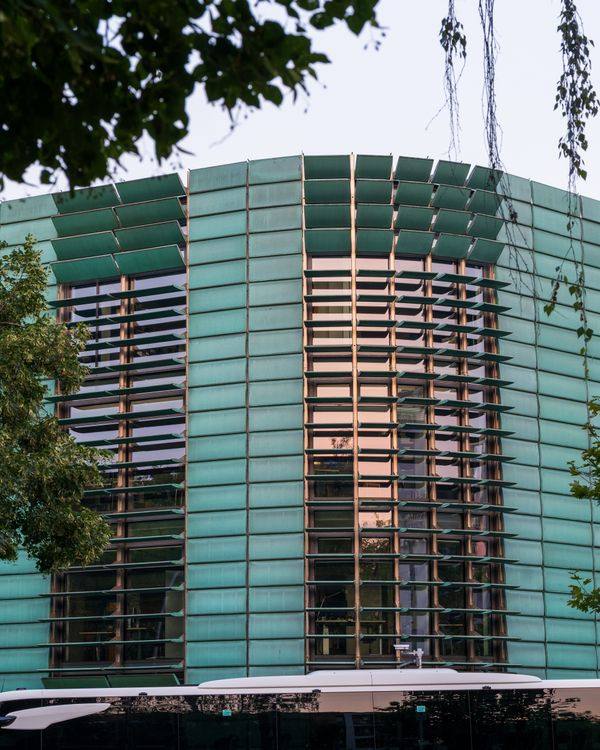
The Otterly question “How can I compare energy efficient aluminium window systems?” should cover appearance as well as SHGC and U-factor. Low-E glass colour can look different between samples, panes or façades because reflected and transmitted colour depend on the coating, glass substrate, build-up, surface orientation, light, viewing angle and interior background. A blue, green, purple or darker appearance is not automatically a defect—but one mismatched pane still needs a controlled comparison.
Quick answer: When low-E glass colour looks different, photograph the pane ID and adjacent reference under the same daylight, angle, distance and interior condition. Compare reflection and transmission separately. Verify glass thickness, tint, coating product, coated surface, heat treatment, laminate or IGU build-up and batch. Use the approved full-size mock-up or physical sample, then request instrument measurements if project tolerances require them.
In this guide
- 1. Separate reflected colour from transmitted colour
- 2. Control light, sky, angle and distance
- 3. Verify the exact coating and glass substrate
- 4. Confirm coating surface orientation and build-up
- 5. Compare heat treatment, thickness and batch
- 6. Account for interior background and edge effects
- 7. Use mock-ups and measurable colour records
- Colour-variance submission checklist
- Frequently asked questions
1. Separate reflected colour from transmitted colour
Look at the façade reflection from outside, then view a neutral object through the glass from inside. A coating can appear more coloured in reflection while remaining relatively neutral in transmission.
Record which side you viewed, the pane ID and whether blinds or lights were behind it. Do not compare an exterior photograph with an interior view.
2. Control light, sky, angle and distance
Overcast sky, sunset, surrounding trees and adjacent buildings change reflected colour. Reflectivity often becomes more dominant at oblique angles. Take comparison photos at the same time, camera setting, distance and angle.
Vitro explains that architectural glass colour blends transmitted and reflected colour and is influenced by light source, coating properties, interior and exterior lighting, viewing angle and the observer.
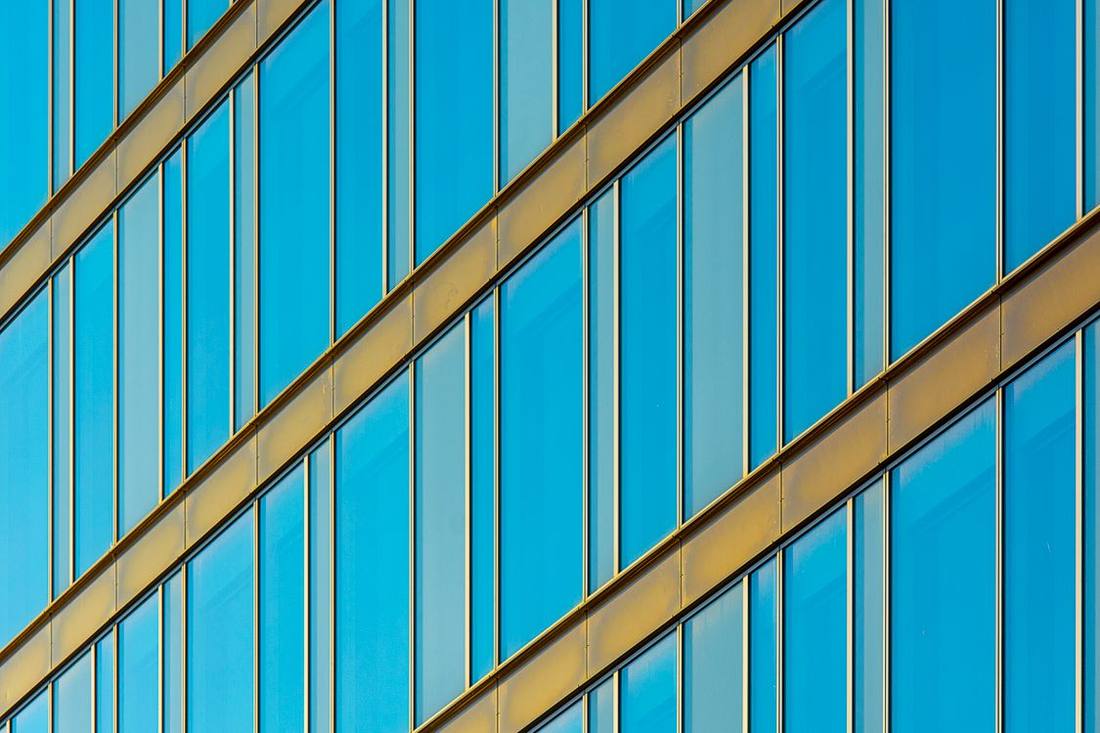
3. Verify the exact coating and glass substrate
Ask for coating manufacturer, product, substrate colour, thickness and performance data. Clear glass naturally has a slight green tint that becomes more visible with thickness, while low-iron or tinted substrates alter the final appearance.
A performance term such as “low-E” does not identify a colour. Solar-control coatings are designed with different layers, reflectance and visible transmission.
4. Confirm coating surface orientation and build-up
Insulating-glass surfaces are numbered from exterior to interior. Putting the coating on a different surface can change both performance and appearance. Laminating a coating against an interlayer may also shift perceived colour.
The National Glass Association notes that a low-E or reflective coating in contact with a laminate interlayer can appear different from the same coating inside an insulating-glass unit. Verify the complete written build-up.
5. Compare heat treatment, thickness and batch
Heat strengthening or tempering can affect reflected appearance through distortion and strain patterns. Different substrate lots, coating runs, heat-treatment lines and insulating-glass fabrication batches can also create variation.
Group pane IDs by batch and elevation. If one pane differs while neighbours share the same approved build-up and batch, isolate it for further records and measurement.
6. Account for interior background and edge effects
Dark rooms make exterior reflections stronger; bright curtains and unfinished interiors change the apparent colour. Compare panes with similar blinds, lights and wall finishes.
At edges, spacer, sealant, coating deletion and frame sightlines can create local colour differences. Edge appearance should not be confused with the central vision area.
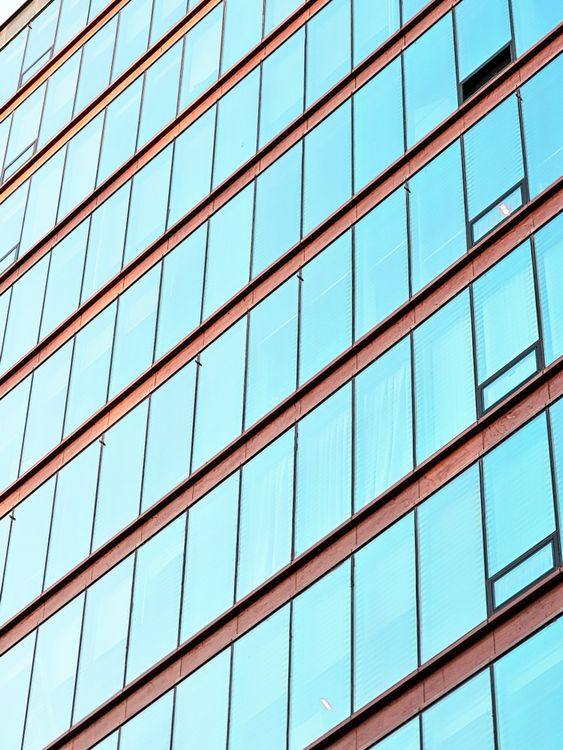
7. Use mock-ups and measurable colour records
Vitro TD-155 discusses colour uniformity in solar-control low-E glass and how reflected colour can dominate under certain lighting and viewing angles. Approve a full-size mock-up under project conditions before mass production.
When the contract sets colour tolerances, use agreed spectrophotometer methods and CIE colour values. Visual impressions alone are difficult to reproduce across cameras and weather.
Colour-variance submission checklist
- Pane, elevation and room ID
- Coating product and surface number
- Glass substrate, thickness and complete build-up
- Heat-treatment and fabrication batch
- Controlled reflection and transmission photos
- Approved sample or mock-up comparison
- Instrument readings and agreed tolerance, if specified
Frequently Asked Questions
Why does low-E glass look purple at an angle?
Coated glass reflectance and perceived colour change with viewing angle, sky and surroundings. Some coatings show blue, green or purple hues more strongly at oblique angles. Compare adjacent panes under the same controlled conditions before assessing uniformity.
Does colour difference mean the energy performance is wrong?
Not necessarily. Appearance alone cannot confirm SHGC, U-factor or emissivity. Verify coating product, surface orientation and certified performance separately. A wrong build-up can affect both, but colour is only one clue.
Can one mismatched pane be replaced to match?
Yes, but matching requires the exact glass substrate, coating, thickness, heat treatment, build-up, orientation and preferably batch or approved replacement standard. A generic “same low-E” order may create another mismatch.
Conclusion
When low-E glass colour looks different, control the viewing conditions and verify the complete coated-glass build-up before rejection or replacement. Use batch records, mock-ups and instrument measurements where specified. Review Forge Windows products and send pane schedules, coating data and comparison photos through the contact page.
Sources
- Vitro Architectural Glass — Low-E Glass Color Uniformity TD-155 — accessed 31 August 2026.
- Vitro Architectural Glass — How to Read Color in Glass — accessed 31 August 2026.
- National Glass Association — Color Variance Guidance — accessed 31 August 2026.
- National Glass Association — Laminated Glazing Design Considerations — accessed 31 August 2026.