Quick answer: To reduce heat through windows, control direct sun first, then improve the glazing and frame. Exterior shading is usually the first design layer, while suitable Solar Heat Gain Coefficient (SHGC), low-emissivity coatings, insulated glazing, thermally improved frames, airtight installation, interior blinds and a ventilation strategy work together.
Hot rooms beside large windows are not always solved by darker glass. The right response depends on orientation, climate, shade, glass area, room use and cooling strategy. This guide explains how to reduce heat through windows for homes, villas, apartments and commercial projects without sacrificing all daylight.
Table of contents
- Diagnose the heat source
- Eight practical ways to reduce heat
- Buyer’s specification checklist
- Common mistakes
- Frequently asked questions
Is the problem solar heat, hot air or conductive heat?
Direct sunlight through glass creates solar heat gain. Heat also moves through glass, spacers and frames when outdoor and indoor temperatures differ, while gaps allow warm air to leak into cooled rooms. Observe when the room overheats and which window surface receives sun before selecting a product.
Singapore’s National Environment Agency (NEA) notes that east- and west-facing windows are more exposed to low-angle sun and recommends sunshades to reduce discomfort. NEA also explains that a lower whole-window SHGC means less solar energy is transmitted through the window.
Eight ways to reduce heat through windows
1. Add effective exterior shading
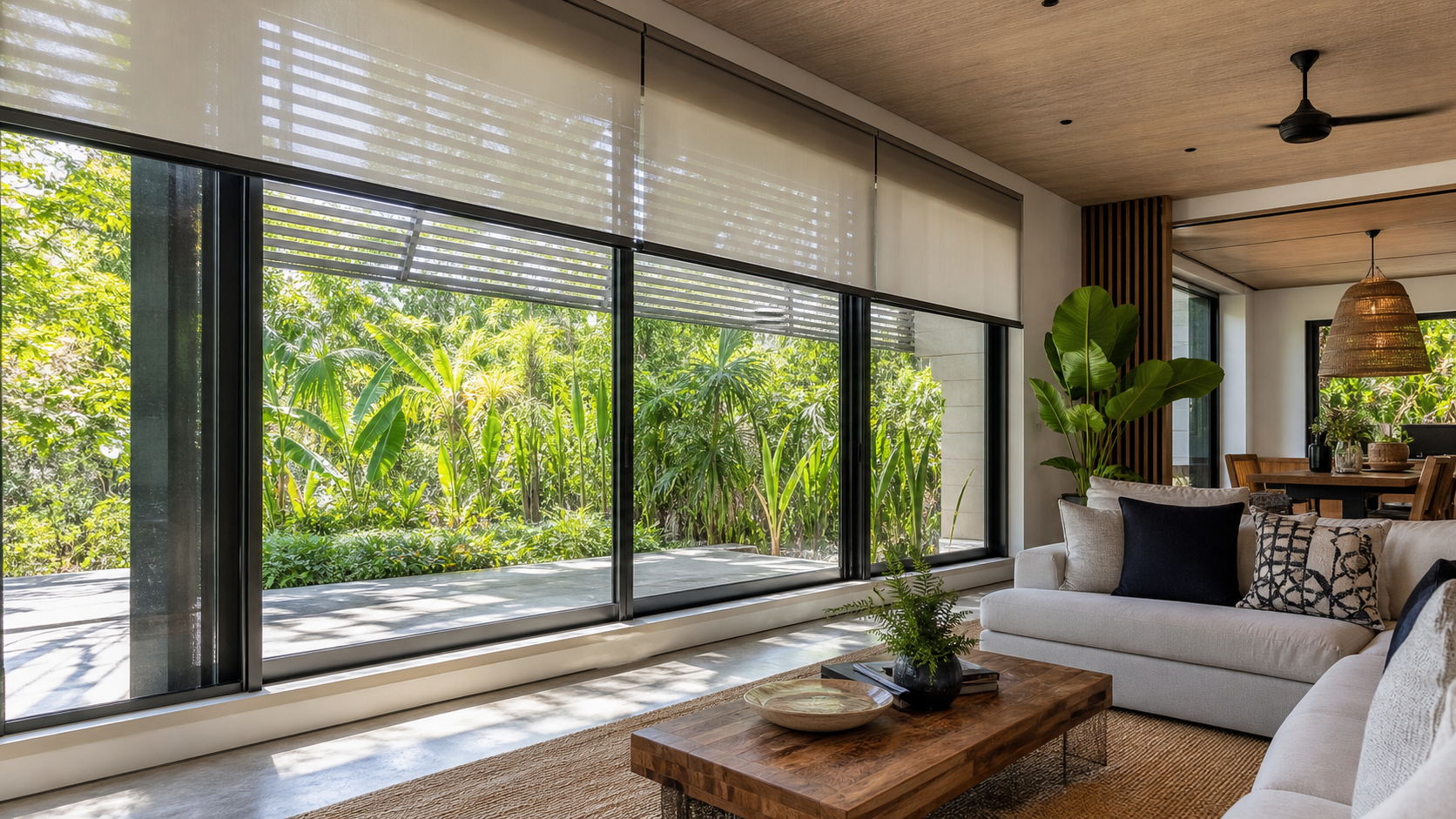
Overhangs, fins, screens, shutters and nearby architectural elements can stop sunlight before it reaches the glass. The geometry should match orientation and seasonal sun angles: a horizontal overhang and a vertical fin do not shade the same path. Coordinate shading with wind, drainage, maintenance, structure and emergency access.
2. Select an appropriate whole-window SHGC
SHGC ranges from 0 to 1 and represents the fraction of incident solar heat admitted through the product. Lower values generally reduce solar gain, but the best target depends on climate and design intent. Compare whole-window ratings rather than centre-of-glass values, and confirm the rating applies to the proposed frame, glass and size.
3. Consider low-emissivity glass coatings
Low-emissivity, or low-e, coatings can modify how glass transmits and reflects radiant energy. Coating type and surface position must suit the climate, glass build-up and safety requirements. Ask for verified SHGC, U-factor, visible transmittance and appearance data instead of accepting “low-e” as a complete performance specification.
4. Use insulated glazing when the project supports it
Two or more panes separated by a sealed space can reduce conductive heat transfer compared with basic single glazing when correctly specified. Spacer design, gas fill, edge seals and installation quality matter. In hot climates, insulated glazing should still be paired with suitable solar control because extra panes alone do not define SHGC.
5. Improve the aluminium frame’s thermal path
A thermal break separates interior and exterior aluminium sections with a less conductive material. This can improve the frame’s thermal performance and interior surface temperatures. Request whole-product thermal data and details for corners, mullions, sills and installation joints; a thermal-break label does not guarantee every assembly is equal.
6. Seal unintended air leakage
Warm outdoor air entering a cooled room increases discomfort and cooling load. Check sash gaskets, locks, frame joints and wall interfaces, while keeping intentional drainage and ventilation paths open. Tested assembly data and careful installation are more reliable than applying sealant after a problem appears.
7. Use curtains, blinds or compatible solar film
NEA recommends curtains, blinds or solar window film to help block unwanted heat. Interior treatments are accessible retrofits, though heat has already passed the outer glass before reaching them. Confirm that any film is compatible with the glass type, coating, seal warranty and thermal-stress limits.
8. Coordinate natural ventilation and mechanical cooling
When outdoor conditions are suitable, cross-ventilation and fans can improve comfort. When air-conditioning is operating, open windows may add heat and humidity. Plan operable area, insect screens, safety, noise and indoor-air-quality needs so that the window supports the building’s actual operating mode.
Design principle: Reduce heat before it reaches the glass, control what passes through the glass, then manage air movement inside.
Heat-reducing window specification checklist
- Record climate, façade orientation and surrounding shade.
- Provide window dimensions and glass-to-wall ratio.
- State room use, operating hours and cooling strategy.
- Define whole-window SHGC and U-factor targets.
- Define visible transmittance and appearance requirements.
- Confirm safety glass, wind, water and air-leakage requirements.
- Coordinate exterior shading and interior treatments.
- Request test reports for the proposed assembly.
- Review edge details, frame-to-wall junctions and drainage.
- Agree on installation quality checks and handover records.
Forge Windows offers casement windows, sliding windows and other aluminium systems for project-specific configurations. Opening style affects ventilation and sealing, while glass and frame specifications determine thermal performance. Compare the complete assembly rather than selecting by appearance alone.
Common mistakes when trying to keep a room cooler
- Choosing dark glass by colour alone: appearance is not a verified SHGC.
- Ignoring orientation: identical windows can receive very different solar exposure.
- Specifying glass only: frames, edges, seals and installation also transfer heat.
- Adding film without compatibility checks: the wrong product can create warranty or thermal-stress concerns.
- Blocking daylight completely: balance solar control with visible transmittance and lighting needs.
- Forgetting ventilation: tighter windows need an intentional fresh-air strategy.
Frequently asked questions
Does double glazing keep heat out?
Double glazing can reduce conductive heat transfer, but solar heat gain depends on the complete glass build-up and coatings. A double-glazed unit can still admit substantial sunlight. Compare verified whole-window U-factor, SHGC and visible transmittance for the proposed frame and size.
What SHGC is best for a hot climate?
A lower SHGC generally transmits less solar heat, but there is no universal value for every façade. Orientation, shade, daylight, appearance, room use and energy modelling affect the choice. Set a project target with the designer or energy consultant, then verify it using whole-window product data.
Are exterior shades better than interior blinds?
Exterior shading can intercept sunlight before it reaches the glass, making it a strong design layer. Interior blinds remain useful, accessible and recommended by NEA for reducing unwanted heat. The best solution often combines appropriately designed exterior shade with suitable glazing and adjustable interior control.
Will thermal-break aluminium make a room cooler?
A thermal break can reduce heat flow through the frame, but the room result also depends on glass area, SHGC, orientation, shade, airtightness and cooling. Request whole-window data and assess the complete façade. Frame improvement cannot compensate for uncontrolled direct sun through unsuitable glazing.
Build a complete solar-control strategy
Knowing how to reduce heat through windows means looking beyond one glass feature. Diagnose orientation and sun first, use effective shade, specify verified SHGC and U-factor, improve frames and seals, and coordinate blinds, ventilation and cooling. Send drawings and performance targets through the Forge Windows contact page for a project-specific proposal.
Sources: NEA, Energy Efficient Interior Design Tips; NEA, Building Envelope and Lighting Systems; ENERGY STAR, Independently Tested and Certified Energy Performance.