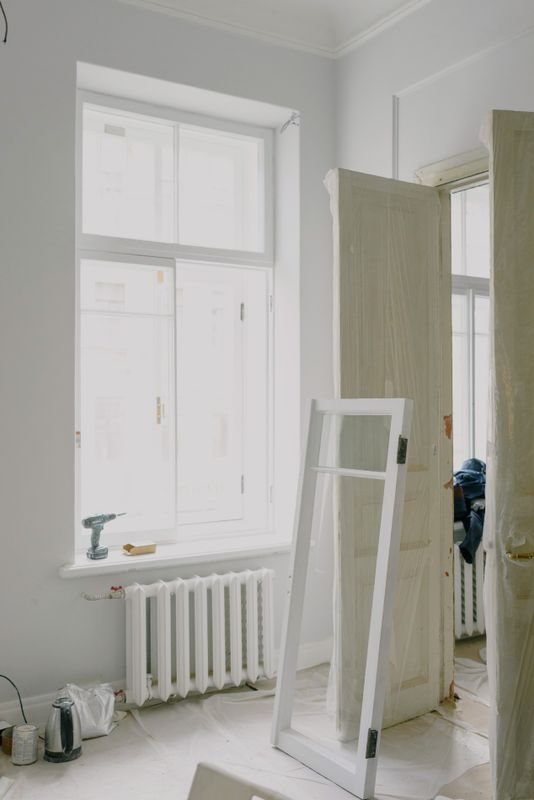
Quick answer: To childproof windows without losing ventilation, combine a purpose-made window guard or opening restrictor with safer furniture placement, cordless window coverings and regular hardware checks. An insect screen is not fall protection. The right device depends on the window type and must not block a required emergency escape route. Keep any opening limit and release method consistent with local building and fire-safety requirements.
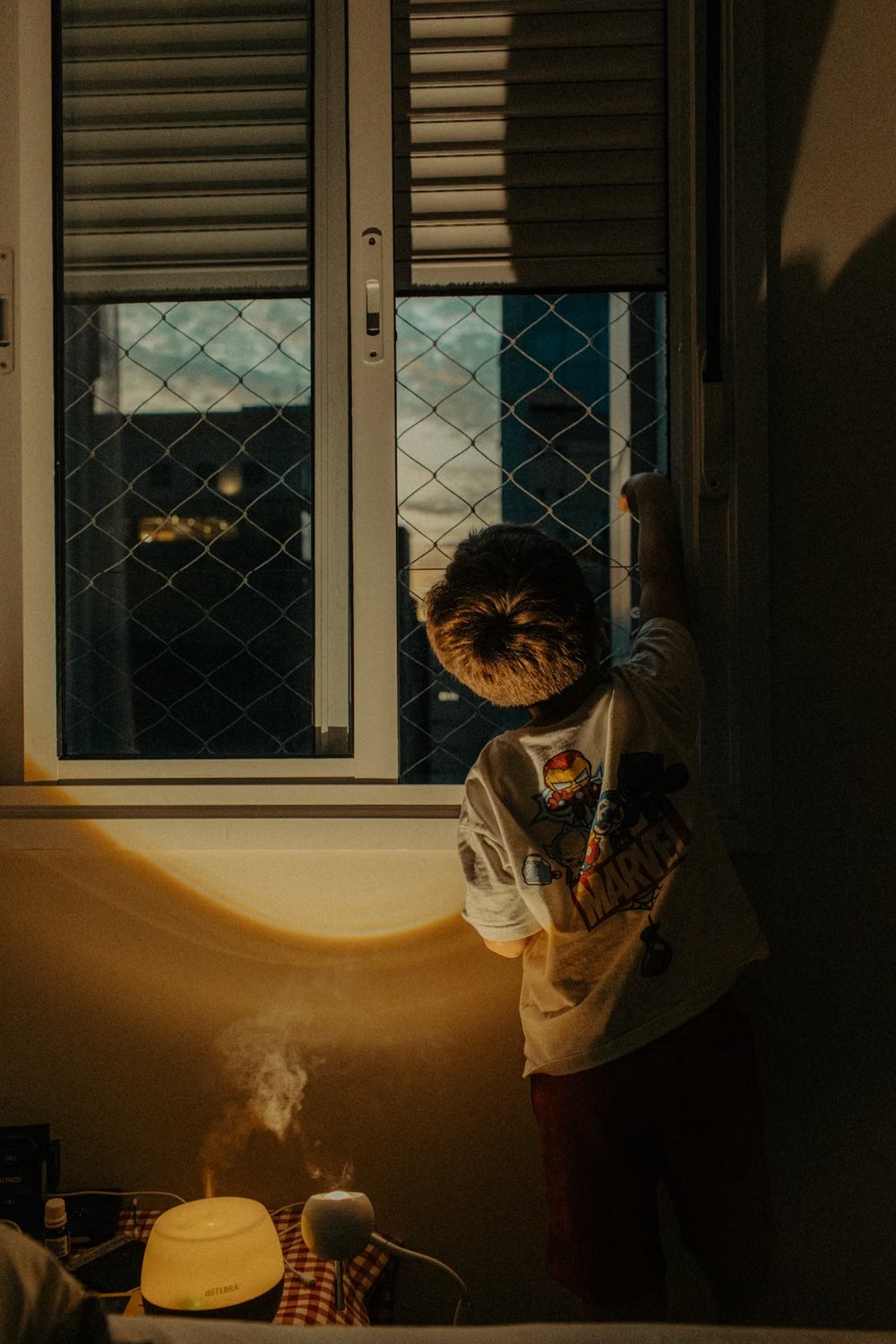
Fresh air matters in a family home, but an open window can become a fall hazard when a child can climb, push a screen or reach the operating hardware. A safer plan controls how far the window opens while preserving useful airflow and access for adults.
Contents
- Start with the real risk
- Seven ways to childproof windows
- Build a safer ventilation routine
- Choose compatible safety hardware
- Frequently asked questions
Start with the real risk: an open window, not just the glass
Most child-window safety measures are designed to prevent a fall through an opening. The U.S. Consumer Product Safety Commission states that ordinary window screens are intended to keep insects out, not children in. It recommends guards or stops and uses a four-inch maximum opening as U.S. consumer guidance. That measurement is a useful risk reference, but it is not a substitute for Singapore requirements or a project-specific assessment.
Walk through the home at a child鈥檚 eye level. Look for beds, sofas, desks, toy boxes and low cabinets that turn into climbing steps. Check whether a child can reach the handle, push on a screen, open a restrictor or become entangled in a blind cord. Also identify windows that may be required for emergency escape or rescue before fitting anything that limits movement.
Seven ways to childproof windows without blocking ventilation
1. Use a window guard where a fall through the opening is possible
A window guard forms a physical barrier across the opening. It should be purpose-made, firmly fixed and appropriately spaced so that a child cannot pass through, become trapped or easily release it. A decorative grille or insect mesh should not be assumed to perform the same safety function.
Bedrooms and other rooms with required emergency egress need special attention. The guard may require an adult-operable release, and occupants must understand how it works. Ask the supplier and installer to confirm compliance with the applicable building, fire and window-safety rules.
2. Fit an opening restrictor or stop to control the gap
A restrictor lets the sash or sliding panel open only to a controlled position. This can preserve ventilation while reducing the accessible opening. The device must match the frame material, opening direction, sash weight and hardware geometry. A loose chain, improvised block or adhesive-only solution may fail under repeated pulling.
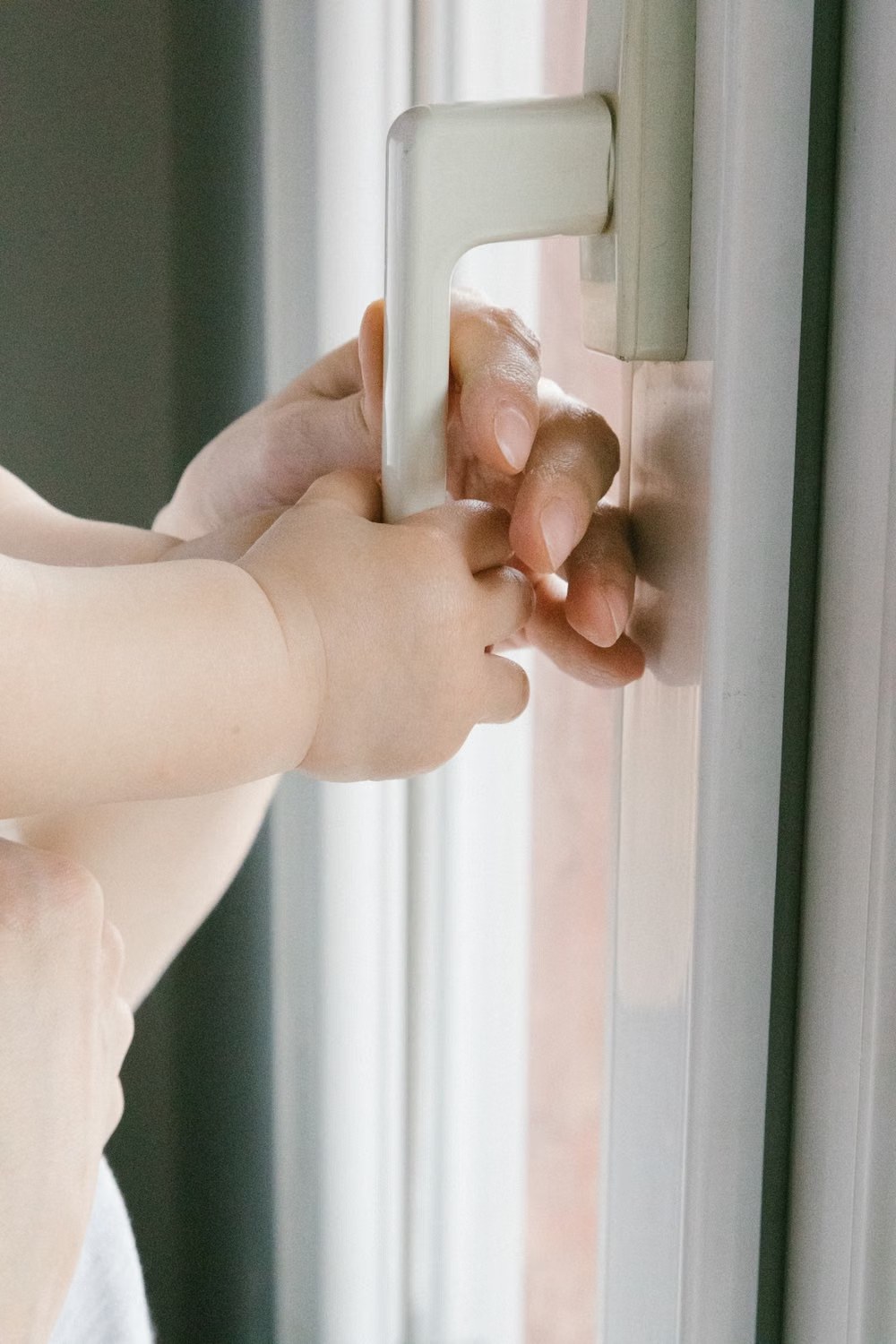
Test from a stable indoor position. The restrictor should engage consistently, the fixing points should not move and the adult release should not be accessible to a young child. If the frame is thin, damaged or corroded, have a contractor assess whether it can safely hold the proposed device.
3. Match the solution to the window type
Different windows create different risks. A casement window projects outward and must remain controlled against wind as well as opening distance. A sliding window may accept a track stop, but the stop should not be a loose object that can be removed or swallowed. Louvre windows require attention to blade spacing, operating mechanisms and broken glass. Ask for a system solution rather than a universal accessory.
4. Move climbable furniture away from windows
Hardware is only one layer. Move cots, beds, chairs, sofas, desks and storage units away from the window whenever practical. Secure furniture that could tip during climbing. Keep toys and attractive objects away from the sill so the window does not become a play destination.
5. Replace reachable cords with safer window coverings
Blind and shade cords can create a separate strangulation hazard. Prefer cordless coverings where possible. Existing cords should be kept inaccessible and managed with the manufacturer鈥檚 approved safety device; simply tying a knot in a loop does not remove the hazard. Make sure a new blind does not interfere with the guard, restrictor or window handle.
6. Treat insect control and fall protection as two separate jobs
A well-fitted insect screen supports ventilation by keeping mosquitoes and other insects out. It is still not designed to hold a child鈥檚 weight. Where both needs exist, specify a secure fall-protection measure and a serviceable insect screen as separate components. The screen should be removable for cleaning without disabling the safety device.
7. Inspect the whole arrangement regularly
Children grow, furniture moves and hardware loosens. Add window safety to routine home checks. Look for loose screws, cracked plastic, damaged mesh, corrosion, a restrictor that no longer catches and locks that a child has learned to operate. Stop using any window that feels loose or unstable until it is assessed.
Build a safer ventilation routine room by room

You do not need every window fully open to improve airflow. Choose lower-risk openings that can be restricted securely, then create cross-ventilation with another protected opening where the layout allows. Use fans or mechanical ventilation when weather, air quality, security or child supervision makes open windows unsuitable.
- Bedrooms: confirm which opening is needed for escape before installing a fixed barrier.
- Living rooms: move climbable furniture and control sliding or casement openings used every day.
- Kitchens and bathrooms: balance ventilation with wet surfaces, heat and the reach of nearby fittings.
- High-level windows: keep operation accessible to adults without using chairs or leaning outside.
Supervision remains important even after safety hardware is installed. Close and lock windows when the room is unsupervised or when strong wind makes an open sash difficult to control.
Questions to ask before buying a window safety device
- Is it designed as a guard, restrictor or lock, and what risk does it address?
- Is it compatible with the window material, profile, opening direction and sash weight?
- How is it mechanically fixed, and can the existing frame support those fixings?
- What is the controlled opening, and does that meet the applicable local requirement?
- Can an adult release it quickly if the window is part of an emergency route?
- Will it interfere with drainage, seals, handles, screens or normal cleaning?
- What inspection, cleaning and replacement schedule does the manufacturer require?
Professional help is appropriate when the window is high above ground, the frame is damaged, the glass or sash is loose, fixings are corroded, or the work affects an emergency opening. Avoid drilling or modifying an aluminium profile until a qualified contractor confirms the fixing location and system compatibility.
Frequently asked questions
Can I rely on a mosquito screen to stop a child falling?
No. Standard insect screens are not fall-protection barriers. Use a purpose-made guard or restrictor that is compatible with the window, then treat the mosquito screen as a separate insect-control component.
How far should a child-safe window open?
CPSC consumer guidance in the United States uses no more than four inches, but the permitted opening and device requirements can vary by jurisdiction, building type and emergency-escape role. Confirm the rule that applies to the Singapore property and the specific room.
Can a restrictor be fitted to an existing aluminium window?
Often it can, but compatibility depends on the profile, sash condition, fixing points and operating hardware. A contractor should confirm that installation will not weaken the frame, obstruct drainage or prevent secure closing.
When should the whole window be replaced?
Replacement may be the safer option when the sash or frame is distorted, fixing areas are badly damaged, glass is insecure or no compatible safety hardware can be installed reliably. Repair should restore a complete safe system, not just add another accessory.
Need a child-safety review for your window project?
Share the room type, window style, opening dimensions, floor level and clear photographs of the frame and hardware. Forge Windows can discuss suitable aluminium window configurations and the questions your installer should resolve. Explore our window and door products or contact Forge Windows for a project-specific conversation.