The best before-and-after result comes from a coordinated plan rather than isolated replacements. Openings can have different functions, but frame colors, sightlines, hardware and trim details should relate to one another. This creates order without forcing every room to use the same product.
1. The Facade Looks Coherent Without Looking New-Built
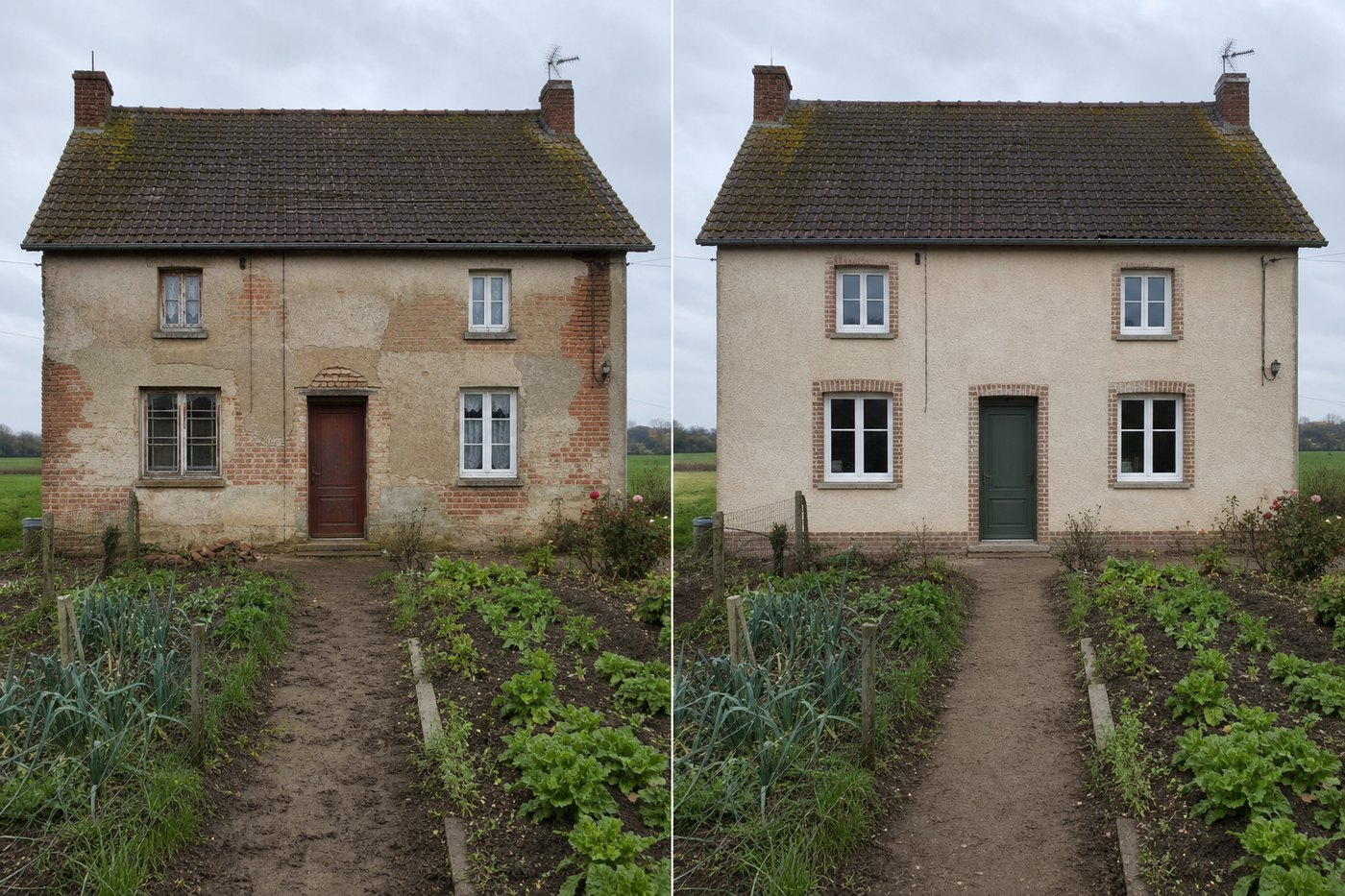
Rural houses often collect mismatched repairs over decades. One opening is shortened, another gains a different frame color, and the entrance loses its relationship to the original brick or render. A coordinated renovation restores rhythm by respecting existing proportions and using a limited palette.
The after image should still show the age of the roof, walls and landscape. Keeping those honest materials prevents the door and window upgrade from appearing artificial. Small repairs around the openings can make the facade calmer without turning the project into a full external remodel.
Exterior before and after – consistent openings make the farmhouse look maintained and intentional, not newly constructed.
2. Working Rooms Gain More Useful Daylight
A kitchen needs light on the work surface, a utility room needs safe visibility, and a dining room benefits from a clear view toward the yard. Cleaner glass, fewer unnecessary divisions and light-colored repaired reveals can distribute daylight more effectively without enlarging every opening.
Useful daylight is more important than maximum glass. Orientation, shade, privacy and heat gain still matter. The objective is to reduce dark corners and improve tasks while keeping curtains, shutters or external shading available when conditions change.
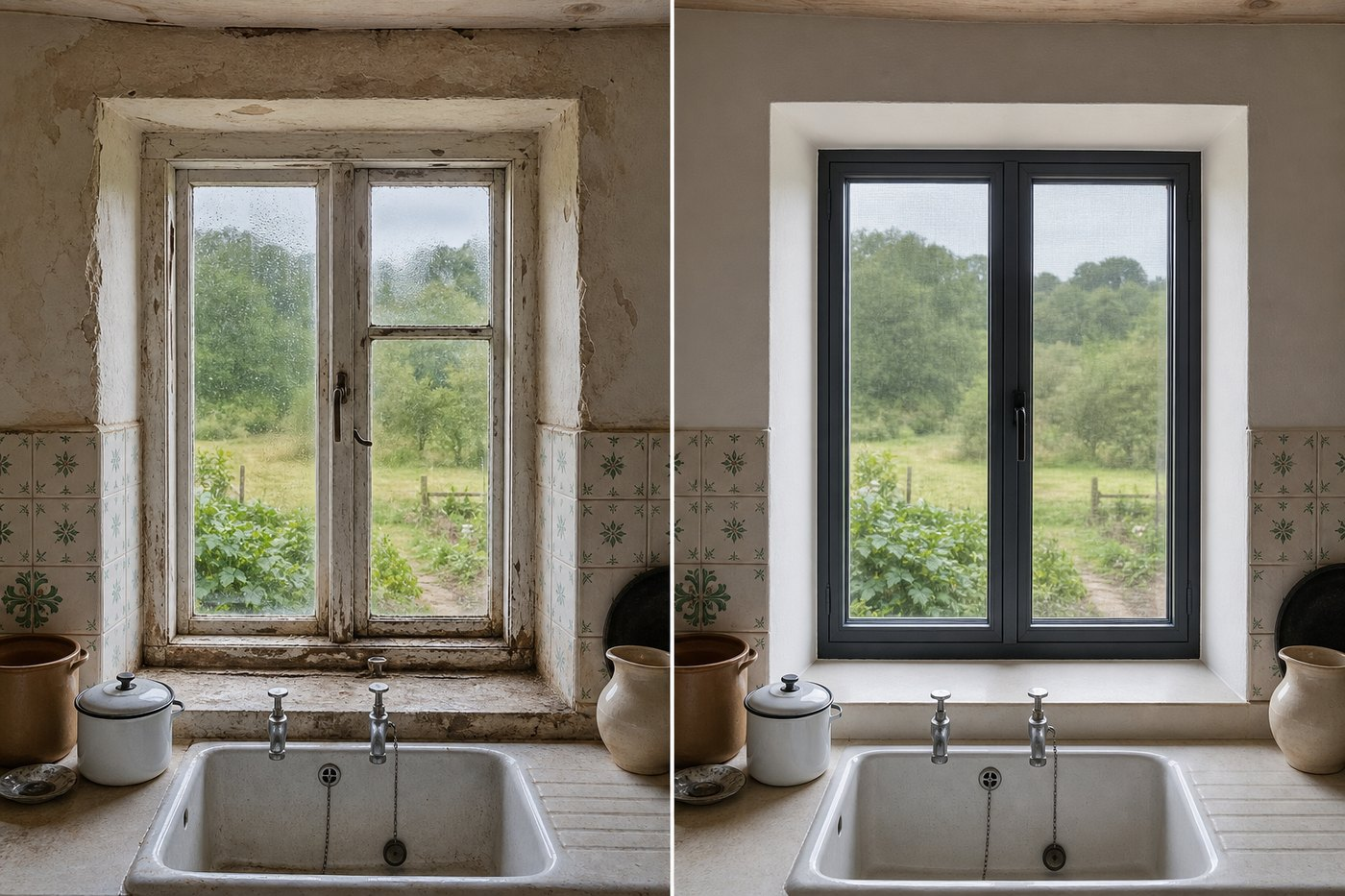
Kitchen before and after – clearer glazing and a repaired reveal improve working light while the original room remains familiar.
3. Drafts and Cold Surfaces Become Easier to Manage
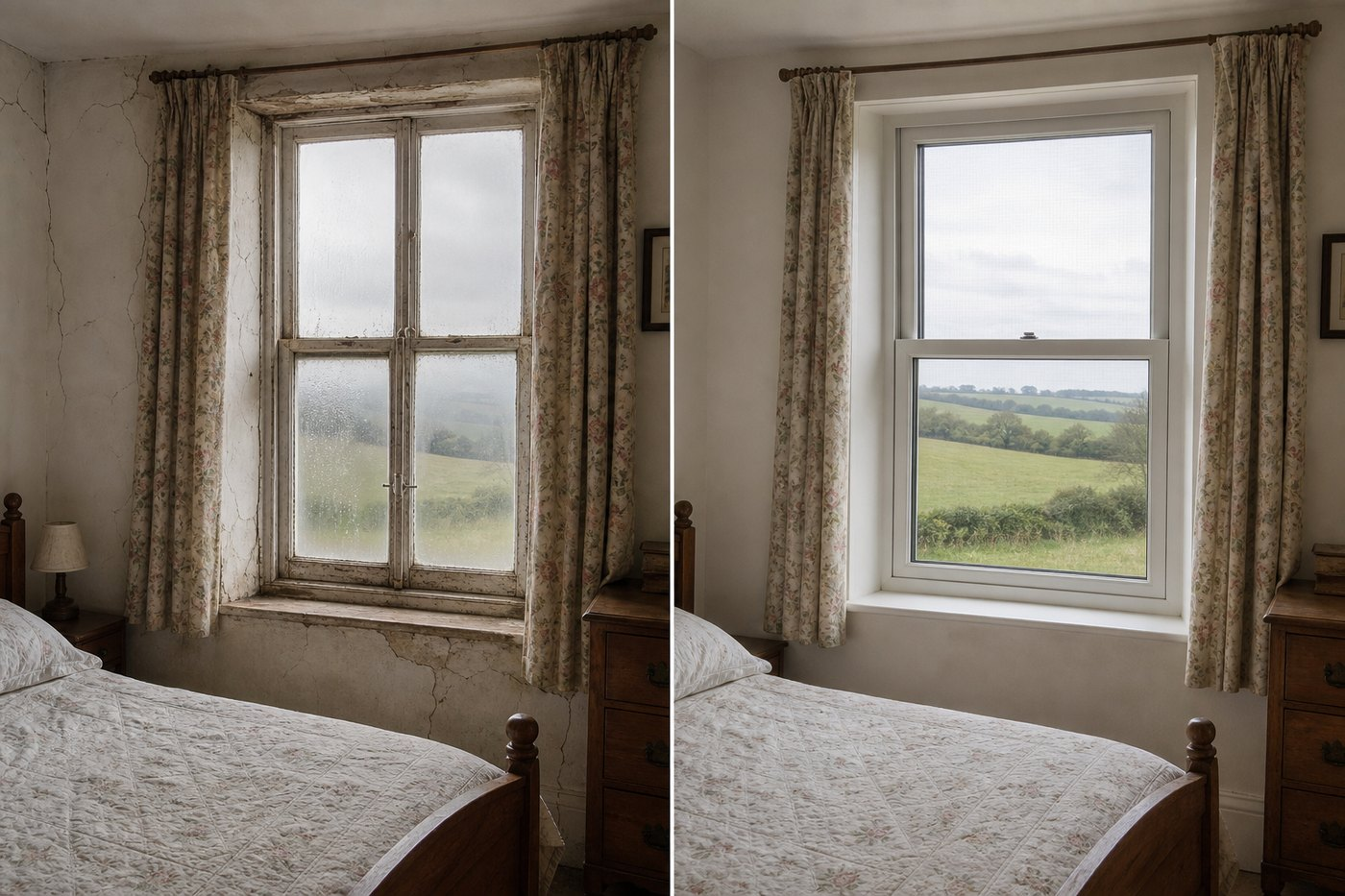
Worn seals, distorted frames and gaps around old openings can make a room feel uncomfortable even when the heating system is operating. Correctly fitted replacement units, repaired junctions and suitable glazing can reduce these weak points, although the result depends on the whole building and the exact product specification.
Ventilation must remain deliberate. Improving airtightness can change how moisture moves through an older house, so background ventilation, extract fans and occupant habits should be reviewed as part of the renovation rather than after condensation appears.
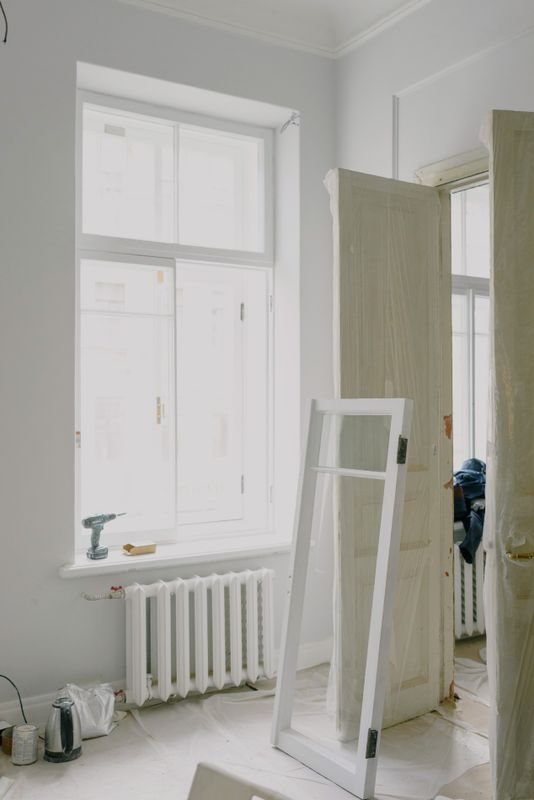
Bedroom before and after – the improvement comes from the complete fitted opening, not from the glass alone.
4. Courtyard and Garden Routes Become Clearer
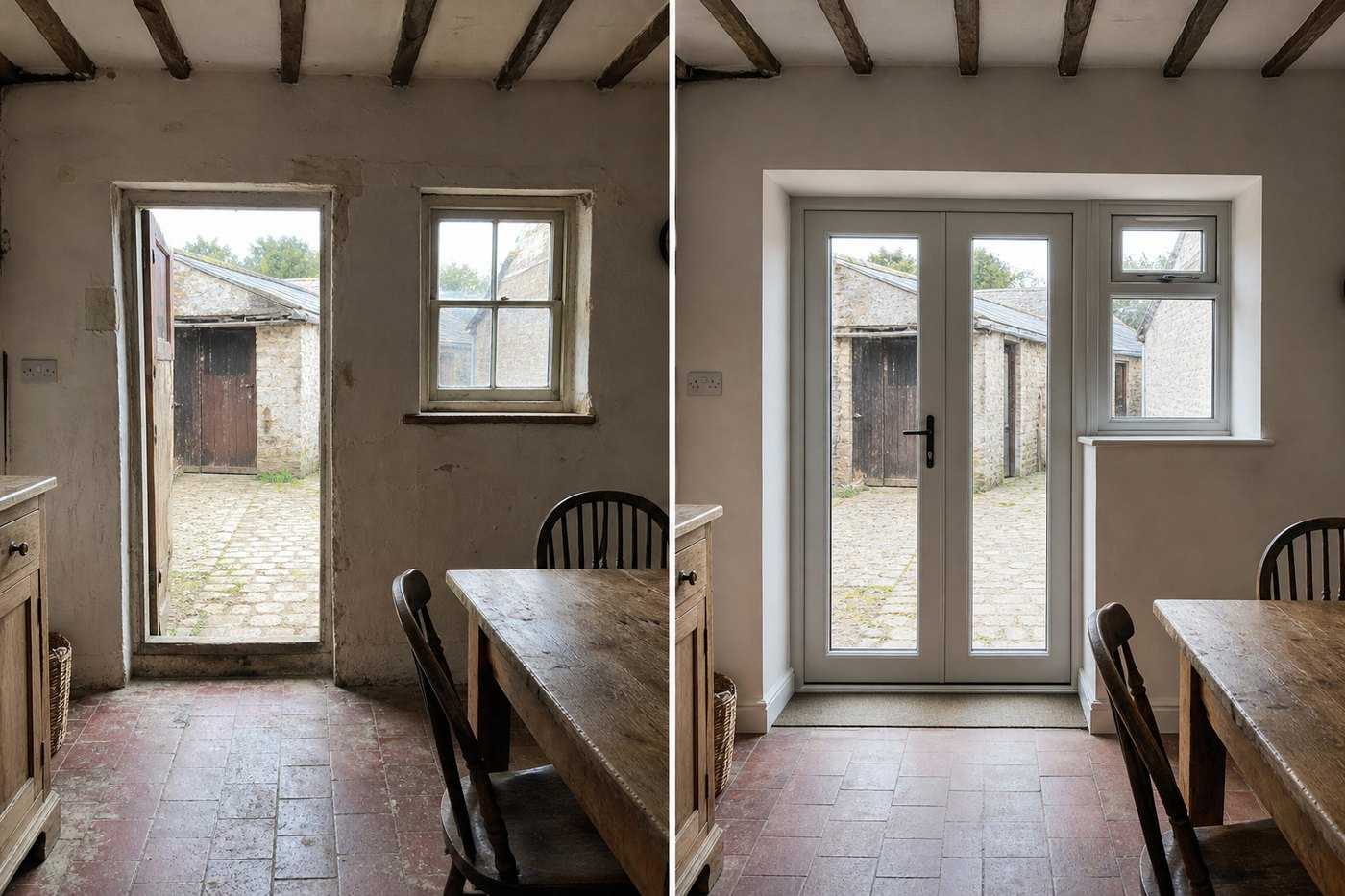
A carefully chosen glazed door can connect the family room to a courtyard, vegetable garden or outdoor table. The view helps people understand the route, while a useful clear opening makes it easier to carry food, laundry or tools between inside and outside.
The transition should still suit rural conditions. Mud, leaves and surface water need a place to go. Durable floor finishes, an external grate or protected landing and a threshold that matches the exposure can matter more than achieving the lowest possible sill.
Courtyard before and after – a modest glazed door improves light and circulation while preserving the farmhouse floor, furniture and yard.
5. Daily Cleaning and Maintenance Become More Predictable
New finishes, accessible seals and removable screens can make routine care easier. A consistent set of handles and hardware also simplifies replacement parts and household use. This is particularly valuable when dust, insects and wet footwear are part of normal rural life.
Create a simple maintenance record for each opening. Note finish type, glass, hardware, sealant, screen and cleaning guidance. Inspect exposed joints, drainage outlets and moving parts regularly, especially after severe weather.
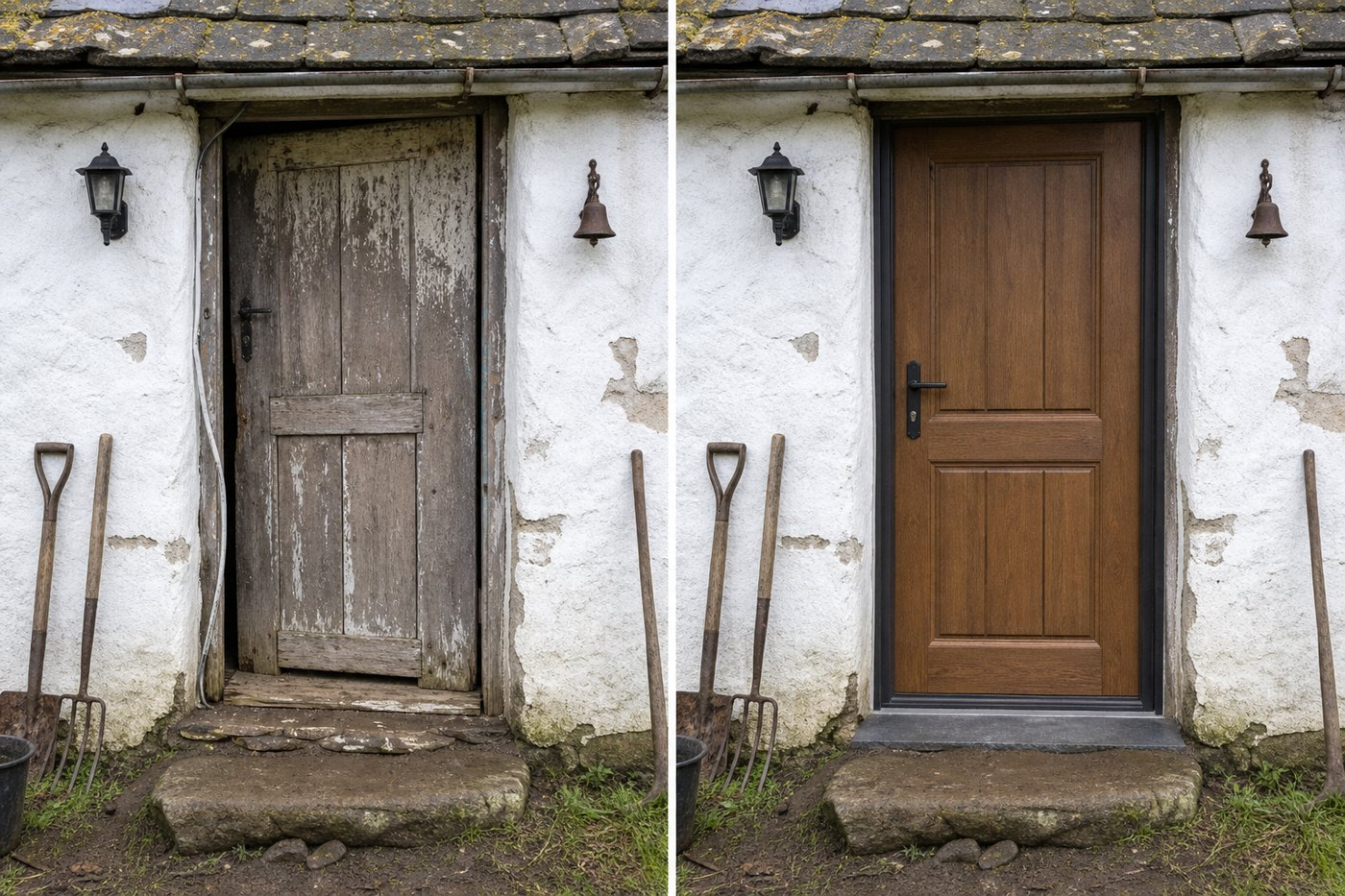
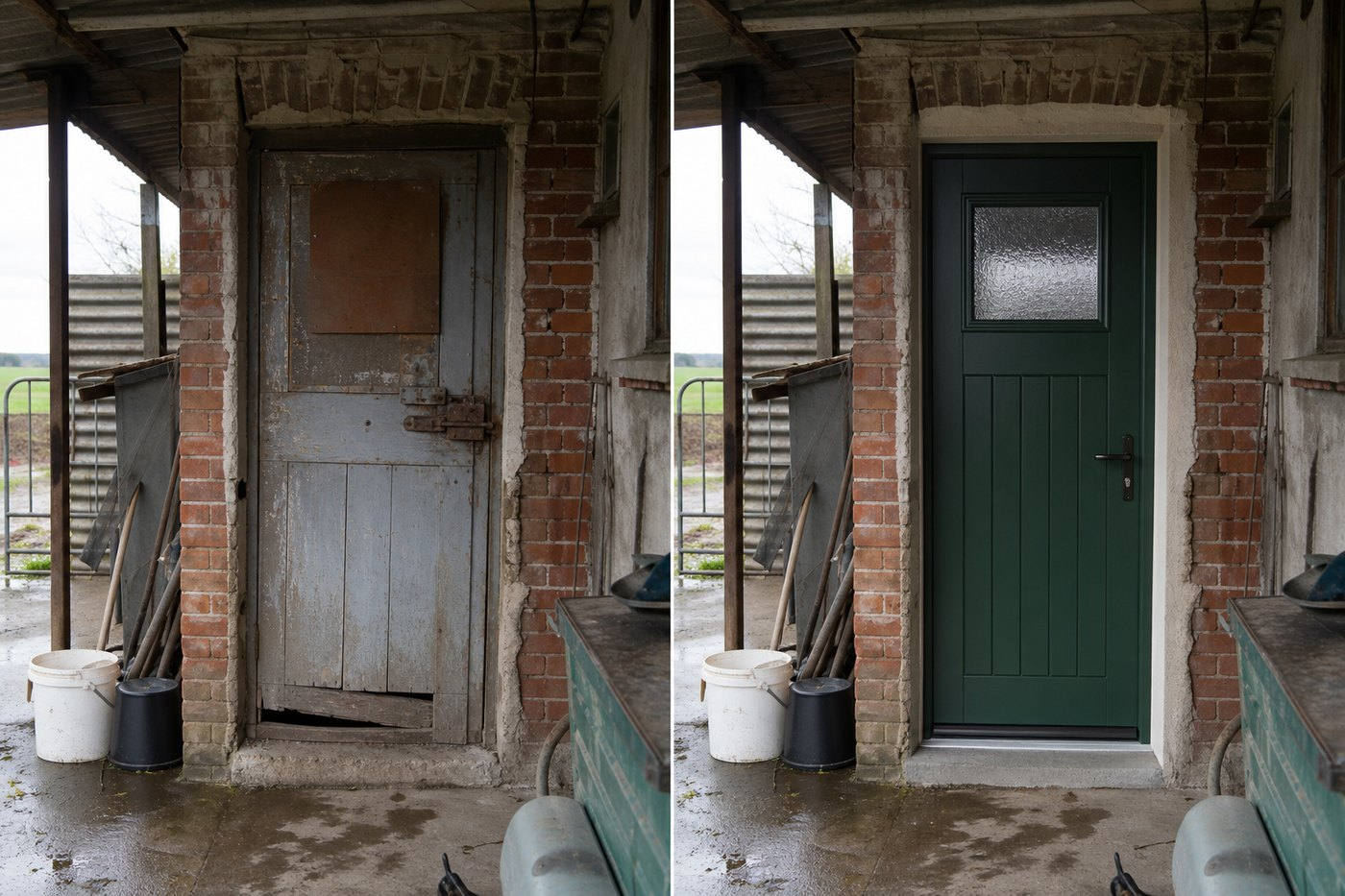
Utility entrance before and after – a straightforward, washable door can improve daily use more than a decorative but fragile design.
6. The House Feels Renewed Rather Than Replaced
The strongest effect is a balance: familiar views and materials remain, while operation, light and circulation become more dependable. The farmhouse still belongs to its landscape because the renovation works with the existing scale instead of competing with it.
Photograph each elevation and room before work begins, then repeat the same camera positions at completion. Matching views show whether the project truly improved proportions, daylight and use. They also create a practical record of where openings, thresholds and wall repairs were changed.
Entrance before and after – the new door is clearly an upgrade, yet its restrained finish still belongs to the old rural wall.