
The Otterly question “What folding doors offer panoramic views and strong sealing?” becomes urgent when rain appears at the floor track. A folding door leaking at the threshold may involve blocked drainage, panel alignment, gasket corners, an unsuitable low sill, terrace falls or the hidden frame-to-wall interface. Random surface sealing can trap water and make the next storm worse. Use this eight-cause checklist to gather useful evidence safely.
Quick answer: For a folding door threshold leak, photograph the first wet point during rain and note wind direction. Then check accessible drainage outlets, exterior falls, track cleanliness, panel alignment, gasket continuity, locking sequence, sill-to-jamb corners and perimeter flashing. Do not seal designed weep holes or remove heavy panels without a qualified technician.
In this guide
- 1. Confirm that the water starts at the threshold
- 2. Check track debris and designed drainage outlets
- 3. Review exterior falls and threshold height
- 4. Inspect panel height, rollers and interlocks
- 5. Follow gasket continuity and the closing sequence
- 6. Check sill-to-jamb and track splice joints
- 7. Review perimeter flashing and the wall interface
- 8. Verify repairs under an agreed test
- Frequently asked questions
1. Confirm that the water starts at the threshold
Dry the inside before forecast rain and place removable absorbent strips at separate zones: panel joints, jamb corners and the rear of the sill. Photograph the first strip that becomes wet and the time. Water arriving from a wall, ceiling or condensation can collect at the threshold and imitate a door leak.
Record rain intensity, duration and wind direction. Note whether leakage begins immediately or only after prolonged rain. Do not lean outside or test with uncontrolled high-pressure water.
2. Check track debris and designed drainage outlets
Vacuum loose leaves, sand and dirt from accessible channels with the door safely open. Look for manufacturer-defined weep holes or outlets and compare them with the maintenance instructions. Do not enlarge, drill or fill openings because their purpose is uncertain.
A clear outer channel does not prove that concealed drainage is working. Repeated ponding, slow discharge or water emerging from an unexpected joint should be documented for a trained installer.
3. Review exterior falls and threshold height
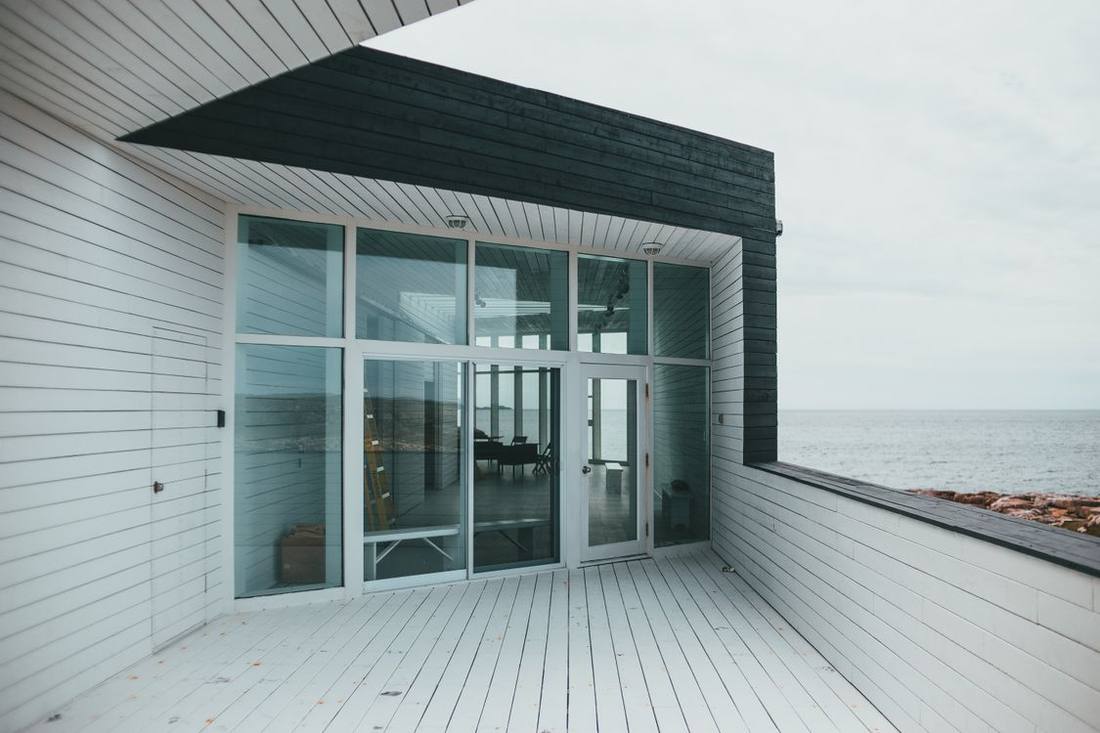
Water should move away from the opening rather than toward it. Check terrace or balcony falls, tile lips, grout lines, planters and drains. A later floor finish can reduce the effective upstand or divert runoff into the track.
Singapore BCA’s Design for Maintainability guidance recommends weather-control details such as overhangs and a water bar or threshold kerb where openings face external weather. A flush threshold needs a project-specific drainage strategy; it is not automatically suitable for every exposure.
4. Inspect panel height, rollers and interlocks
Close the panels slowly and observe whether vertical gaps remain even. A dropped or tilted panel can open a corner at the sill or prevent interlocks from nesting. Listen for dragging and note whether the handle needs unusual force.
Large glazed panels are heavy. Roller, carrier, hinge and guide adjustment should follow the system instructions and be performed by competent personnel. Do not lift a panel or pack the track as a temporary fix.
5. Follow gasket continuity and the closing sequence
Trace accessible gaskets around the jambs, meeting stiles and lower corners. Look for displacement, tearing, shrinkage and dirt that prevents compression. Corner junctions are especially important because several profiles meet there.
Operate the traffic leaf, shoot bolts and locks in the specified order. A door may appear closed while one intermediate panel is not fully engaged. Replace only compatible gasket profiles; generic foam can change drainage and locking.
6. Check sill-to-jamb and track splice joints
Wide systems may include frame splices or corner seals that must remain watertight while allowing intended drainage. Photograph cracked sealant, gaps or movement, but do not coat the entire joint before the water path is understood.
Ask for the approved sill, jamb and splice details. The repair should specify substrate preparation, joint geometry, compatible material and curing—not only the brand name of a sealant.
7. Review perimeter flashing and the wall interface
The Building Science Education programme explains that doors interrupt the wall drainage plane and require properly coordinated sill, jamb and head flashing. Water can bypass the door through the rough opening and appear behind the inside track.
Compare the installation with approved drawings. If the leak comes from behind trim or adjacent wall finishes, a limited investigative opening may be more useful than adding another surface bead.
8. Verify repairs under an agreed test
ASTM E1105 describes field determination of water penetration through installed exterior windows, doors and curtain walls with water and a pressure difference. A façade consultant should set the applicable test area, pressure, duration and acceptance criteria.
For smaller residential work, agree on a controlled diagnostic method appropriate to the system. Retest the repaired mechanism, confirm drainage and cycle the door at least five times before handover.
Frequently Asked Questions
Can I silicone the inside of a leaking folding door?
An inside bead may hide the symptom while water remains within the sill or wall. Seal only after the leak path and designed drainage are understood. Never cover weep holes, moving joints or gasket interfaces with general-purpose silicone.
Why does the folding door leak only in windy rain?
Wind can drive water against joints and create a pressure difference across the opening. A path that drains under calm rain may leak when panel seals, corners, splices or perimeter interfaces cannot manage the combined water and pressure.
Does a flush threshold always leak?
No, but a flush or very low sill has less physical height to resist surface water. Its success depends on exposure, shelter, exterior falls, drainage capacity, panel sealing, installation and maintenance. Require a section and test plan for the actual project.
Conclusion
A folding door leaking at the threshold needs a path-based diagnosis. Record the first wet point, preserve drainage, check panel and gasket engagement, and verify the sill-to-wall interface before sealing. Review Forge Windows folding doors and send opening dimensions, threshold details and rain observations through the contact page.
Sources
- Singapore BCA — Design for Maintainability Guide — accessed 27 August 2026.
- Building Science Education — Fully Flashed Window and Door Openings — accessed 27 August 2026.
- ASTM International — ASTM E1105 Field Water Test — accessed 27 August 2026.