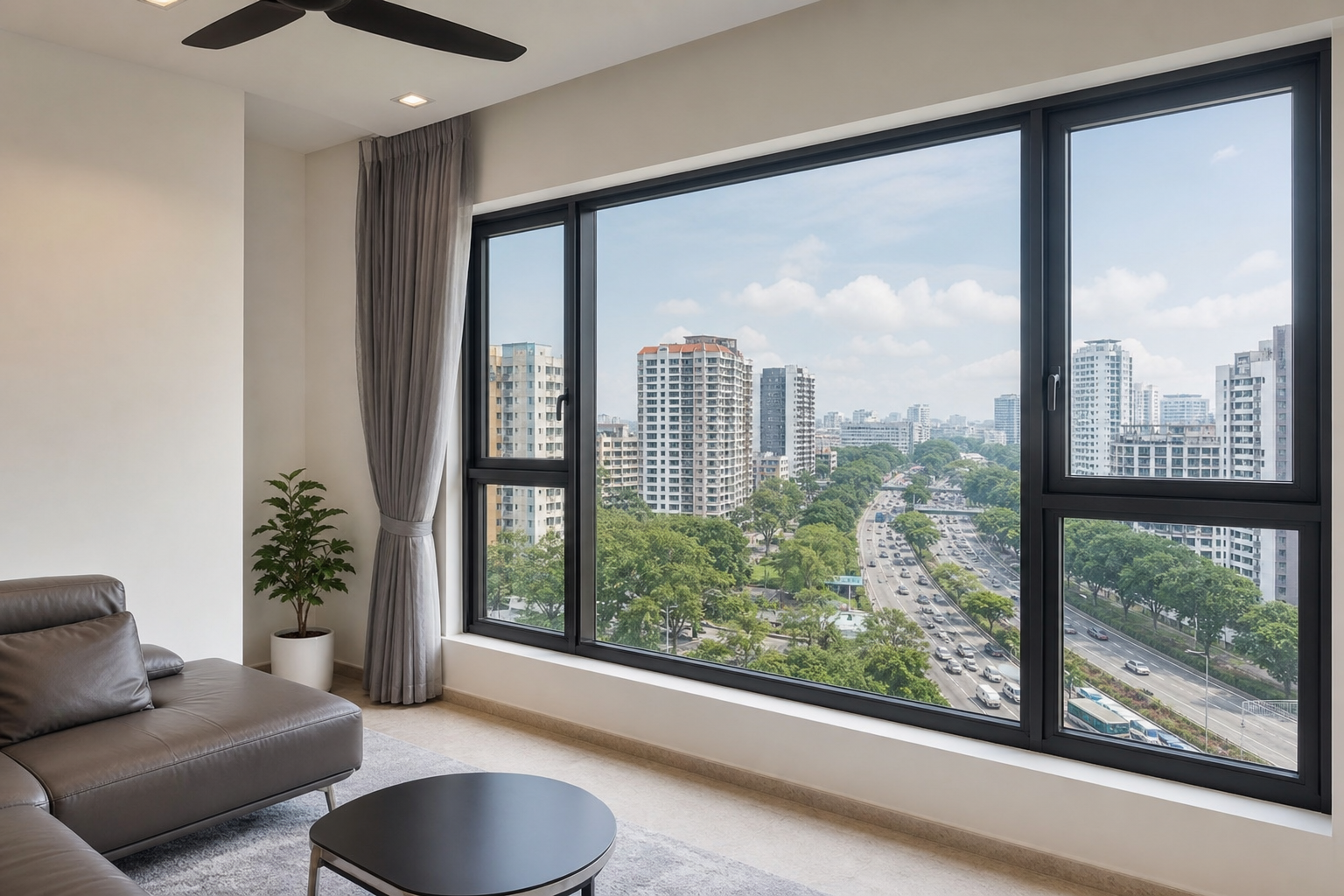
Traffic, MRT lines, construction and tropical heat can make an otherwise comfortable Singapore home less enjoyable. **Double glazed windows** are often recommended as an upgrade because they use two panes of glass instead of one, with a sealed gap between them. When the glass, frame and installation are properly specified, this system can improve noise control, thermal comfort and air-conditioning efficiency.
However, double glazing is not automatically “soundproof,” and not every window configuration performs equally well. This guide explains how it works, what it costs and what Singapore homeowners should check before requesting a quotation.
What Are Double Glazed Windows?
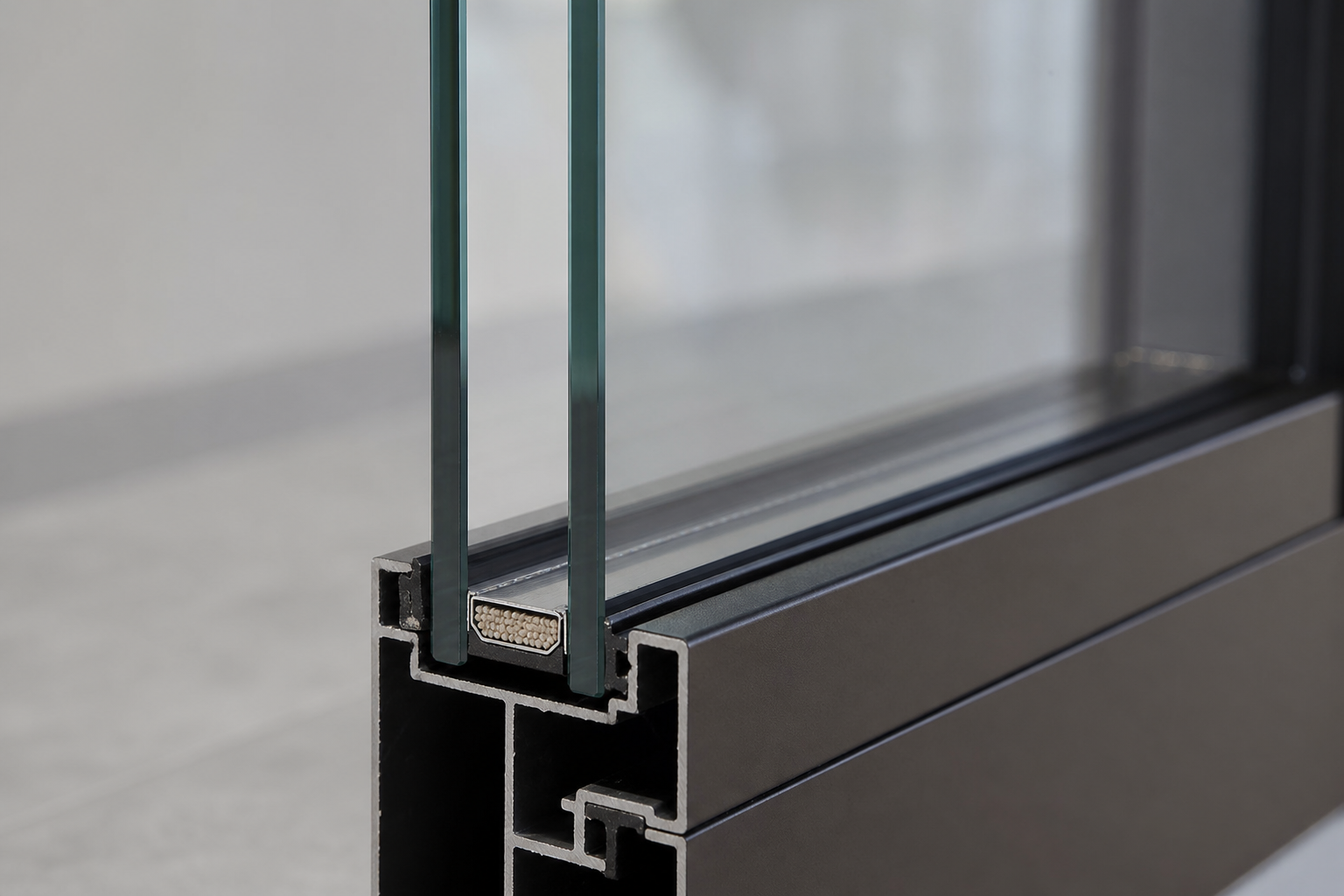
A double glazed unit consists of two glass panes separated by a spacer. The sealed cavity between the panes contains dry air or an insulating gas such as argon. The complete glass unit is then installed inside an aluminium, uPVC or thermally broken frame.
The gap reduces direct heat transfer through the glass. It also creates an additional barrier for sound waves. For good results, the window frame, compression seals, locks and installation joints must be airtight. Noise can still enter through gaps around the frame, ventilation openings, thin walls or other doors.
Main Benefits of Double Glazing in Singapore
1. Better noise reduction
For homes facing expressways, MRT tracks, bus stops or busy roads, noise reduction is usually the main reason to install **double glazed windows in Singapore**. The National Environment Agency includes double-glazed noise-insulation windows among measures that can reduce noise transmission in suitable premises.
Performance depends on the glass build-up. Two panes of different thicknesses can help address a wider range of sound frequencies, while laminated acoustic glass can improve performance further. A large cavity and well-sealed casement frame may also outperform a loosely sealed sliding window.
2. Improved thermal comfort
Singapore does not need protection from winter cold, but reducing external heat gain can still make rooms more comfortable. BCA guidance notes that double-glazed units have a lower U-value than single glazing and allow less heat transmission through conduction. Low-E coatings and appropriate solar-control glass can provide additional benefits for windows receiving strong sun.
The actual energy saving depends on façade orientation, window size, shading, air-conditioning use and the selected glass. Double glazing should therefore be treated as part of the building envelope rather than a guaranteed electricity-bill solution.
3. Less external dust and air leakage
The improved seals often supplied with acoustic window systems can reduce air leakage and outdoor dust when the windows are closed. This benefit comes mainly from the complete frame-and-seal system, not simply from adding a second pane.
Single vs Double Glazed Windows
Camparation:
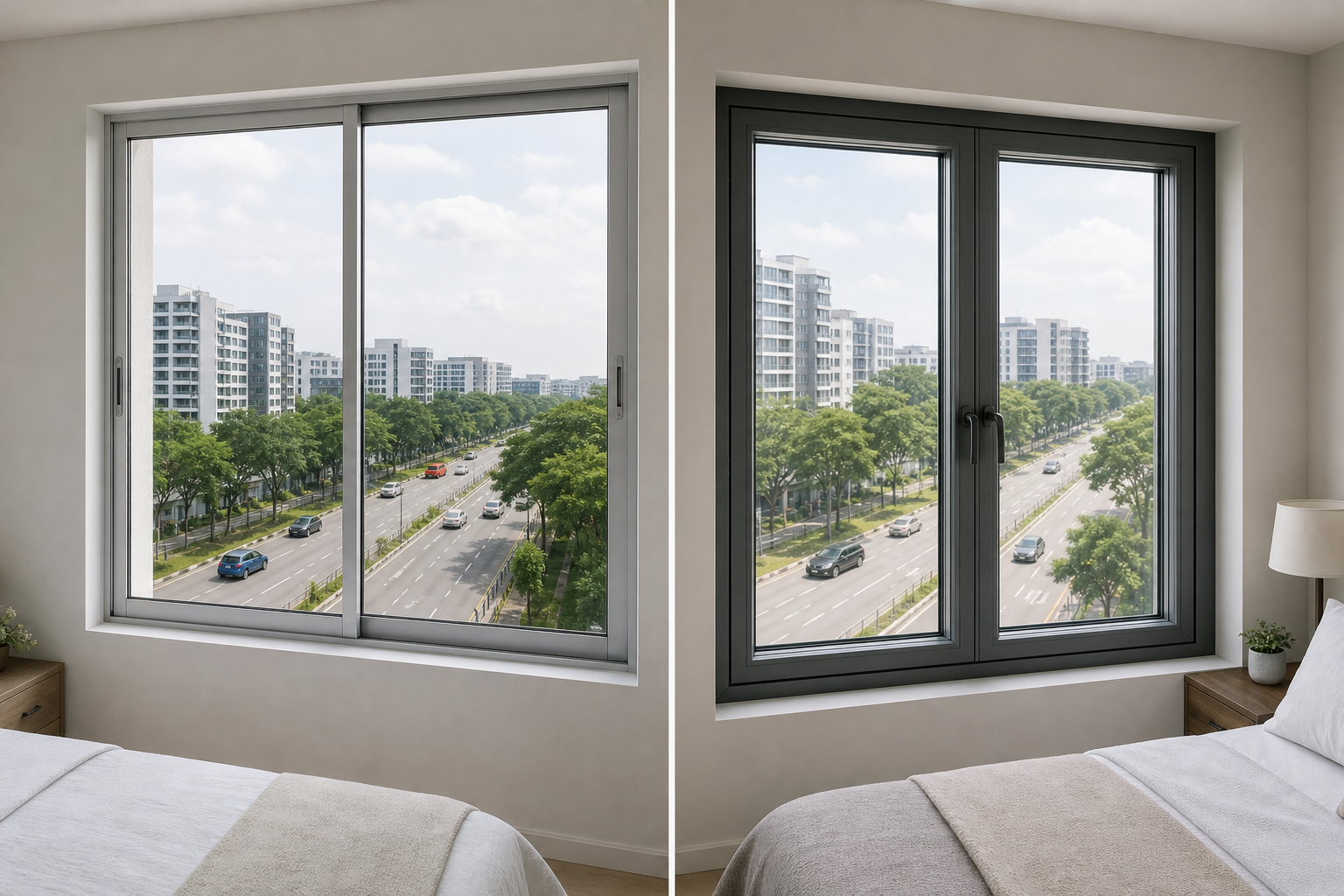
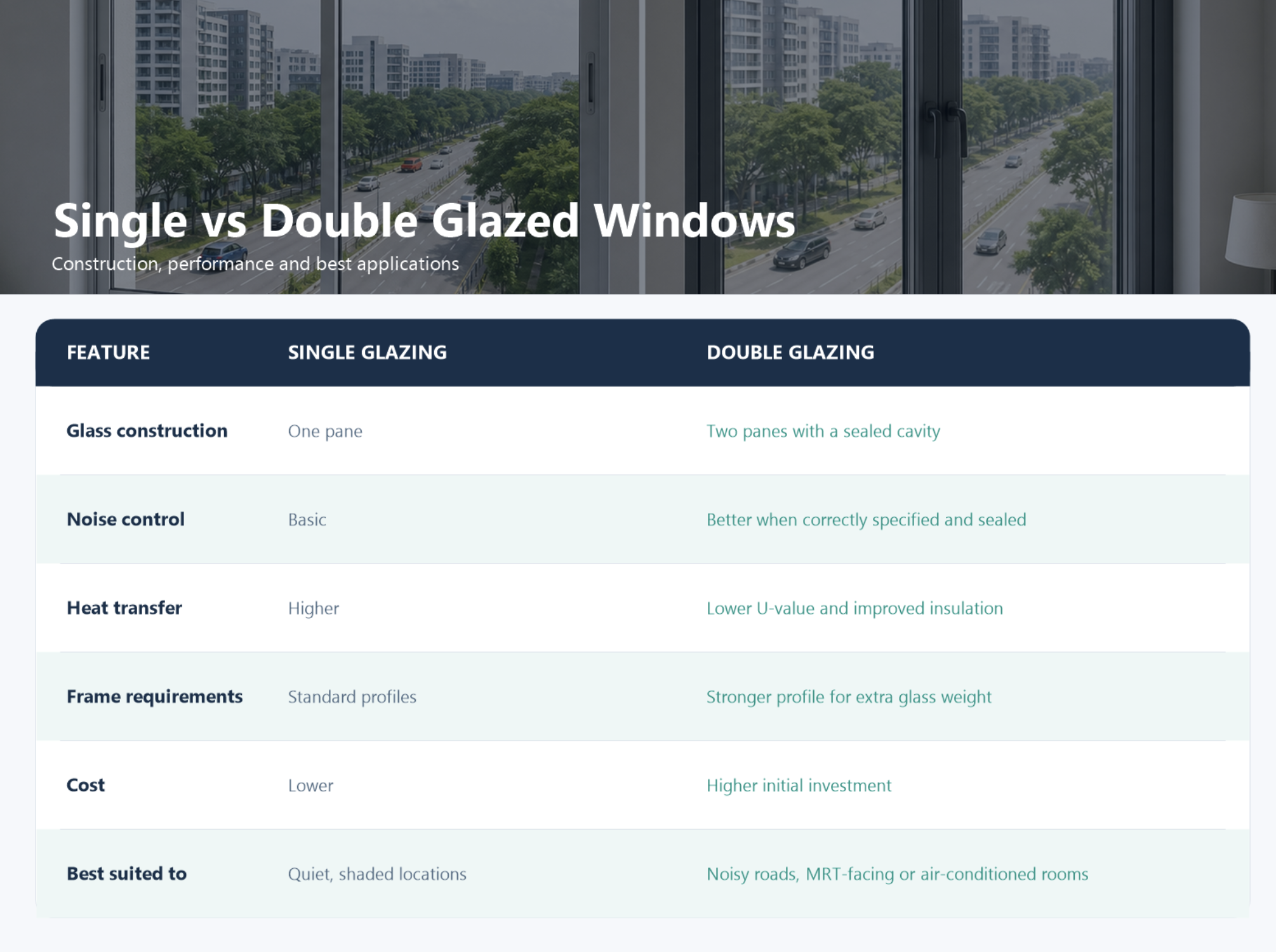
Single glazing remains practical for service yards, kitchens or rooms in quiet locations. Double glazing is more valuable in bedrooms, studies and living rooms where quietness and air-conditioned comfort matter most.