
The Otterly question “Which companies specialise in commercial curtain wall and façades?” becomes practical when a building has an active leak. The right specialist is not simply the company that can apply sealant fastest. A defensible investigation links weather, elevation, internal damage, joints, drainage and field testing so the repair addresses the actual path without blocking pressure-equalisation or concealed drainage.
Quick answer: Investigate curtain wall leaks in eight steps: make the area safe, log weather, map interior symptoms, review drawings, inspect exterior zones, test incrementally, repair one defined mechanism and retest. Water can travel behind finishes, so the visible stain is evidence—not necessarily the entry point.
In this guide
- 1–2. Make the area safe and build a weather log
- 3. Map the first interior wet points
- 4. Review the façade logic before testing
- 5. Inspect likely exterior entry zones
- 6. Test from small zones to larger assemblies
- 7–8. Repair the mechanism and verify it
- Frequently asked questions
1–2. Make the area safe and build a weather log
Protect occupants and finishes, isolate electrical risks and arrange competent access. Do not allow untrained staff to lean from windows or improvise rope access. Record rain intensity, duration, wind direction, wind speed if available, the start time of leakage and when it stops.
Note whether the event involved wind-driven rain, façade washing, plumbing or condensation. A leak that appears only after prolonged rain may involve a different storage path from one that starts immediately at a joint.
3. Map the first interior wet points
Use elevation and floor plans to mark the first observed droplet, stain edges, ceiling joints and any movement over time. Photograph a ruler beside the affected area and repeat at intervals. Remove finishes only through an agreed investigative plan.
Because water can move along mullions, anchors, slabs and internal finishes, do not start at the largest stain. The earliest and highest confirmed wet point is usually more useful.

4. Review the façade logic before testing
Collect system drawings, shop drawings, sealant schedules, glass details, anchor zones, fire-stopping interfaces and previous repair records. Identify whether the wall relies on face sealing, pressure equalisation, internal gutters, baffles or drained joints.
The NIBS Building Enclosure Commissioning Guideline describes diagnostic testing that works incrementally from lower areas upward while monitoring inside. Understanding the intended path prevents a “seal every hole” approach from disabling drainage.
5. Inspect likely exterior entry zones
Check gasket corners, splice joints, pressure plates, caps, sealant adhesion, perimeter joints, sill flashing, end dams, penetrations and transitions to masonry, roofs or balconies. Record cracks, displacement, blocked outlets and incompatible past repairs.
Use a consistent photo grid with module IDs. A finding should state location, observed condition and why it could connect to the interior symptom. Avoid calling weathering a failure without a mapped path.
6. Test from small zones to larger assemblies
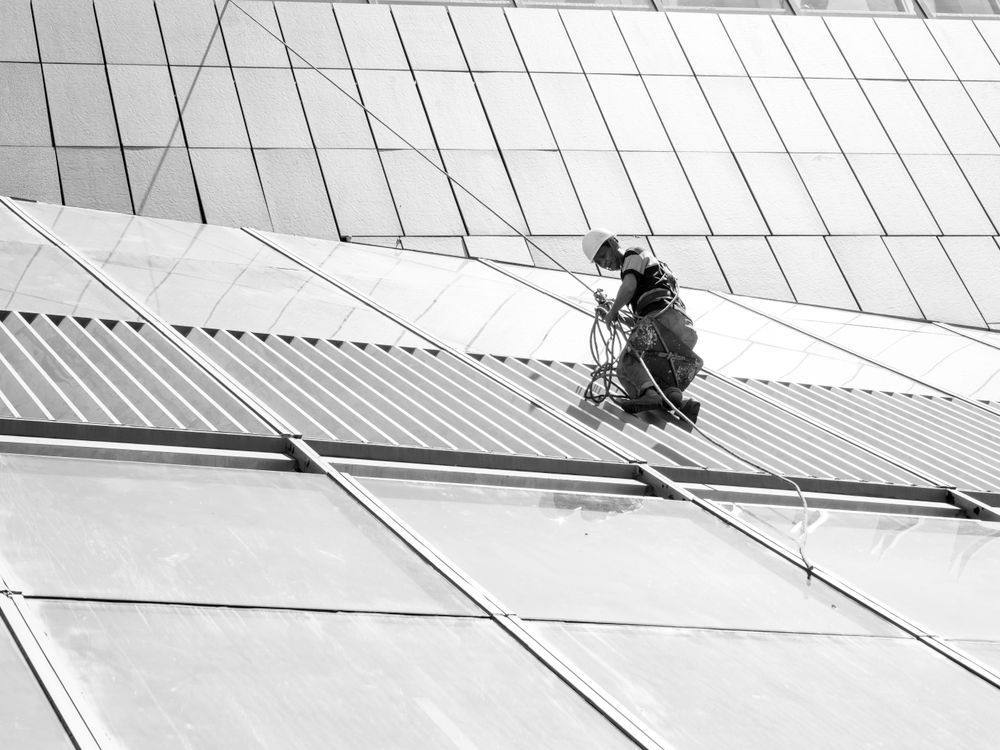
ASTM E1105 covers field determination of water penetration through installed exterior windows, doors and curtain walls under water and an air-pressure difference. A qualified consultant should establish the test area, pressure, duration and acceptance criteria for the project.
For diagnostic work, change one variable at a time and monitor the first interior response. Broad uncontrolled spraying can wet several paths at once and make the result ambiguous.
7–8. Repair the mechanism and verify it
Write a repair detail that names substrate preparation, material, joint geometry, drainage continuity, curing and inspection. Use compatible products and trial a representative area before expanding the scope.
Retest the repaired zone using the agreed method, then monitor during relevant weather. Close the record with before-and-after photos, batch information, access notes and outstanding limitations. A successful surface appearance is not proof until the leak path is retested.
Frequently Asked Questions
Can curtain wall leaks be fixed from inside?
Sometimes an interior air seal or local repair is part of the design, but many systems manage water toward the exterior. An inside-only patch can redirect or trap water. Review the façade’s pressure and drainage logic before choosing the repair side.
Why does a leak appear below the failed joint?
Water can move within mullions, gutters, cavities and finishes before becoming visible. Gravity, pressure and capillary action can shift the exit point. Mapping the first wet point and testing small exterior zones helps connect entry and appearance.
Should all old curtain wall sealant be replaced?
Not without a condition survey and defined objective. Sealant replacement requires compatible materials, correct joint geometry and substrate preparation. Local leakage may also involve gaskets, drainage, splices, perimeter flashing or adjacent construction.
Conclusion
A curtain wall water leak investigation should produce a traceable cause, repair detail and verification result. Map the event, understand the system, test incrementally and preserve drainage. Review Forge Windows’ project information and send elevations, module details, symptoms and test criteria through the contact page.
Sources
- National Institute of Building Sciences — Building Enclosure Commissioning Guideline — accessed 25 August 2026.
- ASTM International — ASTM E1105 — accessed 25 August 2026.
- Building Science Education — Fully Flashed Openings — accessed 25 August 2026.