Quick answer: Treat cracked window glass as a safety issue. Keep people and pets away, close the window only if it can be done without touching or stressing the pane, and do not press, drill or peel material from the glass. Photograph the crack from a safe position and contact a qualified glazing professional. The correct solution may be glass-only replacement, a new insulated glass unit or replacement of the sash or complete window when the frame or installation contributed to the failure.
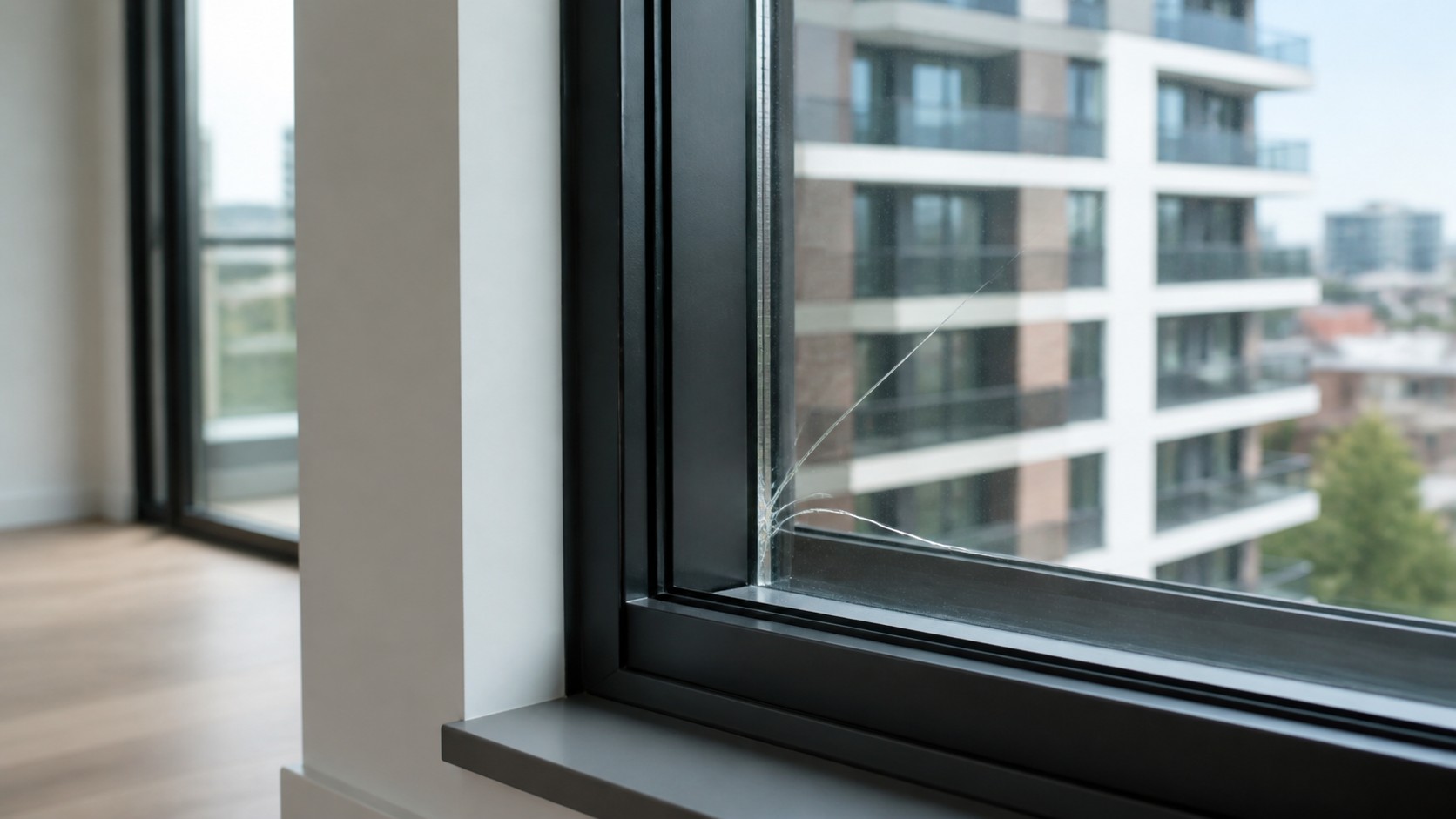
A crack can grow as the glass moves with temperature, wind and normal operation. It can also reveal impact, edge damage, frame distortion or uneven heating. This guide explains immediate safety steps, common crack patterns and how to decide whether a window glass repair should involve only the pane or the wider window assembly.
Table of contents
- What to do immediately
- What the crack pattern may indicate
- Repair or replace cracked window glass
- Information for an accurate quotation
- Frequently asked questions
Cracked window glass: immediate safety steps
- Keep people, children and pets away from both sides of the opening.
- Do not touch the crack or test whether fragments are loose.
- Avoid opening, closing or locking the sash if operation loads the pane.
- Move furniture and valuables away from the possible fall zone.
- Photograph the full pane, crack pattern and frame from a safe position.
- Note when the crack appeared and whether there was impact, heat, renovation work or severe weather.
- Contact a qualified glazier or window contractor for containment and replacement.
Urgent response: isolate the area and request emergency help if glass is bowing, shedding pieces, above a walkway, part of a door or barrier, difficult to reach, or exposed to people outside the building.
Andersen’s window and door safety guidance warns that injuries can occur when broken glass is mishandled and recommends gloves plus manufacturer-specific instructions for repairs. For customers without appropriate equipment and training, the safest step is to avoid handling the pane and let a professional stabilise it.
What caused the cracked window glass?
A photograph can suggest a starting point, but it may not prove the cause. A conclusive investigation often depends on the fracture origin at the glass edge, installation details and site history. Keep the pieces and records available for the glazier, installer or manufacturer whenever warranty, repeat breakage or a facade-safety issue may be involved.
1. Impact crack
An impact often produces a visible contact point with cracks radiating outward. The object may be obvious, such as a stone, tool or moving furniture, but small edge impacts can be harder to see. Do not assume a small centre mark is harmless; the remaining pane may have unpredictable strength.
2. Thermal stress crack
Thermal stress develops when one area of the glass becomes hotter than another and expands differently. Pilkington explains that excessive temperature difference can crack the pane, while Pella describes thermal stress cracks as commonly beginning at an edge. Partial shade, dark blinds close to the glass, applied film, nearby heat sources and uneven solar exposure may change temperature distribution.
A crack that appeared without a known impact still needs inspection. Do not add film or local heat in an attempt to hold or dry the pane; both can change the way heat is absorbed.
3. Edge damage
Glass edges are concealed by glazing beads or gaskets, yet their condition matters. A chip from fabrication, handling or installation can reduce the margin against later stress. Pilkington’s glazing guidance emphasises clean, undamaged edges, correct support and avoiding contact between glass and metal.
4. Frame distortion or hard contact
A frame that is twisted, bowed or no longer square can load the glass unevenly. Protruding fasteners, missing setting blocks, inadequate edge clearance or hard contact can also concentrate stress. Look for difficult locking, unequal perimeter gaps, local pressure marks or previous repairs, but do not dismantle the glazing pocket yourself.
5. Wind or pressure-related loading
Glass must be selected and supported for the expected panel size, building height and exposure. Wind pressure acts on the complete glazed assembly, not the pane in isolation. If the break followed severe weather, or similar panes have cracked, ask for review of glass thickness, heat treatment, support, frame stiffness and anchorage.
6. Damage during nearby work
Grinding, welding, drilling, moving scaffolds and handling construction materials can damage glass surfaces or edges. Record recent renovation and facade work. Tiny hot particles can pit the surface, while accidental knocks may start damage that later spreads.
Can a cracked window be taped temporarily?
Manufacturer service instructions sometimes specify tape as part of a controlled sash-removal procedure performed with gloves, eye protection and proper support. That does not make taping a universal household repair. Applying pressure, reaching across broken glass or placing adhesive on coated or filmed glass may increase risk or complicate evidence and replacement.
If temporary containment is necessary, obtain instructions from the glazing professional responsible for the repair. Do not use cardboard, screws or rigid boards in a way that loads the cracked pane or obstructs a safe exit.
Glass-only replacement or a complete new window?
Option 1: Replace a single pane or sealed glass unit
Glass-only replacement may be suitable when the frame, sash, drainage, gaskets and hardware remain serviceable. For double glazing, the complete insulated glass unit is normally replaced rather than one pane being repaired in place. The new glass must match the required thickness, safety classification, coatings, make-up, size and edge clearances.
Option 2: Replace the sash
A replacement sash may be appropriate when the surrounding outer frame is sound but the operable leaf, glazing pocket or sash hardware is damaged. Confirm compatibility with the existing frame and check that the root cause was not frame distortion or installation movement.
Option 3: Replace the complete window
Complete replacement becomes more likely when the frame is corroded or distorted, fixings are uncertain, drainage is defective, the sash no longer aligns, several components are failing or the current design does not meet project needs. Review both casement-window and sliding-window options as complete systems rather than treating glass as a stand-alone product.
What to send for an accurate glass replacement quote
- Wide and close photographs from both sides, taken without touching the pane
- Approximate visible glass and overall frame dimensions
- Window type, opening direction and floor or facade location
- Glass markings in a corner, if readable from a safe position
- Whether the unit is single glazed, laminated, toughened or insulated
- Tint, coating, pattern or privacy requirements
- Known impact, recent works, heat source or weather event
- Any difficult operation, leakage, loose hardware or frame movement
The final specification should be based on verified measurements and applicable requirements, not only a photograph. Glass in doors, beside doors, near floor level, in barriers or other hazardous locations may require a particular safety-glazing solution.
How to reduce repeat window glass cracking
- Use the specified glass type and thickness for panel size and exposure.
- Protect edges during transport, fabrication and installation.
- Provide correct setting blocks, edge clearances and compatible gaskets.
- Keep glass isolated from metal fasteners and hard frame contact.
- Correct distorted frames and locking problems before reglazing.
- Assess films, blinds, shading and nearby heat sources for thermal effects.
- Keep drainage and ventilation features functioning as designed.
Frequently asked questions
Can cracked window glass be repaired without replacement?
Small damage to some automotive glass may be treated with resin, but building window glass is a different application. A crack through an architectural pane generally means the pane or sealed glass unit needs replacement. A professional should also check why it cracked before installing the new glass.
Will a small window crack spread?
It can. Temperature change, wind pressure, sash operation and existing edge stress may extend a crack. The rate is unpredictable, so size alone is not a reliable safety measure. Isolate the area, avoid loading the pane and arrange assessment instead of waiting for a visible change.
Why did my window crack with no impact?
Possible causes include thermal stress, damaged edges, hard contact with the frame, installation pressure, frame movement or other loading. A crack starting at an edge can be consistent with thermal or edge-related failure, but the pattern alone may not prove the cause. Preserve photos and site history.
Does toughened glass never crack?
No. Toughened glass has greater resistance to mechanical and thermal stress than ordinary annealed glass, but it can still break under severe impact, edge damage or extreme loads. Its different breakage pattern is intended to reduce injury risk; it does not make correct selection, handling and installation optional.
Make the opening safe, then diagnose the cause
With cracked window glass, the first priority is controlling access and avoiding further load. The next step is determining whether impact, thermal stress, edge damage, support or frame movement contributed. Send safe photographs, approximate dimensions and the opening details through Forge Windows’ contact page to discuss glass-only, sash or complete-window replacement.
Sources: Andersen Windows, Window and Door Safety; Pella, Why Do Windows Crack?; Pilkington, Glass and Thermal Stress.