Quick answer: A casement window that will not close may have debris in the frame, a displaced gasket, loose locking hardware, a bent friction stay, sash misalignment, frame movement or damaged fasteners. Do not force the handle. Stop using the window if the sash feels loose, drops, twists or has corroded safety components.
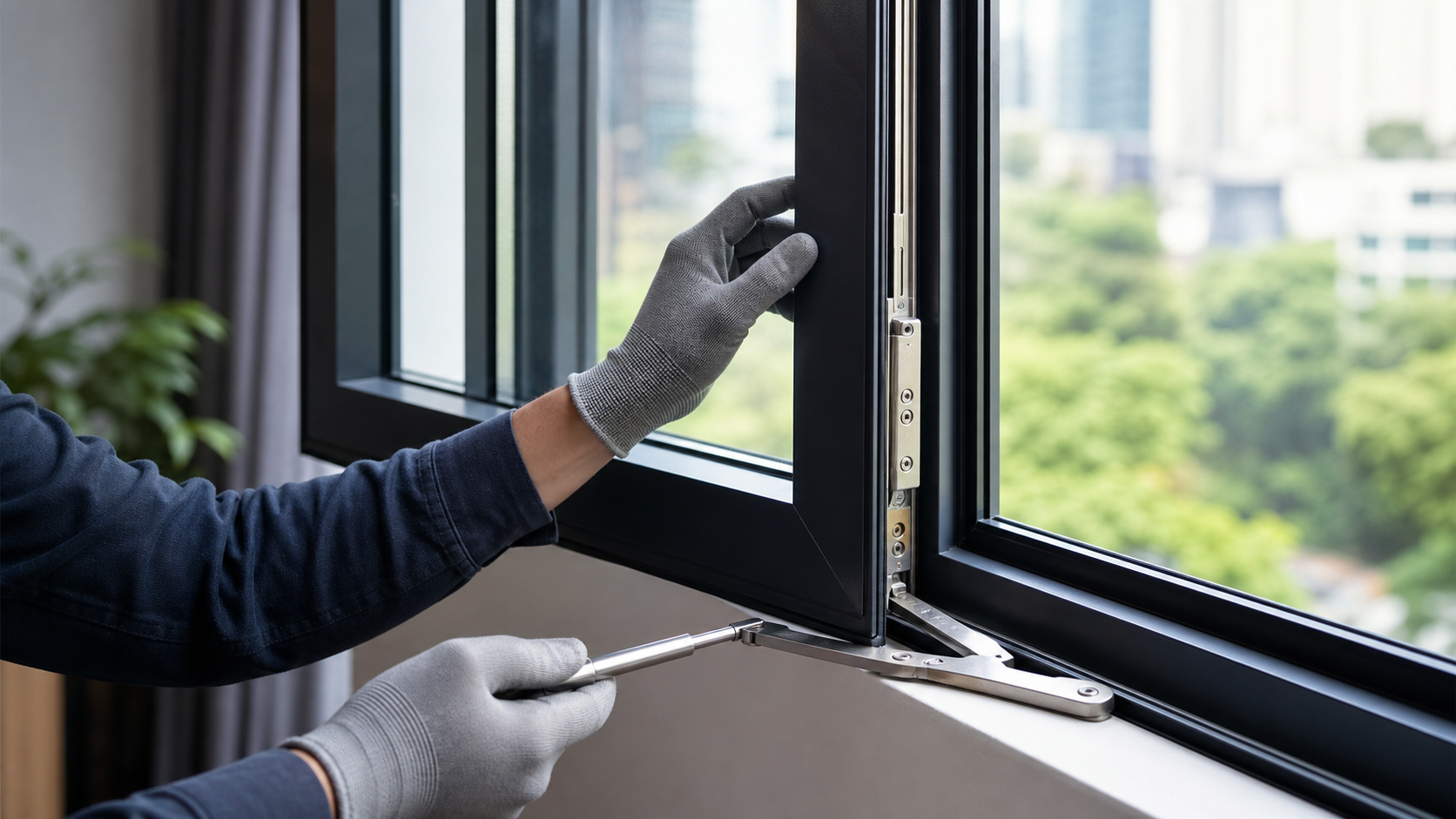
A stiff casement window is more than an inconvenience. Forcing it can damage locks and hinges, reduce weather sealing or worsen an unsafe hardware condition. This guide explains how to diagnose a casement window that won’t close and when to engage an approved window contractor in Singapore.
Table of contents
- Safe first checks
- Seven causes and fixes
- Maintenance routine
- Repair or replacement
- Frequently asked questions
What to check before forcing a casement window closed
Move the sash slowly and note exactly where resistance begins. Check the head, jambs and sill for loose objects or folded seals. Observe whether the gap around the sash is even and whether the handle moves normally when the sash is slightly away from the frame.
Do not lean outside, detach stays or remove fasteners. Singapore’s Building and Construction Authority (BCA) says windows need regular checks and maintenance because weather exposure and wear can cause deterioration. BCA’s casement-window checklist specifically highlights broken or corroded rivets, loose or rusty screws, and bent or loose friction stays.
Seven reasons a casement window won’t close
1. Dirt or an object is blocking the frame
Dust, paint flakes, insects or a small object can prevent full closure. Clean accessible surfaces with a soft brush and cloth, then test gently. Avoid sharp tools that can damage finishes, seals or drainage paths, and never reach outside a high-rise opening.
2. A gasket has folded, swollen or pulled out
A displaced weather seal can catch between the sash and frame. If it is undamaged and the correct refitting method is clear, press it back into its designed groove without stretching it. Torn, hardened or shrunken seals should be replaced with the correct profile rather than a visually similar substitute.
3. The locking points and keeps are misaligned
If the sash reaches the frame but the handle will not complete its movement, a locking point may be striking its keeper. Loose screws, sash settlement or previous adjustment can create the mismatch. A technician should align the sash and locking system together so that secure engagement does not rely on excessive handle force.
4. The friction stay is bent, loose or contaminated
Friction stays guide and support many casement sashes. A bent arm, loose fixing or damaged sliding shoe can make the sash bind or drop. BCA tells homeowners to check whether friction stays are bent or loose; replacement and regulated window work should be handled by appropriately qualified personnel.
5. The sash has dropped out of square
A dropped sash may rub the sill or one jamb and show an uneven perimeter gap. The cause can be hardware wear, loose fixings, glass weight or frame distortion. Do not solve the symptom by filing the frame; restore support, alignment, locking and sealing as one coordinated repair.
6. The frame has moved or become distorted
Building movement, poor installation support or impact can change the opening geometry. Clues include recurring misalignment, cracked perimeter finishes and several hardware points binding at once. The contractor should measure the opening and determine whether local adjustment, frame repair or replacement is appropriate.
7. Fasteners or safety components are corroded or damaged
Rusty screws, broken rivets or loose attachments require more than lubrication. In Singapore, BCA provides specific requirements and resources for window safety and retrofitting. Stop operating a visibly unstable sash and arrange inspection by an approved window contractor.
Safety rule: If the sash changes height, feels loose or separates from its normal path, secure the area and stop using the window.
A practical casement window maintenance routine
- Check fasteners and visible hardware for rust, looseness or damage.
- Inspect friction stays without leaning outside.
- Clean dirt from movable and contacting parts.
- Check gaskets for gaps, folds or hardening.
- Open and close slowly; listen for scraping or clicking.
- Confirm the handle locks without being forced.
- Dry the sill and keep drainage routes unobstructed.
- Record defects and arrange qualified repair promptly.
BCA promotes a “check, clean, change” approach and previously advised homeowners to inspect windows every six months. Follow current BCA guidance, the window manufacturer’s instructions and any building-management rules that apply to your property.
Should you lubricate a stiff casement window?
Use only a lubricant approved for the specific hardware and only at the specified points. Spraying oil over locks, gaskets and drainage paths can collect dirt or affect materials. Lubrication cannot correct bent stays, loose fasteners, dropped sashes or frame distortion, so diagnose the mechanical cause first.
When is replacement better than repair?
Repair may be suitable when the frame and sash are sound and compatible hardware, seals or locks remain available. Replacement may be more reliable when the frame is distorted, corrosion or damage is widespread, repeated repairs fail, safety compliance is uncertain or the existing window cannot meet the project’s weather, acoustic or thermal requirements.
When planning a new system, review Forge Windows’ aluminium casement windows and compare them with sliding windows if projecting clearance is limited. Include opening sizes, handing, wind exposure, glass and hardware requirements in the enquiry.
Frequently asked questions
Why does my casement window close but not lock?
The sash may not be fully seated, or its locking points may no longer align with the keeps. A displaced gasket can create the same symptom. Do not force the handle. Have the sash support, alignment, seals, locks and frame geometry checked as one system.
Can I adjust a dropped casement window myself?
Large or high-rise casement sashes can create a serious falling risk, and adjustment may involve load-bearing hardware or regulated work. Limit DIY action to safe observation and cleaning of accessible surfaces. Engage an approved window contractor when the sash drops, twists, feels loose or has damaged stays or fasteners.
Why does the window only stick during wet weather?
Moisture may affect accumulated dirt, seals, finishes or surrounding building materials, while water in hardware can reveal drainage or corrosion problems. Record the location and weather conditions. Ask the contractor to inspect both operation and water management instead of adjusting the lock alone.
How do I find an approved window contractor in Singapore?
Use the current contractor and window-safety resources published by the Building and Construction Authority. Confirm that the company and trained installer are authorised for the work being proposed. Ask for a clear defect diagnosis, repair scope, replacement parts and an operation-and-safety check after completion.
Restore safe operation—not just handle movement
A casement window that won’t close needs careful diagnosis. Clean accessible obstructions, inspect seals and observe where the sash binds, but leave stays, fasteners, alignment and regulated repairs to qualified contractors. For replacement projects, send Forge Windows your schedule and requirements through the contact page.
Sources: BCA, Windows Safety; BCA, What to Look Out for When Checking Windows; BCA, Good Industry Practices: Aluminium Window.