Aluminium window corrosion may appear as white oxidation, bubbling or lifting coating, pitting, staining, or corrosion on attached fasteners. Light surface residue can sometimes be cleaned, but deep pitting, loose hardware, distorted sections or corrosion at structural connections needs professional assessment. The safe repair depends on whether the aluminium, the finish or a different metal component is deteriorating.
Aluminium is widely used for windows because it is light and practical, but it is not maintenance-free. Moisture, salt deposits, trapped dirt, damaged coatings and contact between dissimilar metals can create different forms of deterioration. In coastal and humid environments, early identification is especially useful because a small finish defect and a safety-critical fastener problem require very different responses.
What does aluminium window corrosion look like?
Start by cleaning a small, inconspicuous patch gently. Dirt and mineral deposits can mimic corrosion. After the surface is dry, look for:
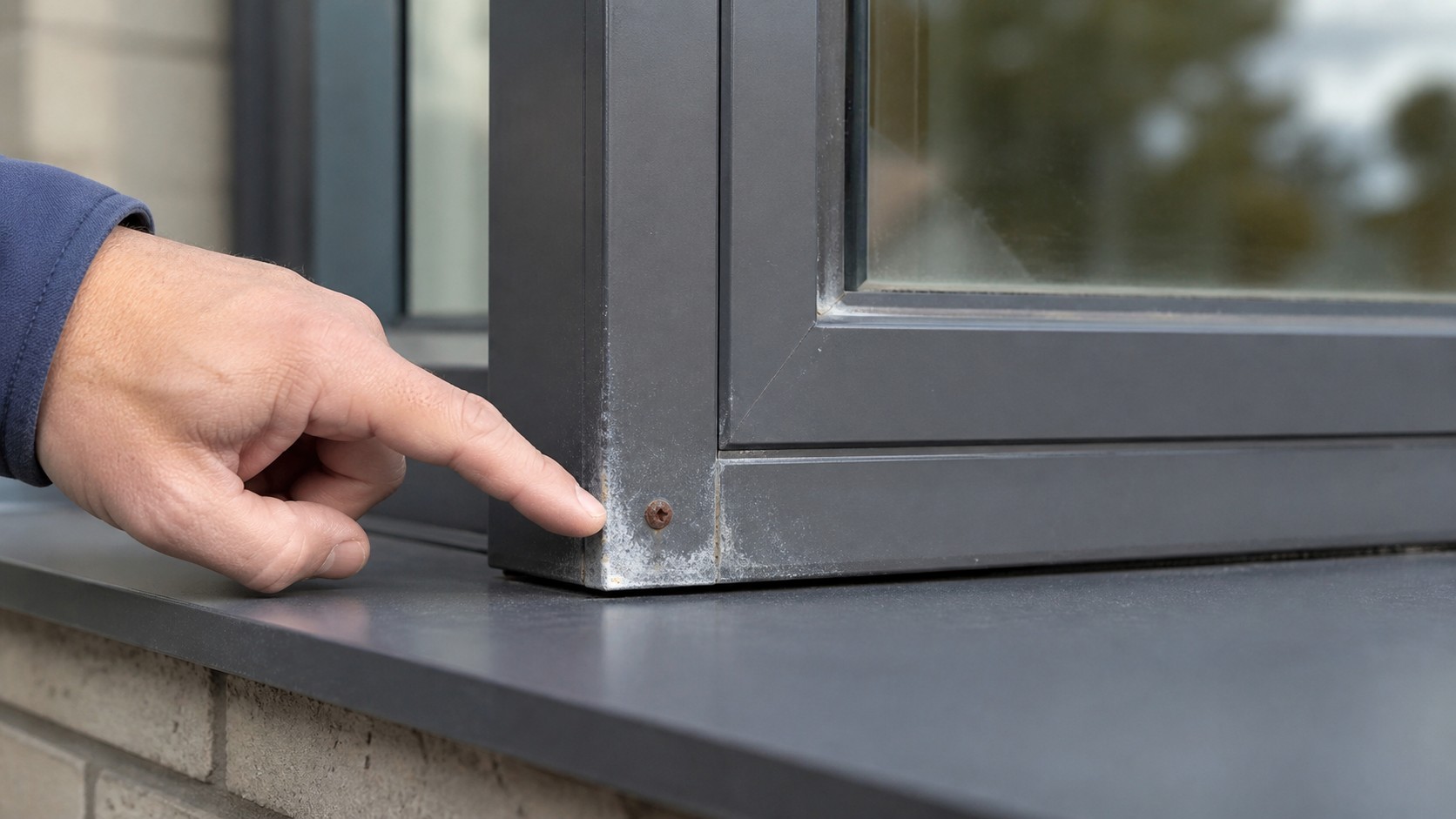
- White or chalky residue: may be oxidation, coating chalking or deposited salts.
- Powder coating that bubbles, flakes or lifts: moisture may have reached the metal beneath a damaged finish.
- Small pits or craters: material loss has begun and should be assessed for depth and location.
- Brown rust: usually points to a steel screw, bracket or other ferrous component rather than the aluminium frame itself.
- Dark staining around a connection: can indicate trapped moisture or interaction between different metals.
- Loose rivets, screws or stays: treat this as a window-safety issue, not a cosmetic blemish.
Photograph the whole window and then each affected area with a size reference. Note whether it is inside, outside, at a drainage corner, beside a fastener or along a cut edge. That record helps a contractor distinguish a local finish repair from broader component replacement.
Why aluminium window corrosion happens
Salt and airborne contamination
Salt deposits attract and retain moisture. Homes near the coast, busy roads or industrial activity may need more frequent gentle cleaning than sheltered interiors. Deposits that remain in corners and tracks keep the surface damp and can attack damaged coating or exposed metal. Regular rinsing and wiping are preventive maintenance, not proof that a damaged finish has been restored.
Damage to anodising or powder coating
Architectural finishes form a protective and decorative surface. Scratches, drilled holes, cut edges, impact damage and poorly prepared repairs can expose aluminium. A harsh cleaner or abrasive pad can also dull or scratch a finish, making later inspection difficult. Follow the window or coating manufacturer’s care instructions wherever they are available.
Trapped water and blocked drainage
Debris in tracks and corners can hold water against fasteners and joints. Sealant applied over drainage outlets can make the problem worse. Clean the intended water path with a soft brush or vacuum, but do not drill new holes or alter baffles without knowing the system design.
Contact with dissimilar metals
When different metals are in electrical contact in the presence of an electrolyte such as water containing salt, galvanic corrosion can occur. The exact risk depends on the materials, coatings, fasteners and exposure. A qualified installer should select compatible replacement components and isolation details rather than substituting whatever screw happens to fit.
Aged or unsuitable fasteners
Brown rust at screws or supports indicates deterioration of a ferrous part. Aluminium rivets are a separate safety concern in older Singapore casement windows. BCA requires applicable casement windows to have aluminium rivets at variable geometry stays replaced with specified stainless steel rivets, and this work must be handled through the approved window-contractor route.
Aluminium window corrosion: clean, repair or replace?
| Condition | Likely response | Escalate when |
|---|---|---|
| Loose surface dirt or salt film, intact finish | Gentle cleaning and drying | Residue returns quickly or hides pitting |
| Small isolated scratch, no movement | Manufacturer-compatible touch-up after assessment | Scratch reaches a joint, edge or exposed exterior face |
| Bubbling, flaking or spreading white oxidation | Professional finish and substrate assessment | Damage expands or metal is visibly pitted |
| Rusty screw, rivet, stay or bracket | Replace with a specified compatible part | Any support is loose, cracked or unable to hold the sash safely |
| Deep pitting, frame distortion or loose glass support | Consider component or full-window replacement | Immediately; stop operating the affected window |
How to clean an aluminium frame without damaging it
Choose a cool time of day and test a hidden area first. Remove loose grit with a soft brush or low-suction vacuum. Wipe with clean water and a mild neutral detergent using a soft cloth or sponge, then rinse away residue and dry the surface. Use safe indoor access; never lean outside a high-rise window.
Avoid steel wool, metal scrapers, aggressive polishing compounds, strong acids, strong alkalis and unapproved solvent cleaners. These can scratch, stain or attack the finish. Do not direct high-pressure water into joints, tracks or wall cavities. If the residue does not release with gentle cleaning, stop before removing more of the coating.
Clean tracks and movable parts separately from coated faces. BCA’s maintenance guidance recommends removing dirt from moving components, lubricating appropriate joints and pivot points, tightening loose screws where suitable, and replacing corroded or damaged parts. For safety hardware, engage an approved window contractor instead of improvising a replacement.
Can corroded aluminium be repaired?
A cosmetic repair may be possible when deterioration is shallow, localised and away from safety-critical joints. The area must be cleaned and prepared correctly, corrosion products removed without enlarging the damage, and a compatible treatment or coating system applied. Colour matching alone is not evidence that the repair has restored protection.
Deep pitting cannot be reversed with paint. Neither can a touch-up restore strength to a weakened rivet, stay, corner connection or frame section. Replacement is generally the safer direction when metal loss affects support, the sash is loose, glass retention is uncertain, or corrosion is widespread beneath the finish.
When comparing replacement options, examine the complete system: aluminium alloy and section design, surface finish, fastener specification, drainage, compatible sealants, fabrication quality and installation method. The operating style also affects maintenance access. Review casement windows and sliding windows in relation to the opening, not just the colour sample.
Warning signs that need prompt professional attention
- The sash moves independently of a stay, hinge or corner connection.
- A fastener is missing, severely rusted or can be turned by hand.
- The frame is cracked, deeply pitted, bowed or separating from the wall.
- Glass, glazing beads or panels are loose.
- A sliding panel lacks a secure safety stopper or angle strip.
- Corrosion is spreading around multiple connections.
Do not continue opening and closing a suspect window to “test” it. Singapore BCA says windows are exposed to weather and wear and should be checked and maintained regularly. If you are not confident inspecting them, the agency advises engaging an approved window contractor.
How to prevent aluminium window corrosion
- Clean deposits before they build up. Adjust frequency to exposure; coastal or sheltered corners may need more attention.
- Use gentle, compatible products. Abrasion and harsh chemicals can damage protective finishes.
- Keep drainage routes clear. Remove loose dirt but preserve the designed outlets and baffles.
- Repair scratches early. Ask the supplier for the correct system instead of applying an unknown paint.
- Inspect fasteners and supports. Rust, looseness or movement has higher priority than appearance.
- Fix water entry. Persistent leakage keeps joints wet and accelerates deterioration.
- Document changes. Repeat photos from the same angle make spreading pitting or coating failure easier to see.
What not to do
- Do not sand or wire-brush a coated frame until the repair system is known.
- Do not paint directly over powdery corrosion or trapped moisture.
- Do not use steel wool or a steel scraper on aluminium.
- Do not replace a safety fastener with an unverified material or size.
- Do not seal over drainage openings.
- Do not treat rust at a stay, hinge or rivet as a cosmetic issue.
Frequently asked questions
Does aluminium rust?
Aluminium does not form the brown iron oxide commonly called rust, but it can corrode and develop white oxidation or pitting. Brown rust on an aluminium window usually comes from a steel fastener or component. Identify which material is deteriorating before choosing a cleaner, coating or replacement part.
Can white oxidation simply be wiped off?
Loose surface deposits may wipe away with gentle cleaning, but recurring powder, rough pits or lifting finish indicates more than dirt. Cleaning can reveal the condition; it does not rebuild lost metal or restore a damaged coating. Photograph the area after cleaning and monitor whether it returns or spreads.
How often should aluminium windows be checked?
Singapore BCA promotes regular window maintenance and has historically advised checks at least every six months. Exposure varies, so inspect more often after severe weather, near marine conditions or when the window is difficult to operate. Cleaning frequency should follow the window or coating supplier’s guidance and the property’s actual exposure.
Is powder-coated aluminium maintenance-free?
No. Powder coating is a durable architectural finish, but dirt, salt, scratches and standing moisture still require attention. Gentle cleaning helps preserve appearance and makes defects visible early. A coating warranty or care programme may specify products and intervals, so retain the supplier’s documents and follow them.
Conclusion
Aluminium window corrosion is manageable when you identify the affected material and act before deterioration reaches support components. Clean gently, preserve drainage, document pitting or coating failure and prioritise rusty or loose hardware. Cosmetic touch-up is not a substitute for replacing a weakened fastener, stay, frame section or unsafe window.
If you are unsure whether the problem is residue, finish damage or structural corrosion, contact Forge Windows with clear photos of the full opening, affected surface and nearby hardware for an initial review and inspection recommendation.
Sources: Singapore BCA — Windows Safety; Singapore BCA — Window Maintenance Tips; FGIA — Care and Handling of Architectural Aluminium Products.