Quick answer: A door closer usually slams because the closing-speed or latch-speed setting is too fast, the arm or closer is incorrectly fitted, the door is dragging, air pressure is pushing it, or the closer has failed. Identify the closer model before touching any valve. Make only small manufacturer-approved adjustments, test the whole closing cycle and replace a leaking or damaged unit rather than trying to refill it.
A slamming door is noisy, hard on locks and hinges, and capable of trapping fingers. Turning the first screw you see can make the problem worse because hydraulic closers often have separate controls for different parts of the swing. This guide explains the likely causes, safe checks and when professional replacement is the better answer.
Contents
- How a door closer controls movement
- Seven causes of a slamming door closer
- Safe checks before adjustment
- How to approach adjustment
- When the closer should be replaced
- Frequently asked questions
How does a door closer control closing speed?
A hydraulic door closer uses spring force to return the door and internal fluid passages to control the motion. Many surface-mounted models divide closing into at least two zones. Allegion describes the main-speed zone as the movement from a wide-open position to roughly the last 15 degrees, while the latch-speed control manages that final portion so the latch can engage.
Some closers also include backcheck, delayed action or adjustable spring power. These controls perform different jobs and are not interchangeable. Backcheck cushions an opening door near the end of its travel; it is not a door stop. Spring power affects the force available to close and latch, but increasing it can also make the door harder to open.
Door closer slamming? Check these seven causes
1. The main closing speed is too fast
If the door races through most of its swing, the main-speed valve may be too open or the closer may be incorrectly adjusted. On many closers, a clockwise movement slows the relevant zone, but valve direction and numbering vary. Use the instructions for the exact brand and model instead of treating a generic diagram as universal.
2. The latch speed is too aggressive
A door that closes normally and then bangs during the last few centimetres usually has a latch-zone problem. The closer still needs enough movement to overcome seals and engage the latch. Slowing it until the door stops short is not a successful repair; the aim is a controlled close that still secures the door.
3. The closer is leaking hydraulic fluid
Oil around the closer body, spindle or adjustment valves suggests seal failure. The door may suddenly lose damping and close unpredictably. Do not keep adjusting a leaking closer and do not attempt to top it up unless the manufacturer provides an authorised service procedure. Most failed residential and commercial surface closers are replaced as complete units.
4. The arm or closer body is mounted incorrectly
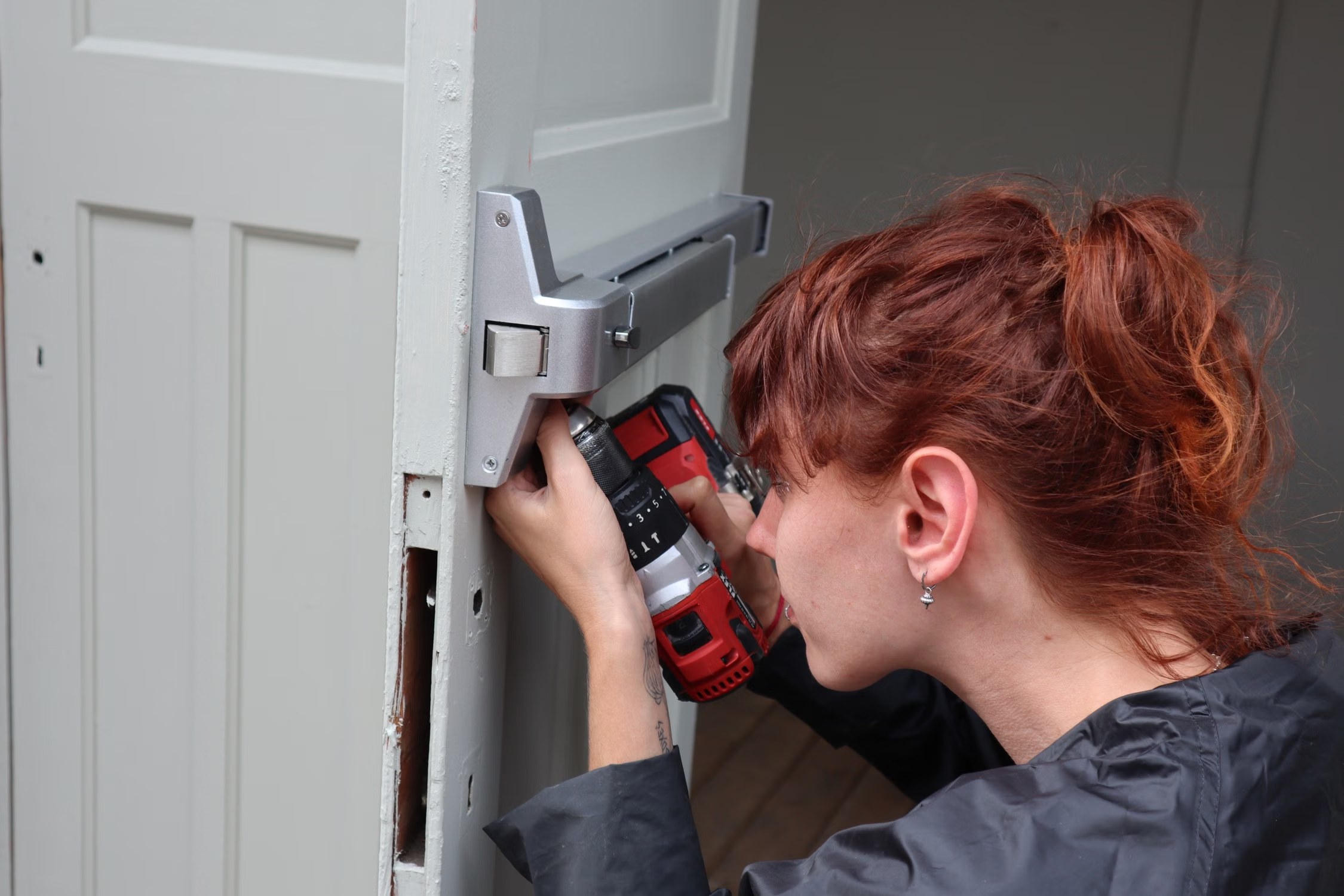
The closer body and arm must follow the mounting template for the selected installation type. Incorrect hole positions, a loose shoe, a bent arm or the wrong preload can change the closing force and travel. Fresh marks around fasteners, an arm that jumps, or a body that moves on the door are reasons to stop testing and call an installer.
5. Hinges, pivots or the frame are creating resistance
A closer cannot compensate for a door that rubs the floor, binds against the frame or hangs on loose hinges. Extra spring power may force the door shut but increase stress on the hardware. Check the perimeter gaps, hinge movement and latch alignment before deciding that the closer alone is faulty.
6. Wind or building air pressure is accelerating the door
Cross-ventilation, exhaust fans, air-conditioning pressure and exposed entrances can change how a door moves. Test the door under more than one operating condition. If the closer works only when another door or window is open, the project may need assessment of pressure, closer size, seals and opening direction rather than repeated valve adjustment.
7. The closer is the wrong size or specification
Door width, weight, exterior exposure, mounting position and latch resistance influence closer selection. A unit without enough power may be set excessively fast to achieve latching; an unsuitable high-power unit may be difficult to open. Replacement should be selected from the manufacturer’s chart and matched to the complete door assembly.
Safe checks before adjusting a door closer
- Control the test area. Keep fingers, children and loose objects away from the closing edge.
- Identify the door. Determine whether it is a normal entrance, an exit door or a certified fire-rated door.
- Find the closer model. Record the label, mounting type and adjustment diagram before removing a cover.
- Inspect for leakage. Oil, cracked castings, loose valves or a damaged spindle indicate replacement or professional service.
- Check the door first. Look for rubbing, loose hinges, misaligned latches, damaged seals and moving fixings.
- Observe both zones. Note whether the speed problem occurs through the main swing, only near the latch, or throughout.
- Test from several angles. A closer should return the door consistently from normal opening positions.
Do not wedge open a fire door for convenience. Singapore Civil Defence Force guidance requires fire doors to return to the closed position and states that faulty self-closing devices should be repaired immediately. If the door has a fire-safety label, preserve the certified assembly and use appropriately qualified personnel.
How to approach a door closer adjustment safely
Adjustment is model-specific. After confirming that the closer is serviceable and the door is aligned, expose only the controls identified in the official instructions. Mark the starting position, then turn the relevant valve by a very small amount—often about one eighth of a turn—and test the full closing cycle. Wait for the door to settle before making another change.
- Adjust the main-speed zone when most of the swing is too fast.
- Adjust the latch zone when only the final part closes abruptly.
- Do not remove an adjustment valve; hydraulic fluid can escape and damping can be lost.
- Do not use spring-power adjustment as the first response to a speed problem.
- Do not slow the door so much that it fails to latch.
- Reinstall the cover and record the final setting for future maintenance.
When should a door closer be replaced?
Replacement is usually appropriate when the body leaks, the arm or spindle is damaged, valves no longer regulate speed, mounting points are broken, the closer is incompatible with the door, or repeated adjustment cannot achieve both controlled closing and reliable latching. A contractor should also review hinges, pivots, locks and frame alignment so the new closer is not installed into an unresolved fault.
For a fire-rated door, changing hardware is not a simple like-for-like purchase. SCDF requirements connect the closer specification and certification to the fire-door assembly. Ask for the closer model, applicable certification and installation record rather than accepting an unverified substitute.
Frequently asked questions
Which screw slows a door closer?
There is no universal screw number. Many hydraulic closers have separate main-speed and latch-speed valves, and some add backcheck or delayed action. Identify the model and use its diagram. Turning the wrong control can create a new safety or latching problem.
Can I adjust a leaking door closer?
A leaking closer has usually lost the fluid needed for controlled movement. Further valve adjustment will not restore failed seals. Restrict use if the door is closing unpredictably and arrange replacement or manufacturer-authorised service.
Why does the door close slowly but slam at the end?
The main-speed zone may be acceptable while the latch-speed zone is too fast. Seal resistance or a misaligned latch can also cause a sharp final movement. Check alignment first, then follow the exact closer instructions for the latch valve.
Should a fire door close by itself?
Where a self-closing fire door is required, the closer must return it to the closed and latched position. Do not disable or wedge the device. In Singapore, faulty self-closing equipment on a fire door should be repaired immediately and certified hardware requirements must be preserved.
Need help specifying an aluminium door system?
Share the door dimensions, weight, opening direction, location, closer label and photographs of the arm, hinges and latch. Forge Windows can discuss suitable aluminium door configurations and the information needed for a compatible hardware schedule. Contact Forge Windows for a project-specific review.