Quick answer: A louvre window that will not close may have debris in the mechanism, a misaligned slat, a loose or broken holder, a bent operating bar, a faulty lever or frame distortion. Do not force the handle or press directly on glass blades. Check the whole set from a safe indoor position, and stop using the window if any pane is cracked, loose or no longer securely held.
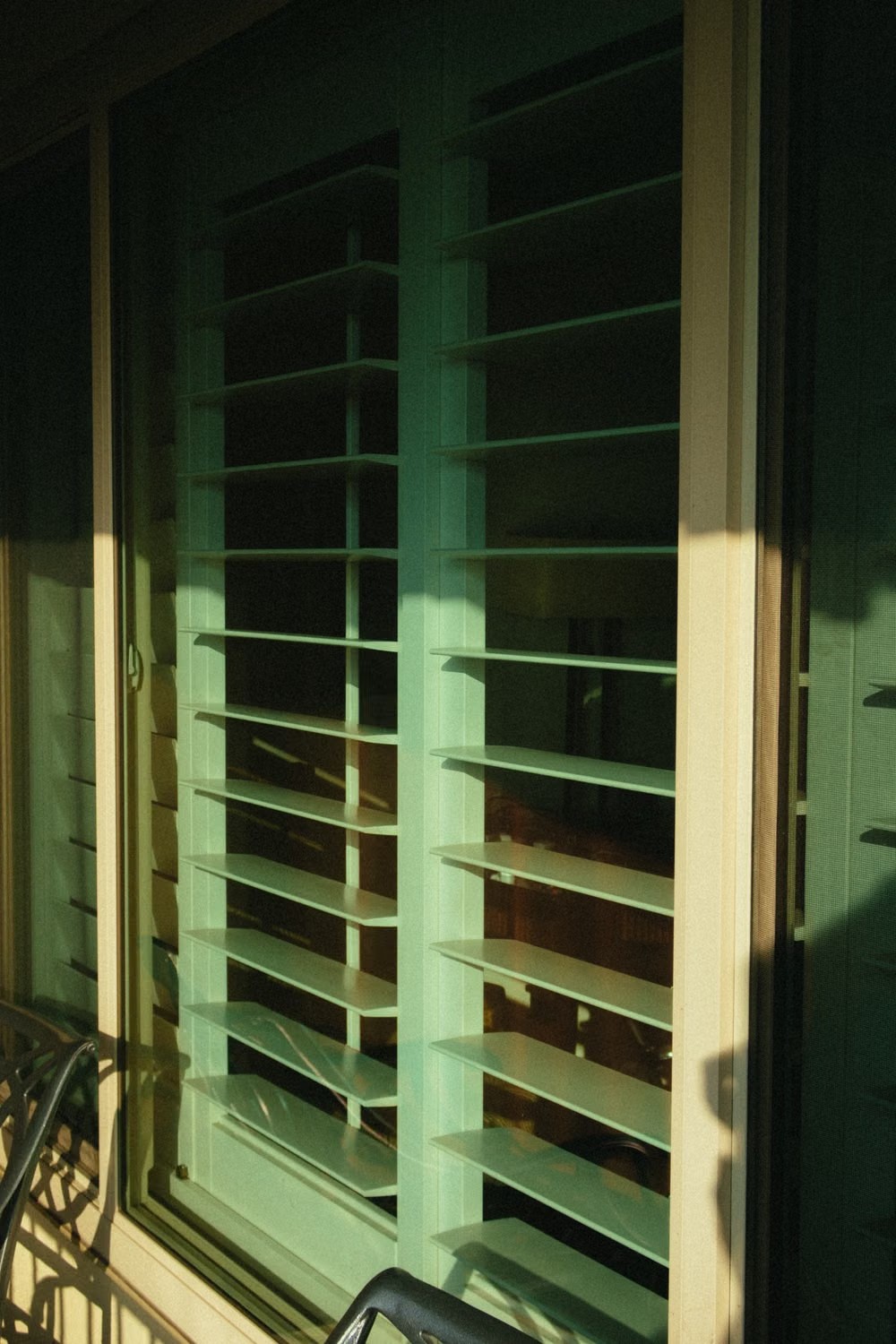
Adjustable louvre windows use linked parts to rotate several blades together, so one obstruction or damaged connection can affect the whole set. Find where motion stops instead of forcing the lever.
First, identify the type of louvre problem
Operate the lever with light pressure while watching all blades from inside. If one blade stays still, look at its holder and link. If all blades stop early, check for dirt, obstruction or misalignment. A lever that moves without the blades may have a loose or broken connection.
Do not confuse adjustable glass louvres with shutters or internal blinds; their hardware and repair methods differ. The checks below are for linked adjustable window blades.
Seven common reasons a louvre window will not close
1. Dirt is blocking a pivot or blade edge
Dust, paint flakes, insects and other residue can collect around blade holders and the operating channel. Even a small obstruction can stop one blade before the others reach the closed position. Use a soft brush or vacuum attachment on accessible areas, then wipe gently with a damp cloth. Never push a hard tool between the glass and its holder.
2. One blade is out of alignment
A blade that has shifted in its clips can contact the frame or overlap the next blade incorrectly. Compare the spacing and angle of each pane. The glass should sit evenly in its holders and move without scraping. If it has slipped, do not try to reposition it by twisting the glass; a professional can check the clips, packers and correct blade position.
3. A clip, holder or gasket is loose
Louvre blades depend on small holders and cushioning components to remain secure. Ageing, impact or previous work can loosen these parts. Movement at the end of a blade, a new rattle or a pane that appears lower than the others needs prompt attention. BCA specifically advises checking that adjustable louvred-window glass panes are secure and not cracked or broken.
4. The operating bar is bent or disconnected
A side channel, link bar or connecting arm transfers movement from the handle to the blade holders. If this bar bends or one connection detaches, the blades can stop at different angles. A lever that suddenly becomes very light may indicate lost connection; a lever that becomes unusually stiff can indicate binding. Both symptoms call for inspection before further use.
5. The lever, gearbox or crank is worn
Repeated use can wear the operating handle or its internal drive. The lever may slip, fail to reach its full travel or spring back. Tightening an external screw may help only when that screw is actually loose and the underlying parts are sound. A stripped, cracked or corroded operator should be replaced with a compatible component.
6. Corrosion or dried residue is restricting movement
Bathrooms, kitchens and exposed elevations can subject window hardware to frequent moisture, airborne residue or salt. Corrosion increases friction and can weaken small components. Clean only with products suitable for the frame, glass and hardware. A coating of general-purpose oil can attract dirt or affect nearby seals, so follow the manufacturer’s lubrication instructions.
7. The frame is distorted or the installation has moved
If all blades rub at the same side, the problem may be larger than a single clip. Frame distortion, movement at the opening or an impact can change the available clearance. Look for new gaps, cracking at the perimeter, water entry or a frame that no longer appears square. These conditions require diagnosis of the installed window, not just the lever.
A safe step-by-step check
- Keep people away from loose glass. If any pane is cracked, chipped at the support point or insecure, do not operate the window.
- Use only gentle lever pressure. Stop at the first hard resistance.
- Watch every blade. Note the first pane that fails to follow the others.
- Look for contact points. Dust marks, scraping or uneven overlaps can reveal where movement is blocked.
- Clean accessible debris. Use soft tools and keep water away from enclosed mechanisms unless the manufacturer permits it.
- Check the handle and visible links. Look for looseness, separation, corrosion or bent parts without dismantling the assembly.
- Close and secure the window if possible. If it cannot be safely closed, restrict access and arrange professional repair.
What should you never do?
- Do not press the centre or edge of a glass blade to make it close.
- Do not force the lever past its normal stopping point.
- Do not remove a pane without the correct support, tools and replacement components.
- Do not use a cracked blade while waiting for a convenient repair date.
- Do not lean outside or perform exterior work from an unstable position.
- Do not assume a blind-cleaning method is suitable for an adjustable glass louvre window.
Repair the mechanism or replace the window?
Targeted repair may be suitable when the frame is sound and the fault is limited to compatible holders, links, a lever or one damaged blade. The technician should confirm that all panes are securely retained and that the complete set opens, closes and holds evenly after work.
Replacement becomes more practical when parts are obsolete, several holders are degraded, the frame is distorted, corrosion is extensive or the window no longer meets the project’s needs. In wet rooms, also consider ventilation, privacy and safe cleaning access.
How to prevent another louvre-window problem
Regular checks are especially important because the system contains multiple panes and linked parts. BCA’s current window-safety guidance recommends regular checking, cleaning and replacement of damaged components. Its louvre-window checklist focuses on secure, unbroken glass panes and a lever lock that works properly.
- Move the lever gently through its normal range and investigate any new stiffness.
- Keep blade edges, holders and accessible channels free of dust.
- Check each pane for cracks, chips, looseness and uneven spacing.
- Keep suitable records or photos of the hardware before parts are changed.
- Use manufacturer-approved cleaning and lubrication methods.
- Arrange prompt repair if the lever slips or a pane no longer moves with the set.
Frequently asked questions
Can I close the blades by hand if the lever is broken?
No. Hand pressure can load the glass or holders unevenly and may disconnect more of the mechanism. Keep the area safe and have the operator and linked hardware assessed.
Can a single cracked louvre pane be replaced?
It may be possible when a compatible pane and retaining system are available, but the installer must confirm glass type, dimensions, edge condition and secure retention. The remaining panes and mechanism should also be checked.
Planning a safer replacement?
If repair is no longer practical, collect the opening dimensions, clear photos, pane sizes, room use and required ventilation or privacy before requesting a proposal. Forge Windows can discuss an appropriate window configuration for residential or commercial openings. Review our window and door products or contact Forge Windows with your project details.