Mosquitoes coming through windows usually enter through torn screens, gaps around the screen frame, an uncovered opening, or a door that is frequently left open. Repair the physical entry route, but also remove stagnant water indoors and nearby. Window screens reduce entry; they do not stop mosquitoes breeding inside the home.
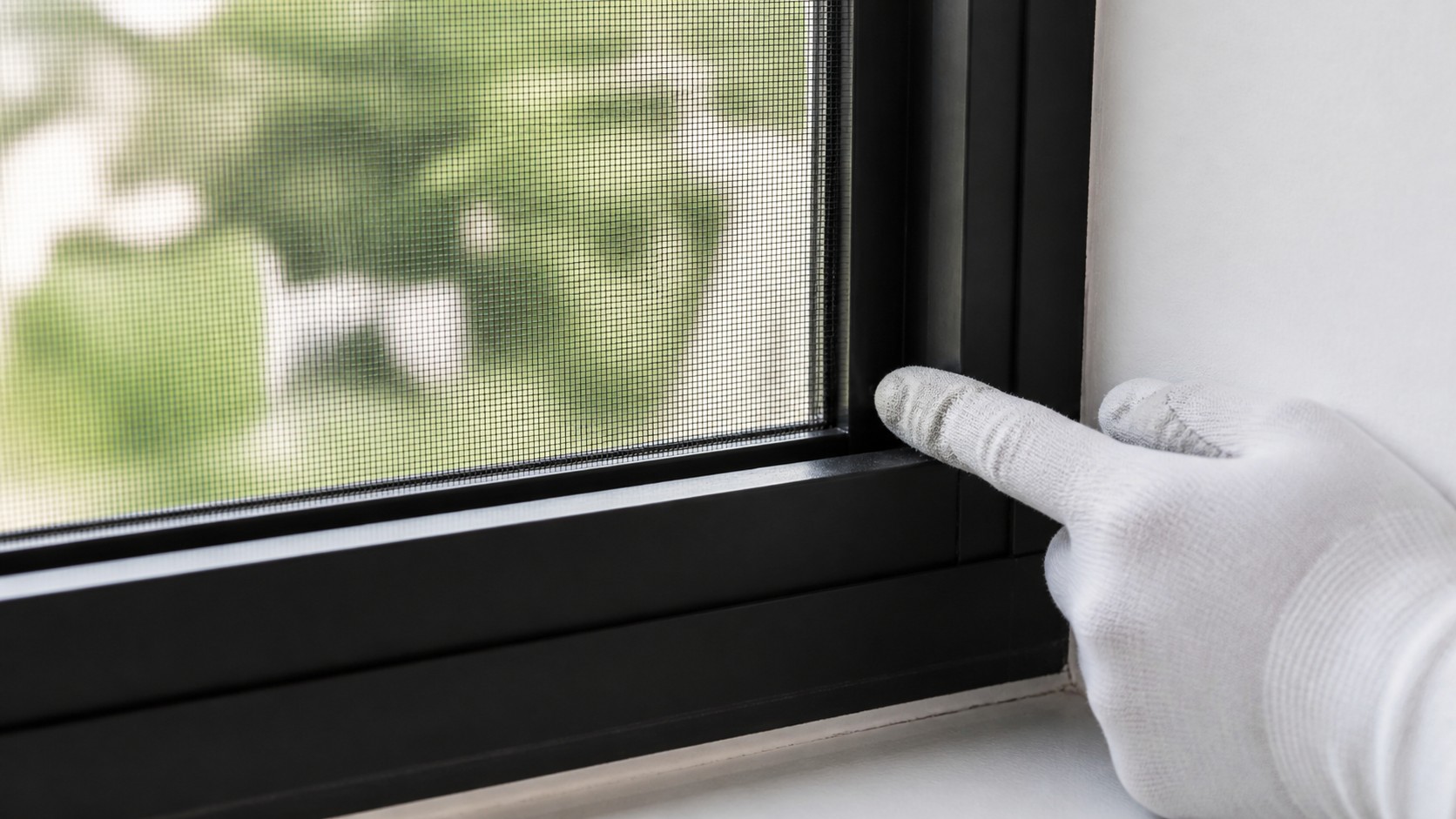
Singapore’s National Environment Agency (NEA) recommends mosquito screens on windows and doors as one protective measure against dengue. This guide helps homeowners find common gaps, choose a screen that still allows safe window operation, and avoid creating drainage or falling-object hazards.
Start with a 10-minute entry-point check
Inspect during daylight with the window closed. Work from indoors and use a torch at corners where needed. Check:
- Mesh for tears, pulled edges and holes around fixings.
- The joint between screen frame and window frame.
- Sliding-screen overlap and the bottom guide.
- Openings around air-conditioner pipes or service penetrations.
- Gaps at an adjoining balcony or entrance door.
- Window tracks and drainage outlets for standing water.
- Vases, plant saucers and containers near the window.
A gap is not always a defect. Window tracks need drainage, and moving panels need operating clearance. Do not fill every opening with silicone or foam. The aim is to add a properly fitted barrier while preserving drainage and safe movement.
7 reasons mosquitoes are coming through windows
1. Torn or detached mesh
Small tears can grow when the screen is pulled. Check the centre and the edge where mesh meets its spline or retaining strip. A temporary patch may close a minor hole, but brittle, stretched or widely damaged mesh is better replaced.
2. A gap around the screen frame
A screen can look intact while its frame sits unevenly. Check all four sides and the meeting point between sliding panels. Bent frames, missing brush seals or undersized inserts leave direct entry paths.
3. The window is opened without a screen
Natural ventilation is useful, but an unscreened opening allows insects in. A fixed, hinged, sliding or retractable system may be suitable depending on how the window opens and how emergency access or cleaning is handled.
4. Mosquitoes enter elsewhere
Balcony doors, corridor doors, service-yard openings and gaps around services may be the real route. If mosquitoes appear even when one screened window stays closed, inspect the whole room perimeter rather than adding thicker mesh to the wrong opening.
5. The screen is open during door movement
Retractable and sliding screens work only when fully closed. A worn latch, damaged guide or screen that rebounds can leave a gap. Choose hardware that household members can use consistently.
6. Mosquitoes are breeding indoors or nearby
NEA states that Aedes mosquitoes prefer clean stagnant water and urges residents to remove breeding sources every week. Window screens cannot solve water held in flowerpot saucers, vases, drains, containers or other items.
7. Window tracks hold water
Dirt can obstruct drainage and leave water in a track. Clean loose debris and confirm designed outlets remain open. Do not drill new holes or block existing ones without understanding the window system.
Mosquitoes coming through windows: choose the right fix
| Problem | Practical fix | Important check |
|---|---|---|
| Small tear in sound mesh | Compatible screen patch | Patch lies flat and cannot detach |
| Brittle or widely torn mesh | Replace the mesh | Correct tension and secure edges |
| Gap around frame | Adjust, repair or replace the screen frame | Window still locks and drains normally |
| Unscreened casement window | Fixed, hinged or retractable screen designed for the opening | Handle and cleaning access remain usable |
| Unscreened sliding window | Sliding or fixed screen panel | Safety stoppers and tracks are not altered |
| Indoor breeding source | Remove stagnant water and clean the container | Repeat the check weekly |
How to inspect and repair a screen safely
- Keep the window closed while inspecting. Do not lean out or remove a high-rise panel.
- Clean the screen gently. Support the frame so vacuuming or wiping does not pull the mesh out.
- Mark every gap. Use removable tape on the room side; do not cover drainage.
- Repair the correct component. Replace torn mesh, damaged spline, brush seal, latch or bent screen frame as needed.
- Test window operation. The screen must not obstruct locks, friction stays, safety stoppers or emergency requirements.
- Recheck after use. Confirm that sliding or retractable screens return fully closed.
The U.S. Centers for Disease Control and Prevention also recommends installing or repairing window and door screens, while emptying and scrubbing water-holding items weekly. The two measures work together.
Which mosquito-screen style suits your window?
Fixed screen
A fixed panel is simple and can seal well, but it must allow required access for cleaning and maintenance. It should be securely retained so it cannot fall.
Sliding screen
This suits some sliding-window arrangements. Tracks must stay clean, and the panel needs enough overlap to avoid a vertical gap. The screen must not replace or interfere with window safety stoppers and angle strips.
Hinged screen
A hinged panel can provide access to a casement handle and exterior glass. Its latch should close reliably, and the open panel must not create an obstruction.
Retractable screen
Retractable mesh stays out of view when not used, but damaged guides, weak tension or an incomplete closure can create gaps. It needs more operating discipline and maintenance than a fixed panel.
If the underlying window is loose, corroded or difficult to operate, repair that safety problem before adding a screen. Review suitable casement windows and sliding windows with the screen requirement included from the start.
What not to do
- Do not seal drainage outlets to close an insect gap.
- Do not attach loose mesh where it can fall from height.
- Do not remove safety stoppers, stays or locks to fit a screen.
- Do not rely on a mosquito screen while leaving stagnant water indoors.
- Do not use an open flame or unattended coil near curtains or mesh.
- Do not assume every mosquito entered through the nearest window.
Frequently asked questions
Can mosquitoes get through very small screen holes?
They can enter through tears, pulled edges and gaps around the frame even when the centre mesh looks fine. Use a mesh product intended for mosquito exclusion and ensure the complete perimeter is fitted correctly. The screen must still allow adequate airflow and safe window operation.
Will a mosquito screen reduce ventilation?
Any mesh adds some airflow resistance, and finer or dirty mesh usually reduces it more. Choose a purpose-made screen, keep it clean and size the opening appropriately. Do not compensate by removing window safety components or leaving another unscreened gap.
Why are mosquitoes still inside after fitting screens?
They may enter through doors or another opening, remain indoors from before installation, or breed in stagnant water. Inspect the whole home and remove water-holding sources weekly. NEA treats screens as one protective measure, not a substitute for breeding prevention.
Can I add a magnetic screen to any window?
Not automatically. The attachment surface, wind exposure, opening type and risk of detachment matter. A screen at height must be secure and must not obstruct window locks, drainage or emergency access. Ask the supplier to confirm suitability for the exact opening.
Conclusion
When mosquitoes are coming through windows, inspect the complete screen perimeter, window operation and nearby water sources. Repair torn mesh and frame gaps with a secure system, preserve drainage and safety hardware, and combine screening with weekly removal of stagnant water.
Need a window-and-screen arrangement that fits your opening? Contact Forge Windows with photos and measurements for an initial recommendation.
Sources: Singapore NEA — Stop Dengue Now; U.S. CDC — Mosquito Control at Home; Singapore BCA — Windows Safety.