Quick answer: When an aluminium door won’t close or lock, do not force the handle. First check for an obstruction, then compare the gaps around the door, test the hinges or rollers, inspect the lock and strike, and look for damaged seals. A door that has dropped, twisted or moved with the surrounding opening needs alignment before repeated lock adjustment.
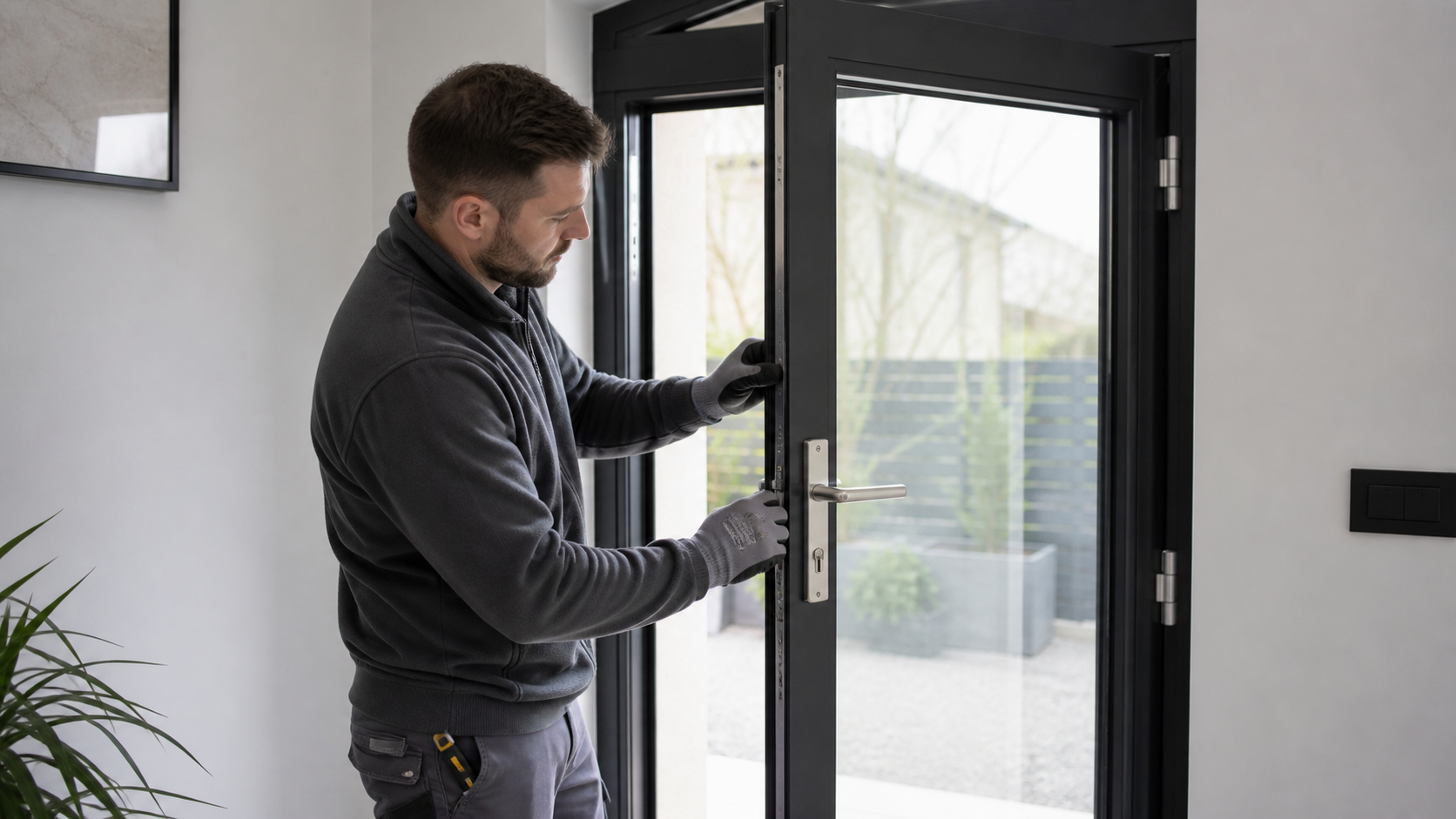
This guide helps homeowners, facilities teams and contractors separate a simple cleaning issue from failed hardware, frame movement or unsafe glass. It covers hinged aluminium doors first and notes the different checks required for sliding systems.
Table of contents
- Safe first checks
- Eight common causes
- Symptom-to-cause guide
- Repair or replace?
- Frequently asked questions
What to check before adjusting the door
- Remove dirt, stones, loose screws or objects from the threshold and track.
- Move the door slowly while watching where it first touches.
- Compare the visible gap at the head, latch side and hinge side.
- Test the latch with the door open, keeping fingers clear of moving parts.
- Check for cracked glass, loose panels, corrosion or unstable hardware.
- Stop if the panel feels as though it could detach or fall.
Do not grind the frame, enlarge the strike opening or turn every adjustment screw at once. Those actions can hide the original fault and make later diagnosis harder. Product-specific installation and maintenance instructions should take priority over generic advice.
Eight reasons an aluminium door won’t close or lock
1. Debris is blocking the threshold or track
Sand, construction residue and small stones can stop a hinged door from seating or a sliding panel from reaching the jamb. Vacuum loose material and use a soft brush. Avoid sharp tools and aggressive chemicals that can damage coatings, weatherstripping or drainage parts.
2. The hinges or pivots are loose or worn
A hinged panel can drop when screws loosen, fasteners lose their hold or hinge components wear. The latch then sits below the strike, and the bottom corner may rub. Tightening is only appropriate when the fastener and substrate are sound; stripped holes, cracked corners or distorted hinges need professional repair.
3. Sliding-door rollers are dirty, worn or misadjusted
Rollers carry a sliding panel and control its height. If the panel becomes difficult to move and no longer lines up with the lock, cleaning the exposed track may help, but roller replacement or adjustment may require panel removal. Large glazed panels are heavy and should not be lifted without suitable people, tools and safe handling.
4. The lock and strike are no longer aligned
If the latch works with the door open but misses or rubs the strike when closed, alignment is the likely problem. The underlying cause may be a dropped panel, moved frame or loose strike rather than a defective lock. Correct the geometry before repeatedly moving the strike plate.
5. The multipoint lock is under pressure
Some doors engage several locking points from one handle. If the panel is not fully seated, forcing the handle can damage the gearbox or locking strips. Gently bring the door into position and test again. A handle that remains stiff with the door open should be inspected as a hardware fault.
6. Weatherstripping is folded, displaced or swollen
A gasket, brush seal or door sweep that has moved can bunch up between the panel and frame. Refit only if the part is clearly designed to clip back into its channel. Do not cut away weatherstripping simply to make the lock easier, because the seal contributes to air and water control.
7. The frame or surrounding opening has moved
Uneven gaps, a panel that contacts more than one edge, or a problem that returns after adjustment can indicate frame distortion or building movement. ENERGY STAR cautions that forcing backer rod or other material into the frame-to-wall gap can bend a window or door frame and affect operation. A contractor should check level, plumb, square and perimeter support.
8. Heat or sun exposure is changing clearances
Doors can operate differently as metal, glass and surrounding materials change temperature. Sun exposure may reveal an existing clearance or alignment problem rather than being the only cause. Record the time, weather and affected edge so the inspection can reproduce the condition.
Match the symptom to the likely cause
| Symptom | Likely area to inspect first | Avoid |
|---|---|---|
| Bottom corner rubs | Hinges, pivots, roller height and frame square | Grinding the panel or threshold |
| Latch misses the strike | Panel alignment, loose strike and hinge/roller condition | Forcing the handle |
| Handle is stiff with door open | Lock body, cylinder and internal hardware | Applying unsuitable oil into the lock |
| Door closes only when lifted | Hinges, pivots or rollers | Continuing to carry the panel by the handle |
| Seal bunches at one point | Weatherstripping channel and panel clearance | Cutting the gasket away |
| Problem returns after adjustment | Frame support, fasteners and surrounding opening | Repeated local adjustments without diagnosis |
Safe maintenance that may solve a minor problem
- Vacuum and brush exposed tracks and thresholds.
- Wipe frames and gaskets with mild soap, clean water and a soft cloth.
- Tighten an obviously loose accessible screw only when its fixing remains sound.
- Use only the lubricant and locations specified by the hardware manufacturer.
- Keep sill drainage and weep routes open.
- Record the original position before any permitted adjustment.
Pella’s current patio-door information identifies the strike plate, rollers, sweeps and multipoint locks as distinct components with different functions. Treating every closing problem as a lock fault can therefore lead to the wrong repair.
When should the door be repaired or replaced?
Repair may be appropriate when the frame is stable and the problem is limited to serviceable hinges, rollers, locks, weatherstripping or fasteners. Replacement deserves consideration when the frame is distorted, corners or panels are loose, glass is damaged, corrosion affects structural connections, water intrusion has damaged the opening or compatible hardware is no longer available.
For new work, specify panel size, opening direction, threshold, hardware, access needs and exposure conditions together. Compare Forge Windows’ system doors and sliding doors when preparing a replacement schedule.
Frequently asked questions
Why does my aluminium door close but not lock?
The latch or locking points may not line up with the strike, even though the panel appears closed. Test the lock with the door open. If it moves freely, inspect panel height, hinge or roller condition, strike position, gaskets and frame alignment before replacing the lock.
Can I adjust an aluminium door myself?
You can clean exposed tracks and check accessible fasteners, but adjustment depends on the door and hardware system. Heavy glazed panels, multipoint locks and concealed hinges can be damaged or become unsafe if handled incorrectly. Follow the product manual or use a qualified door technician.
Should I lubricate the lock and hinges?
Only with a product and application method approved by the hardware manufacturer. Some lubricants attract dirt, affect plastics or seals, or wash into finishes. Clean first, identify the component and never spray an unknown product across the threshold, cylinder and gaskets as a universal fix.
Why is the problem worse in the afternoon?
Direct sun and temperature change may alter clearances enough to expose marginal alignment. Note which side receives sun, where contact begins and whether the issue disappears later. A professional can then check panel and frame geometry under the condition that produces the fault.
Fix the alignment cause before replacing the lock
When an aluminium door won’t close or lock, begin with the threshold, panel gaps and operating hardware. Clean minor obstructions, but stop before forcing, cutting or lifting the door. For a project assessment, send Forge Windows clear photos, opening dimensions, product details and a description of the first contact point through the contact page.
Sources: Pella, The Parts of a Patio Door; Pella, Windows and Patio Doors Owner’s Manual; ENERGY STAR, Sealing Behind Window and Door Trim.