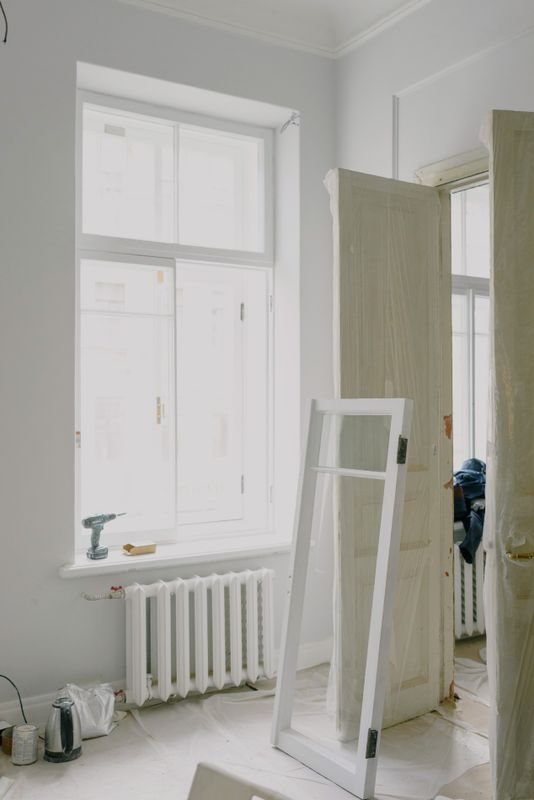
Window performance cannot be judged by opening style alone. Frame design, drainage paths, gaskets, glass specification, wall interfaces and installation workmanship all influence how well a system manages wind-driven rain and outdoor heat.
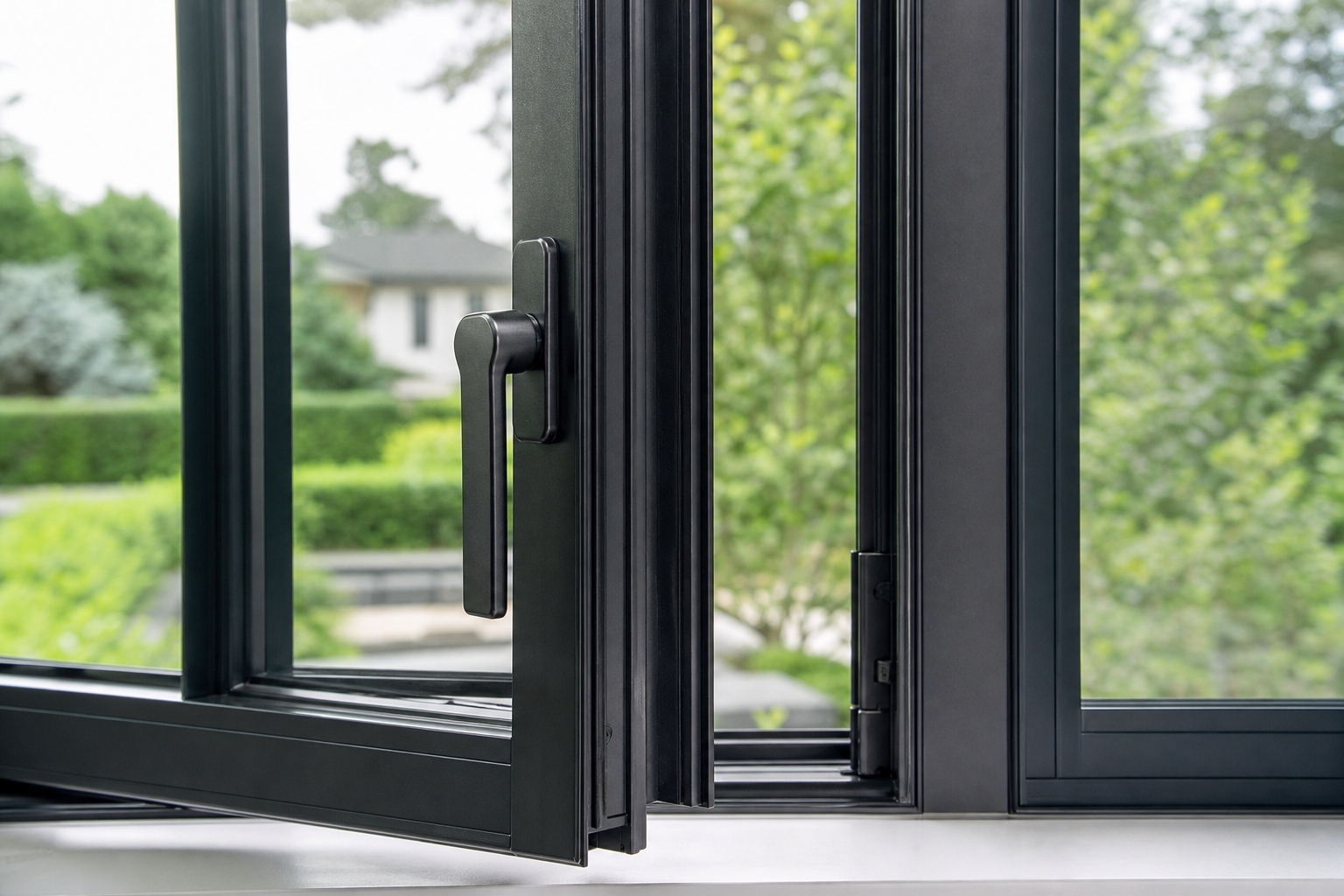
Typical Performance Comparison
| Window type | Water resistance | Heat-control potential | Best application |
| Casement | Strong when compression seals and joints are well designed | Good with tight seals and suitable low-emissivity glazing | Exposed bedrooms, studies and living areas |
| Sliding | Moderate; track drainage and interlock design are important | Moderate to good with quality interlocks and glazing | Balconies, kitchens and compact rooms |
| Top-hung / awning | Good when sash seals and outward drainage are correctly installed | Good with shaded placement and suitable glass | Bathrooms, stairwells and high-level openings |
| Fixed | Very strong because there are no opening joints | Very good when high-performance glass and frames are specified | Feature glazing and permanently sealed views |
| Louvre | Limited because multiple blades create more joints | Limited when open; shading can help reduce direct sun | Sheltered service spaces requiring continuous airflow |
Water Management
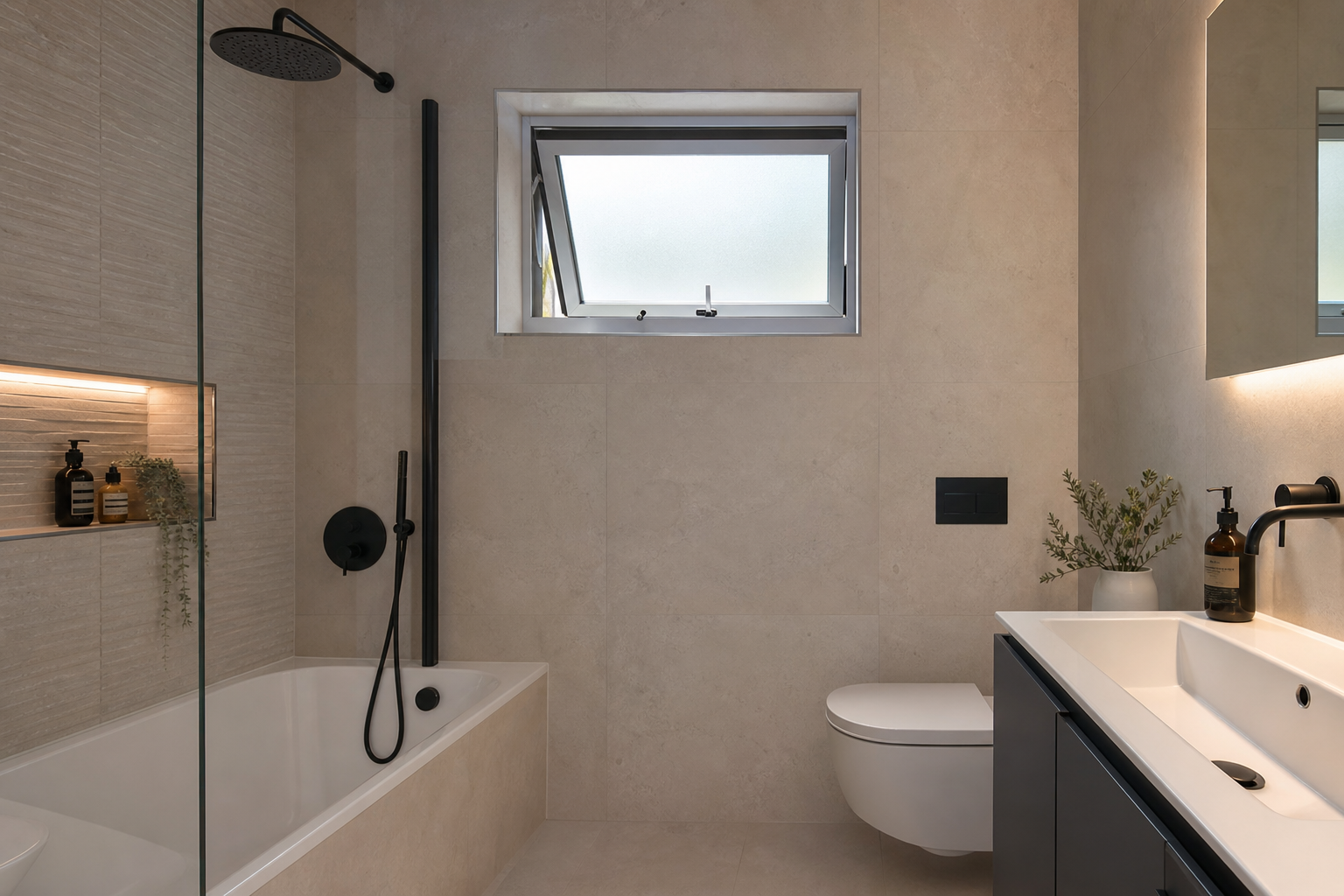
For stronger rain protection, look beyond the visible frame. Continuous gaskets, sealed corners, pressure-equalized cavities, clear drainage outlets and properly finished wall joints all matter. Tracks and drainage channels should remain clean so collected water can leave the frame.
Reducing Heat Transfer

Heat control depends heavily on glass selection and exposure. Low-emissivity coatings, insulated glazing, solar-control glass, external shading and thermally improved frames can reduce heat entering the room. Airtight seals also limit unwanted warm-air movement when the window is closed.