Article summary: Changing an HDB bathroom door’s opening action can beco…
You carry a laundry basket towards the bathroom in your HDB flat and find that the open door leaf takes up part of your approach. A different opening action sounds useful. Then the renovation sketch arrives: the proposed entrance is farther along the wall. What began as choosing a new door now includes changing where people enter the bathroom.
Before choosing the product, establish whether the proposal keeps the existing wall opening or repositions it. Have the renovation contractor identify the door leaf, frame and surrounding work separately. HDB’s conditions for a door installation do not automatically cover moving its entrance, and a new opening cannot simply be assumed feasible.
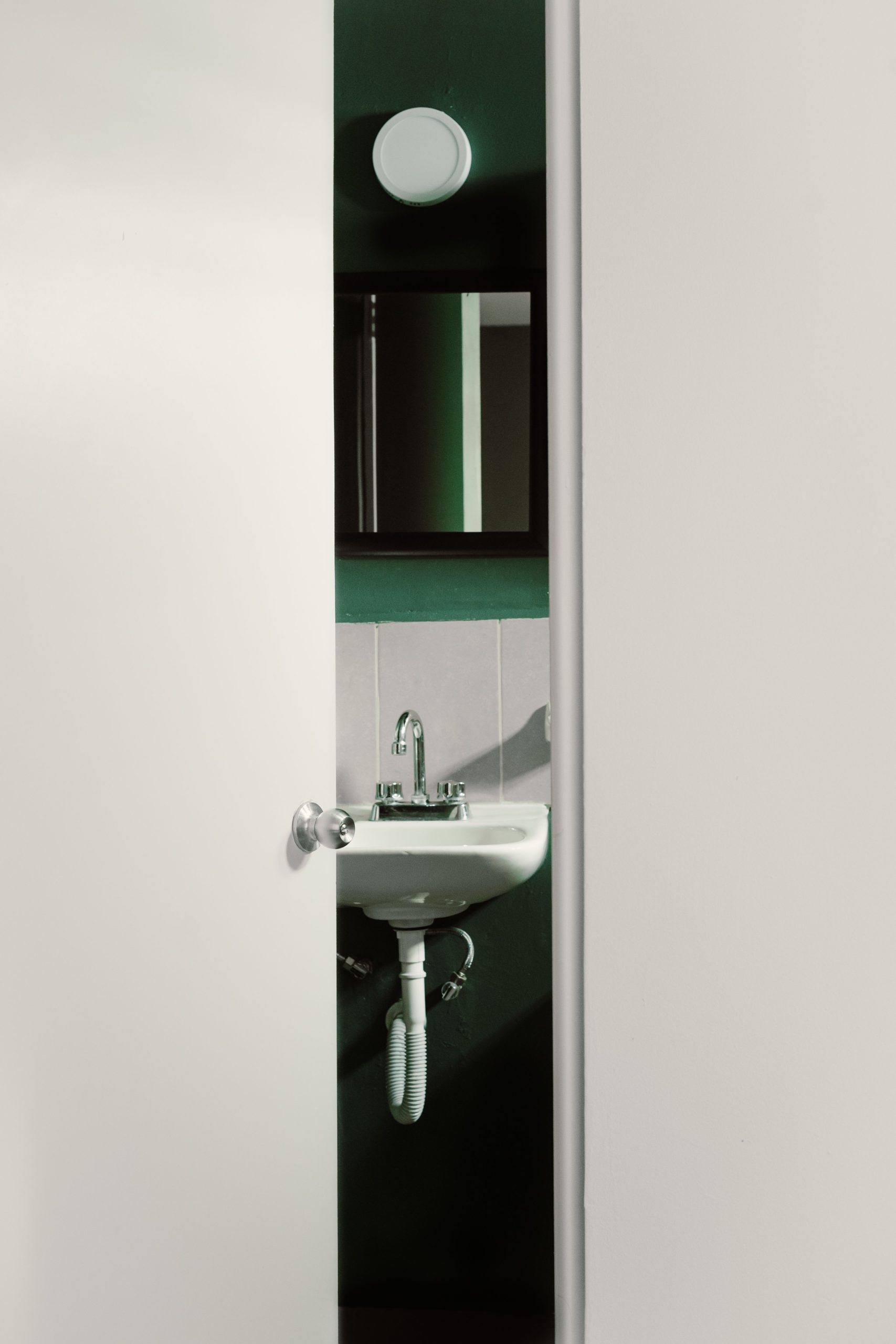
Put the existing and proposed entrance on one plan
Show the bathroom, the approach from the hallway and the current doorway. Place the proposed arrangement alongside it. Ask the designer to make any change in the entrance’s location visible, rather than drawing only the new door panel.
Describe the everyday difficulty: carrying the basket, approaching the bathroom or waiting while another person leaves. This gives the designer a task to address. It does not establish that the wall needs changing. Ask whether an appropriate arrangement within the original opening could meet that need before developing a relocated entrance.
Keep the discussion attached to the actual flat. A showroom’s bathroom sliding glass door demonstrates a product, not the wall conditions or renovation permissions in your home.
Separate the leaf, frame and wall work
A quotation for a new door leaf does not explain whether the existing frame remains. If the proposal includes a new frame, ask for that work and its surrounding repairs to be identified. HDB lists frame replacement separately for prefabricated and non-prefabricated flats. Both entries say no permit is required, but conditions differ. For a prefabricated flat, the new frame must remain within the original opening, reinforced-concrete walls must not be hacked or tampered with, and the affected area needs waterproofing after frame removal. Have the contractor identify the applicable scope.
HDB’s building-work guidelines list installation of sliding glass doors or PVC folding doors at bathroom, WC or kitchen entrances as not requiring a permit when the existing reinforced-concrete lintel or hanger, if any, is not removed. That is a specific work description with a condition, rather than permission for every proposed bathroom alteration.
Have the contractor explain what remains in place and what changes. Do not treat an attractive panel arrangement as an answer about the construction above or beside it. Leave identification of that construction and the permitted work to the responsible professionals.
If the entrance moves, pause the product order
The same HDB guidance lists repositioning internal door entrances as requiring a permit and states that the new entrance should not be created through reinforced-concrete walls. A line on a proposed plan is therefore a starting point for assessment, not an authorised new doorway.
Have the designer and renovation contractor resolve the proposed scope and required approval before door fabrication is confirmed. Ask them to show how the revised proposal deals with the existing opening, the new entrance and affected surrounding finishes. Do not ask workers to begin opening the wall while those answers are pending.
Choose the door within the resolved scope
Once the opening arrangement is established, compare suitable internal sliding doors and other supported options against the everyday route you described. Our slide-and-swing versus bifold comparison gives broader product context. It does not decide whether an opening may move.
Keep the agreed plan and written scope with the quotation. You should be able to tell whether you are buying a door for the original opening or proceeding with separately assessed opening changes. That distinction helps the household, designer and installer work towards the same bathroom entrance.