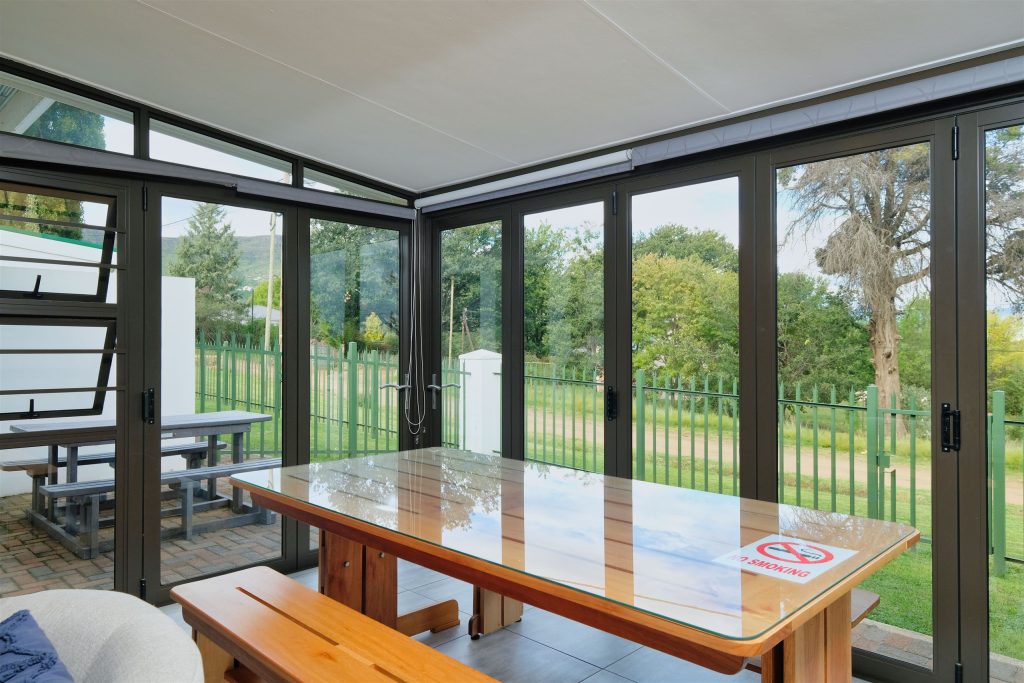
For a Singapore landed home, folding patio doors may connect the kitchen or dining area to a terrace used throughout the week. The wide opening looks appealing for visitors. Most mornings, though, one person may simply want to step outside and come back without moving a whole row of panels.
Choose for both uses. Confirm whether the particular door arrangement includes an independently operating access door, often called a traffic leaf. Then establish how you would open, close and use it from each side. The word “bifold” and the total opening width do not answer those questions.
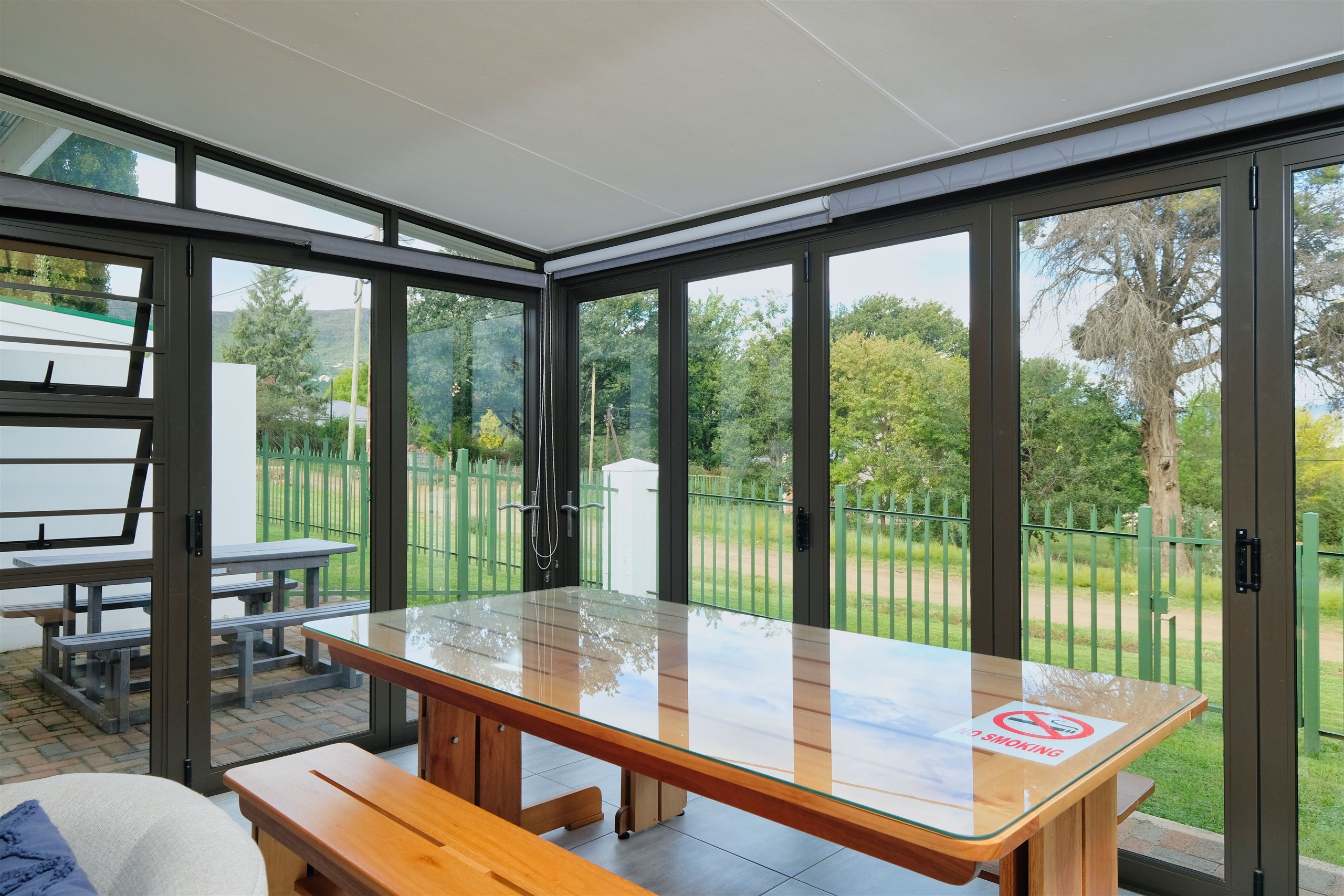
Start with the short trip outside
Think about the route you actually use: from the kitchen to a garden seat, or out to the terrace while someone else stays indoors. Would you normally leave the passage open, pull the door closed behind you, or secure it before leaving the house? These are different situations.
A family that mostly uses another back door may be comfortable reserving the folding set for full opening. If this will be the usual way outside, independent access deserves more weight. Decide that before choosing a panel layout for its symmetrical appearance.
Keep the terrace furniture in the conversation, too. A chair beside the doorway should be considered with the proposed access leaf in its normal open position, not only with the entire set folded away.
Find the access door in the actual proposal
Origin’s panel-configuration guide describes a traffic door as independently operable and explicitly notes that some configurations cannot accommodate one. That manufacturer’s options illustrate why everyday access must be confirmed for the chosen system; they do not establish what another supplier offers.
Ask the supplier to identify the access panel on the drawing for your quotation. Have it show the normal single-person opening separately from the fully folded arrangement. If a display is available, establish whether it represents that same configuration before relying on its demonstration.
When comparing bifold door opening size, distinguish the everyday passage from the space available with all panels parked. Neither should be inferred from the overall frame width. Our custom folding-door guide covers the broader panel plan; here, the decision is whether the ordinary trip works without opening the full set.
Check the return journey before choosing the lock
A description such as “bifold door with a lock” is incomplete for this purpose. Clarify what happens when you step outside and pull the access leaf closed. Can you reopen it normally from the terrace in the intended setting? Which action changes that setting, and what key or other means of access would you need?
This distinction is real: Centor’s F3 brochure identifies an outward-opening exterior-handle option without a passage set or lock that is secured from inside and does not provide exterior access. That is one specified hardware arrangement, not a rule for all folding doors.
Have the supplier explain the proposed handles, latching and locking from both sides. Use its normal demonstration and instructions; do not experiment with an unfamiliar set to find out whether it can lock you out.
Confirm that the quoted residential bifold doors include the access arrangement you selected. If the combination changes, revisit that decision. The result should suit both the occasional wide-open terrace and the much more ordinary moment when someone wants to go outside, close the door and return.