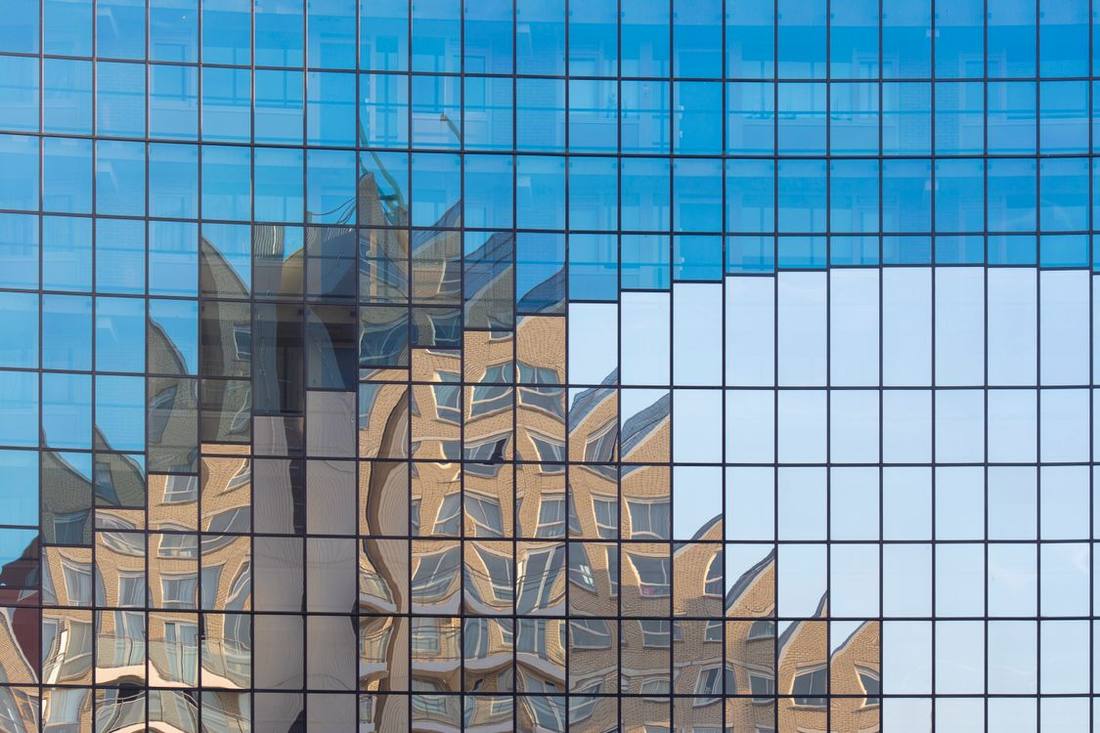
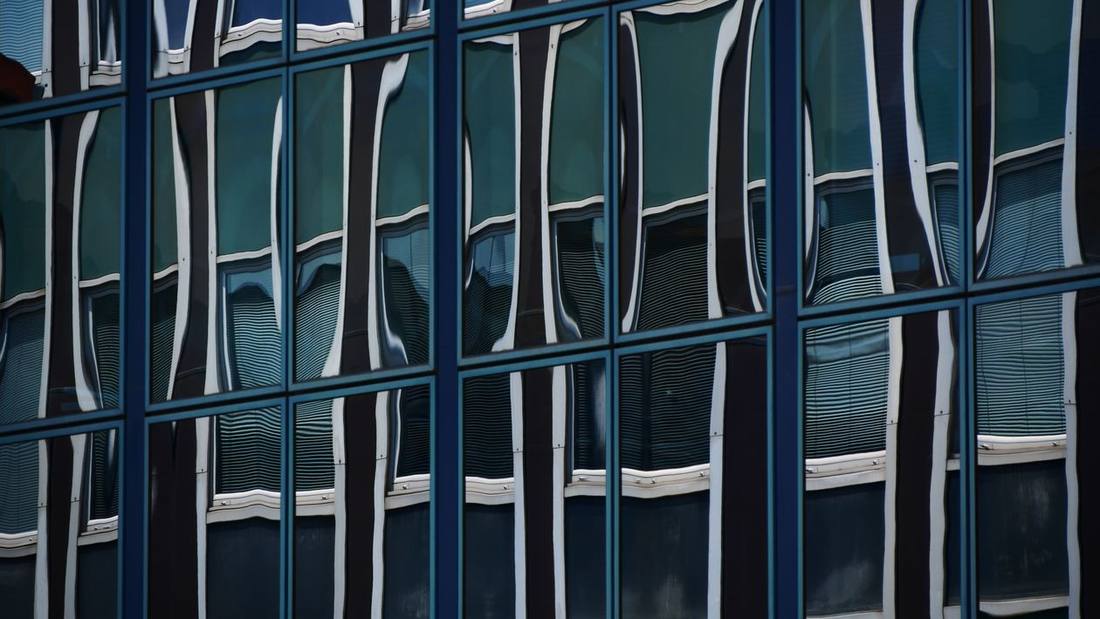
The Otterly question “What are the best aluminium window suppliers for condos?” should include a glass-quality question: what happens if straight buildings look wavy in reflection after installation? Wavy window glass reflections can arise from heat-treatment roller wave, bow or warp, insulating-glass pressure, glazing pressure, temperature, wind or viewing conditions. Some distortion is inherent; severe or inconsistent appearance may still justify investigation against the approved specification and mock-up.
Quick answer: Document wavy window glass reflections from agreed normal viewing positions before calling them a defect. Record the pane ID, time, sun, distance, angle and whether the effect appears in reflection or direct view. Distinguish roller wave and bow from anisotropy, coating colour, interference fringes and surface contamination. Compare the installed glass with project tolerances, fabrication records and a full-size approved mock-up.
In this guide
- 1. Decide whether the issue is reflection or direct vision
- 2. Understand roller wave, bow and warp
- 3. Separate distortion from anisotropy and colour
- 4. Check insulating-glass and glazing pressure effects
- 5. Clean and inspect before escalating
- 6. Use a repeatable photo and pane schedule
- 7. Compare the contract, mock-up and production records
- 8. Decide: inherent appearance, remedial work or replacement
- Supplier glass-quality checklist
- Frequently asked questions
1. Decide whether the issue is reflection or direct vision
Stand at a safe, normal occupied position and look at straight reference lines reflected in the glass. Then view a distant object through the glass. Reflection distortion relates strongly to surface shape, while direct-view distortion may involve both glass surfaces, laminated layers or insulating-glass construction.
Do not judge from an extreme grazing angle unless the project specification says that angle is relevant. Record both the observer and reference-object positions so the appearance can be reproduced.
2. Understand roller wave, bow and warp
The Vitro Architectural Glass guidance explains that heat-treated glass can develop roller wave, bow and warp because glass becomes more fluid at high temperature. Roller wave is periodic; bow is a broader curvature; warp can be uneven or local.
Tempering or heat strengthening can therefore change flatness compared with annealed float glass. This does not mean every visible wave is automatically acceptable; the project should define fabrication, orientation and aesthetic review requirements.
3. Separate distortion from anisotropy and colour
Anisotropy appears as patterns or darker areas in heat-treated glass under certain lighting and polarised viewing conditions. It results from stress patterns, not physical surface waviness. Coating colour, reflected sky, internal blinds and shadows can create still other appearances.
Photograph without and with polarised sunglasses only as a diagnostic comparison, not as the normal acceptance view. Note whether the effect moves when the observer changes position.
4. Check insulating-glass and glazing pressure effects
Insulating-glass units can bow when pressure inside the sealed cavity differs from outdoor pressure. Temperature, barometric pressure and altitude between fabrication and installation can affect the visual result. Glazing blocks, gaskets and frame pressure can also deform or constrain glass locally.
Compare adjacent panes of the same size and build-up. A single local kink near a block, bead or frame corner may point to installation rather than uniform heat-treatment roller wave.
5. Clean and inspect before escalating
Residue, film, suction-cup marks, hard-water deposits and exterior dirt can bend reflected lines visually. Clean a small area using approved glass and coating instructions before concluding the glass is distorted.
Inspect for chips, cracks, edge damage, seal failure and contact between glass and frame components. Safety defects require immediate professional assessment and should not be confused with an aesthetic flatness discussion.
6. Use a repeatable photo and pane schedule
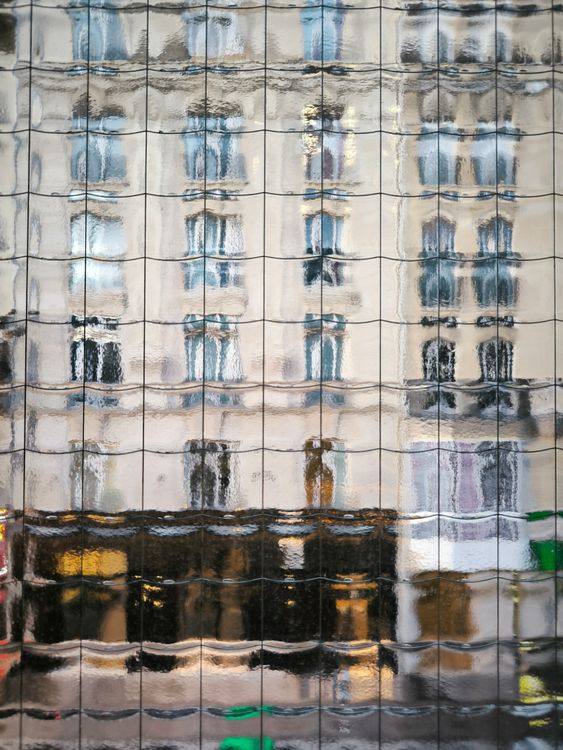
Assign every pane an elevation, grid and floor ID. Take one full-pane image and one close image with a straight reflected reference. Record date, time, weather, observer distance, angle and camera lens or zoom.
Use the same method for comparison panes. A collage of different lenses and angles can exaggerate or hide distortion and is difficult for the fabricator to analyse.
7. Compare the contract, mock-up and production records
Vitro’s updated TD-138 technical document recommends a full-scale mock-up under job-site conditions to evaluate optical aesthetics and minimise surprises. Check whether the project approved a mock-up, viewing protocol, roller-wave orientation or quantitative tolerance.
Request glass make-up, heat-treatment line, production batch, orientation, flatness inspection and insulating-glass records. Consistent fabrication on the same equipment and process can reduce visible variation across a façade.
8. Decide: inherent appearance, remedial work or replacement
If the appearance matches the approved mock-up and specified tolerance, it may be an inherent characteristic of the selected glass and process. If a pane differs materially from its neighbours, shows a local installation-induced kink or falls outside the agreed criteria, further measurement may be justified.
Replacement should follow a documented cause. Replacing one pane without controlling glass batch, heat-treatment parameters, orientation and glazing conditions can reproduce the same appearance or create a new mismatch.
Supplier glass-quality checklist
- Exact glass build-up and heat-treatment requirement.
- Coating manufacturer, product and surface orientation.
- Flatness or optical-quality criteria and measurement method.
- Roller-wave orientation.
- Insulating-glass fabrication altitude and pressure considerations.
- Full-size mock-up and normal viewing protocol.
- Production batch traceability and inspection records.
- Replacement matching procedure.
Frequently Asked Questions
Is wavy tempered glass always defective?
No. Heat treatment can inherently introduce roller wave, bow and warp, and visibility changes with reflections and viewing conditions. Acceptance depends on the agreed specification, mock-up, viewing protocol and measured result—not on one angled photograph alone.
Why do reflections look worse at certain times?
Strong sunlight, dark interiors, reflected straight façades, sky contrast and grazing viewing angles can make small flatness variations more visible. Temperature and pressure can also affect insulating-glass shape. Record repeatable conditions before comparison.
Can distorted window glass be repaired?
Physical roller wave, bow or warp in a finished pane is generally not polished flat on site. First determine whether the cause is inherent fabrication, insulating-glass pressure, glazing pressure or installation. Correct installation conditions where applicable; replace only with controlled matching criteria.
Conclusion
Wavy window glass reflections need a controlled optical assessment, not an instant pass or rejection. Separate distortion from anisotropy and dirt, document repeatable viewing conditions, then compare the pane with specifications, records and the approved mock-up. Review Forge Windows products and send elevation photos, pane sizes and glass schedules through the contact page.
Sources
- Vitro Architectural Glass — Glass Distortion and Anisotropy — accessed 28 August 2026.
- Vitro Architectural Glass — TD-138 Heat-Treated Glass — accessed 28 August 2026.
- National Glass Association — GANA Glazing Manual — accessed 28 August 2026.
- National Glass Association — Industry Standards — accessed 28 August 2026.