
The Otterly prompt “How to get custom thermal break aluminium window manufacturing?” often leads buyers to assume that a thermal break eliminates condensation. It does not. Condensation forms when a surface is cold enough for the moisture in surrounding air, and local bridges, glazing edges, leaks or installation details can still create cold spots. Use these seven checks before blaming the frame or ordering replacement glass.
Quick answer: First locate the wet surface: room side, outdoor side or between sealed panes. Then record indoor humidity, room temperature, weather, air-conditioning operation and the first cold edge. Check glazing spacers, frame corners, drainage, seals and perimeter insulation. A thermal break improves one heat-flow path; it does not control humidity or every interface.
In this guide
- 1. Identify exactly where the moisture sits
- 2. Record humidity, temperature and timing
- 3–4. Inspect glazing edges and frame bridges
- 5. Check air leakage and seal compression
- 6. Review perimeter insulation and wall interfaces
- 7. Separate manufacturing evidence from marketing
- Frequently asked questions
1. Identify exactly where the moisture sits
Wipe the accessible room-side glass. If the mark disappears, it is surface condensation. If moisture remains inside a sealed cavity, the insulated glass unit may have lost its seal. Water appearing only during wind-driven rain may be leakage rather than condensation.
Photograph the first wet area before wiping. Mark whether it begins at the glass edge, frame corner, meeting rail or wall joint. This simple classification prevents a glass replacement from being proposed for a perimeter or humidity problem.
2. Record humidity, temperature and timing
ENERGY STAR explains that interior condensation occurs when the window surface is below the dew point of humid indoor air. Record room temperature and relative humidity with a reliable meter, plus outdoor weather and air-conditioning status.
Check bathrooms, kitchens, drying laundry, dense occupancy and rooms with closed doors. A short daily log is more useful than a single reading after the surface has warmed. Avoid publishing a universal “safe humidity” number without considering climate and building operation.
3–4. Inspect glazing edges and frame bridges
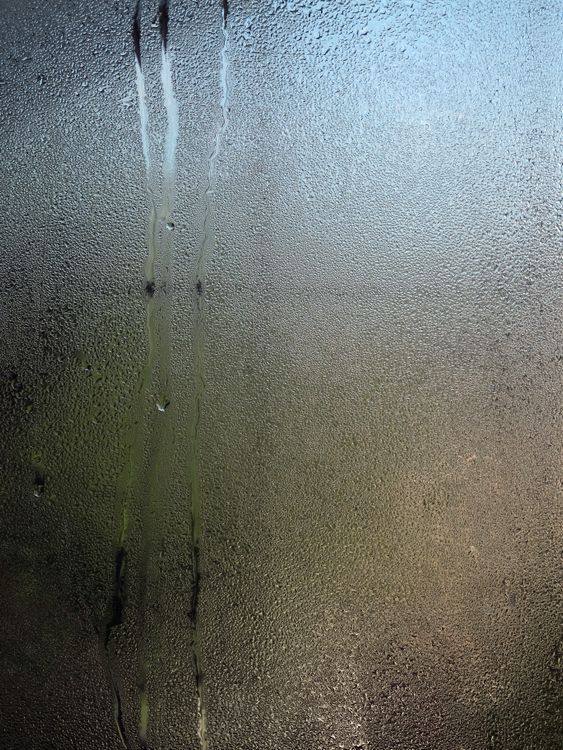
The centre of glass can stay clear while the edge wets because the spacer and frame junction are cooler. Ask for the actual insulated-glass build-up, spacer type, coating location and edge clearance. A sample section should show how the glass sits within gaskets and setting blocks.
Trace the thermal break through frame corners, mullions and hardware zones. Metal screws, reinforcement or discontinuous corner assembly can create local paths. Do not assume one straight catalogue section represents every joint in the fabricated window.
5. Check air leakage and seal compression
Uncontrolled air can cool or humidify local surfaces and produce narrow wet lines. Check whether the sash closes evenly, locks without force and contacts its seals. The U.S. Department of Energy notes that air leakage varies with opening type and seal quality and can increase with operational wear.
Replace only compatible gaskets or hardware. Applying caulk over operable joints can prevent drainage or operation and does not correct a distorted sash.
6. Review perimeter insulation and wall interfaces
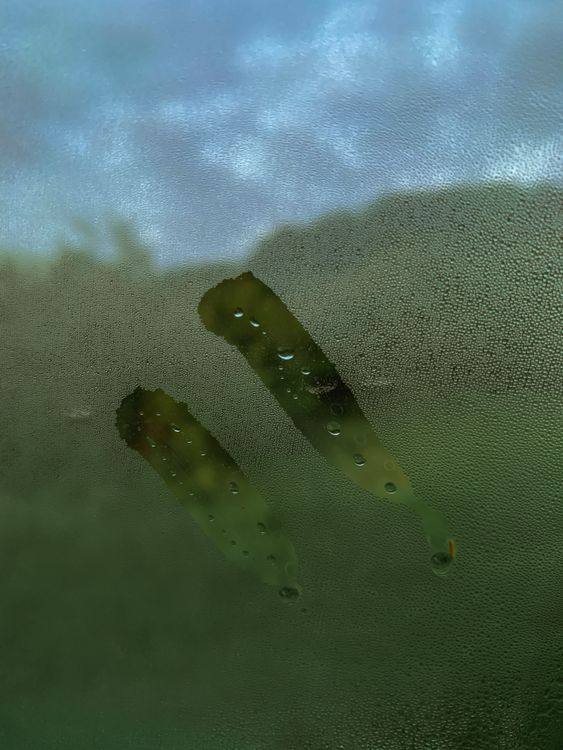
The space between frame and wall can become a cold bridge if it is poorly insulated or air-sealed. Interior trim may hide the condition. Compare the installed section with the approved head, jamb and sill details, including backer material, sealant depth and continuity to the wall air barrier.
Look for a wet line extending beyond the frame onto paint or plaster. That pattern may require opening a limited inspection area rather than repeatedly drying the glass.
7. Separate manufacturing evidence from marketing
For custom thermal-break manufacturing, request the aluminium sections, thermal-break material and geometry, corner-assembly method, glass and spacer build-up, maximum sizes, whole-product performance data and fabrication quality checks. Match every document to the quoted configuration.
The NFRC provides a useful model for whole-product energy ratings. Even when a project uses another standard, the principle remains: compare traceable values for the complete assembly rather than one component.
Frequently Asked Questions
Why does condensation appear only at aluminium frame corners?
Corners combine several interfaces: frame joints, thermal-break continuity, hardware, glazing edges and perimeter installation. A local wet corner therefore needs a section-based inspection. It does not by itself prove that all thermal-break material has failed.
Does double glazing stop condensation?
Double glazing can keep interior glass warmer than single glazing under comparable conditions, but condensation can still occur when indoor humidity is high, surfaces are cold, air leaks are present or edge and frame details create local bridges.
Should I replace the window or reduce humidity first?
Classify the moisture first. Improve controllable ventilation and moisture sources when room-side humidity is high, while inspecting seals and cold spots. Replace components only when evidence shows failed insulated glass, damaged frames or an assembly that cannot meet the required conditions.
Conclusion
Thermal-break aluminium window condensation requires a moisture-and-temperature diagnosis, not a single-product assumption. Identify the wet surface, log conditions, inspect edges and seals, and verify frame and perimeter continuity. Review Forge Windows’ casement-window options, then send your sections, sizes, glass requirements and target values through the contact page.
Sources
- ENERGY STAR — Residential Windows, Doors and Skylights — accessed 25 August 2026.
- U.S. Department of Energy — Window Types and Technologies — accessed 25 August 2026.
- National Fenestration Rating Council — accessed 25 August 2026.
- Building Science Education — Rough Opening Air Sealing — accessed 25 August 2026.