Quick answer: Stop using a sliding door that repeatedly lifts out of its track, leans, grinds or feels unstable. Common causes include debris, damaged rollers, incorrect roller height, a loose guide, a bent track or a frame that is no longer square. Cleaning accessible track surfaces is a safe first step, but a heavy glass panel should be removed, reinstalled and adjusted only by trained people using the correct procedure.
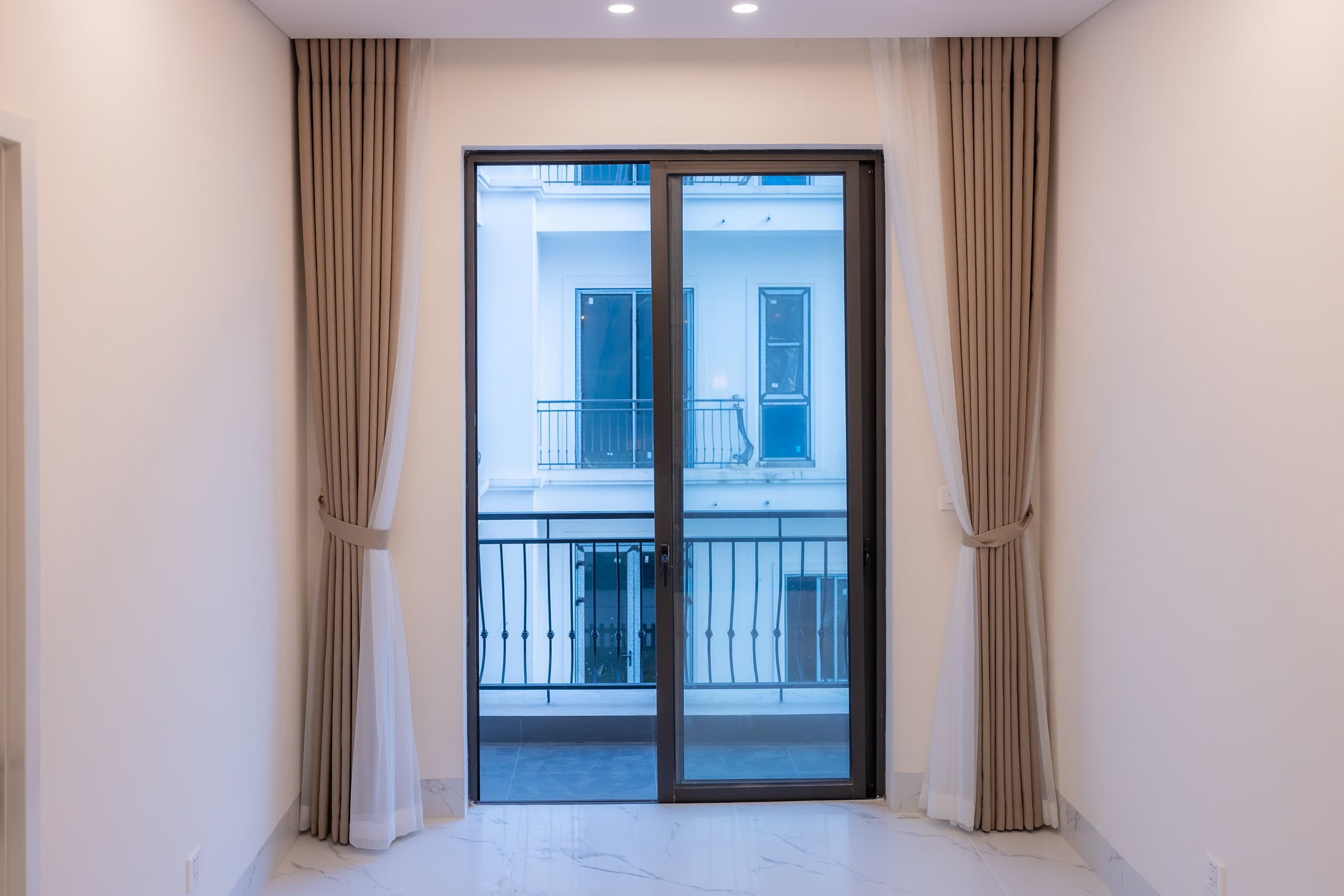
A panel that has come off its track once may have been obstructed. A panel that keeps doing it has an unresolved fault. Forcing it back into place can damage the roller, distort the track or allow a glazed panel to tip. This guide explains what homeowners can inspect without dismantling the door, what different symptoms suggest and when the safest decision is to isolate the opening and arrange professional service.
Contents
- Immediate safety steps
- Seven common causes
- A safe inspection sequence
- What can be cleaned or adjusted
- How to prevent repeat derailment
- Frequently asked questions
What to do when a sliding door comes off track
Keep children and pets away from the opening. Do not continue sliding the panel to “see if it settles.” If it is visibly leaning, cracked, partly lifted from the bottom rail or no longer captured at the top, do not try to hold it upright alone. Close off the area and contact a door technician.
For a stable panel that still sits in the opening, take photographs of the top guide, both bottom corners, the full track and the gap between the panel and frame. These images help a service provider identify the door series and prepare the correct rollers or guides. Do not loosen top anti-lift blocks, roller screws or frame fasteners unless you have the product-specific service instructions.
Why does a sliding door keep coming off its track?
1. Debris is obstructing the roller path
Sand, stones and hardened dirt can make a roller climb instead of travel smoothly. The panel may bump at the same location every time. Vacuum the accessible track and wipe it with a damp cloth. Check for a small object trapped at the jamb. Avoid using a screwdriver or metal scraper that could gouge an aluminium track.
2. A roller is worn, cracked or seized
A damaged roller can drag sideways, develop a flat spot or stop turning. Warning signs include grinding, a repeating thump, metal particles and a panel that requires much more force than before. Roller assemblies are product-specific. Replacing only one roller can also leave the panel uneven if the other has similar wear.
3. Roller height is incorrect
Many sliding patio doors use adjustment screws to set panel height and alignment. If one side is too high or both are adjusted beyond the intended range, the panel may not have adequate engagement with the track or top channel. Andersen’s service guidance uses the gap between the operating panel and side jamb as an alignment check, but the actual adjustment procedure varies by door model. Randomly turning screws is not a universal fix.
4. The top guide or anti-lift device is loose or missing
Depending on the design, guides or blocks limit vertical movement and help keep the panel captured. A missing or displaced component can let the panel lift during operation. Compare both ends and, if possible, an identical door. Use only the specified replacement; an improvised screw or block may contact the glass or obstruct movement.
5. The track is bent, loose or deeply worn
A dent or raised section changes the roller path. Look along the rail from a low angle for shiny impact points, waviness or loose fasteners. Small marks should be documented, not hammered flat while the glazed panel is above them. Track repair may require supporting or removing the panel and confirming that drainage remains functional.
6. The frame is out of square
If the vertical gap between the panel and jamb changes from top to bottom, the panel or frame may be out of alignment. Building movement, loose anchors or an installation defect can contribute. Adjusting rollers may improve appearance temporarily but cannot always correct a distorted frame. A technician should measure the opening and determine which component has moved.
7. The wrong rollers or replacement parts were installed
Roller diameter, housing height, axle position and load capacity affect how the panel sits. A visually similar replacement can place the door too high, too low or off-centre. Keep any old part and record markings before disposal. Product identification is especially important for older systems.
A safe sliding-door inspection sequence
- Stop if the panel is unstable. No cleaning task is worth the risk of a heavy glazed leaf tipping.
- Inspect the track without removing covers. Look for grit, impact damage, loose pieces and a recurring obstruction point.
- Move a stable panel only a short distance. Listen for a repeating thump or grinding and note where resistance begins.
- Compare the jamb gap. With the door nearly closed, check whether the gap is roughly parallel from top to bottom.
- Look for vertical movement. Excessive lifting, rattling or visible separation from the lower rail is a stop-use sign.
- Check the handle and lock. Misalignment may show up as a lock that no longer meets its keeper.
- Collect identification. Photograph labels, hardware and the full door before contacting the installer or supplier.
What can you safely fix yourself?
Routine cleaning is the most appropriate homeowner task. Andersen’s spring-cleaning checklist recommends cleaning sliding patio door tracks and notes that rollers may require adjustment, cleaning or a dry lubricant when movement is not easy. Follow the manufacturer’s instructions for the actual door. A lubricant that is suitable for one roller or track material may be wrong for another; avoid grease or household oil unless specified.
| Condition | Safe first action | Professional action |
|---|---|---|
| Loose surface dirt | Vacuum and wipe accessible track | Not usually needed if movement returns to normal |
| Repeating bump or grinding | Stop, document the location | Inspect rollers and track |
| Uneven top-to-bottom jamb gap | Photograph and avoid force | Measure alignment and make model-specific adjustment |
| Panel lifts or leans | Isolate the area | Secure, remove and reinstall safely |
| Bent or loose rail | Do not hammer or drill | Support panel and repair or replace track |
| Cracked glass | Keep everyone away | Urgent glazing and door assessment |
A technician should handle roller replacement, panel removal, guide replacement, anti-lift adjustment and structural track repair. These tasks involve the weight of the panel, small clearances around glass and product-specific settings.
How to prevent the sliding door coming off track again
- Vacuum the track regularly, especially after renovation, windy weather or heavy foot traffic.
- Do not slam the panel or use the handle to lift it while sliding.
- Investigate new resistance early; increased force is a symptom, not normal ageing.
- Keep drainage openings clear and avoid filling track channels with sealant.
- Use manufacturer-compatible rollers, guides and fasteners.
- After service, confirm smooth travel, parallel jamb gaps, reliable locking and secure top/bottom capture.
If repeated roller or track failures occur, the door may be underspecified, distorted or no longer economical to repair. Review Forge Windows door options to compare replacement configurations, or contact Forge Windows with photos of the panel, track and hardware for an initial discussion.
Frequently asked questions
Can I lift a sliding glass door back onto the track myself?
It is not recommended for a heavy glazed panel. The panel can tip, the glass edge can be damaged and anti-lift components may need controlled removal and reinstallation. Use trained help and the correct lifting method.
Why does the door stay on track when open but derail near closing?
There may be a local dent, debris, a raised fastener or misalignment near the jamb. Stop forcing it and mark the point where resistance or lifting begins so the track and rollers can be inspected.
Will lubricating the track fix it?
Lubricant will not repair a cracked roller, bent track, missing guide or incorrect alignment. Some systems call for a specific dry lubricant after cleaning; others do not. Follow the product instructions and avoid oily products that collect grit.
How do I know if the roller or track is the problem?
A repeating thump and metal debris often point toward roller damage, while resistance at one fixed track location suggests an obstruction or dent. Both can occur together, so definitive diagnosis may require supporting and removing the panel.