Quick answer: A door rubbing the frame is usually caused by loose hinge screws, a hinge that has shifted, debris or a raised seal, an out-of-square frame, door sag, swollen surrounding materials, or pressure from a closer or latch. First identify exactly where the contact occurs. Tighten only accessible loose fasteners, clean the contact area and test the door slowly. Stop if the door is fire-rated, glazed, unusually heavy or visibly pulling away from its fixings.
A scraping sound may look like a small nuisance, but it is evidence that the door leaf, hardware and frame are no longer moving through the intended path. Forcing the door can damage the finish, overload the lock and make alignment worse. This guide helps homeowners and facility teams locate the cause, choose a safe first step and recognise problems that need a door specialist.
Contents
- What the rubbing location tells you
- Eight common causes
- A safe diagnosis sequence
- Safe fixes and actions to avoid
- When professional correction is needed
- Frequently asked questions
Where is the door rubbing the frame?
The contact point is the fastest diagnostic clue. Open and close the door slowly while watching the gap around the top, hinge side, latch side and threshold. A bright torch held across the gap can make contact easier to see. Do not place fingers between the leaf and frame, and do not test a heavy door by repeatedly swinging it at speed.
- Top corner on the latch side: often consistent with door sag or movement at the upper hinge.
- Along the full latch side: may indicate an out-of-square frame, excessive hinge packing or a shifted strike area.
- Along the hinge side: may point to hinge binding, protruding screw heads or insufficient clearance.
- At the floor or threshold: check for debris, a loose threshold, floor movement or a door that has dropped.
- Only during the final closing movement: inspect the latch, seals and door closer rather than assuming the leaf is oversized.
Allegion’s technical guidance notes that a door rubbing on the head or jamb can result from a frame that is out of square or improperly installed. Hinge shimming may help in some configurations, while severe conditions can require frame correction or replacement. That is why sanding or grinding the first visible contact mark can hide the symptom without correcting the geometry.
Door rubbing the frame: eight causes to check
1. Loose hinge screws or fixings
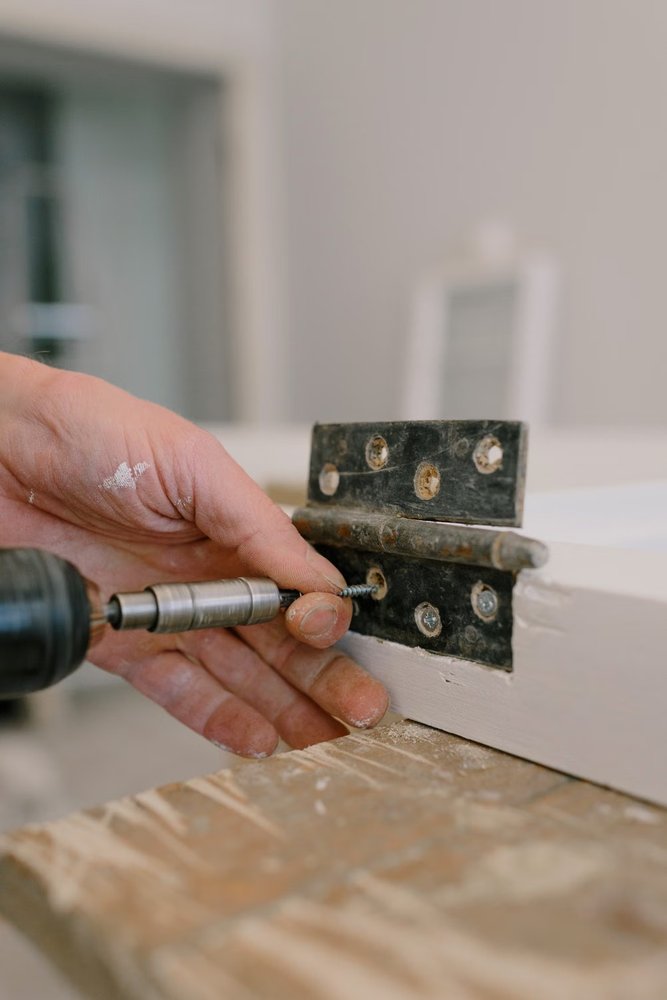
Fasteners can loosen under repeated use. The door may drop slightly, commonly showing contact near the upper latch-side corner. With the door supported and stationary, check whether accessible screws sit flush and whether a hinge leaf moves relative to the frame. Tightening a loose compatible screw may restore alignment, but a screw that spins without gripping indicates a damaged fixing point that needs repair.
2. A bent, worn or incorrectly positioned hinge
A distorted hinge knuckle, worn pivot or uneven hinge position changes the swing path. Look for metal dust, a rising hinge pin, uneven hinge gaps or a leaf that moves when the door is gently lifted. Do not hammer a hinge, stack random washers or substitute screws without confirming the hardware specification, especially on aluminium, glass or fire-rated doors.

3. The frame is out of square
If the reveal is tight on one side and wide on the opposite side, the frame may have shifted or may never have been installed square. Wall movement, loose anchors and previous renovations can contribute. Allegion advises that frame shimming is part of the installation process and that adverse conditions may require frame replacement. This is not a good trial-and-error DIY job because changing one anchor can transfer stress elsewhere.
4. The door leaf has sagged or twisted
A heavy leaf places significant leverage on its hinges. Sag can develop when hardware is underspecified, fixings loosen or the door is repeatedly pushed beyond its intended opening angle. Twisting is less common in stable metal leaves but can occur in composite or timber components exposed to moisture or heat. Compare the gaps rather than judging from one scraped patch.
5. Dirt, grit or a raised threshold is creating contact
Sand, small stones, loose floor trim and raised threshold components can make a properly aligned door appear to drag. Vacuum first, then wipe the sill and inspect fasteners. Do not lower or grind the leaf until the floor path is clean and the threshold is secure.
6. Weather seals are folded, swollen or displaced
Compression seals must contact the door, but they should not fold into the gap or bunch at a corner. A seal that has pulled out of its channel can create resistance and prevent latching. Re-seat only a clearly compatible removable seal. Adhesive foam added on top of an existing gasket can make alignment worse and may interfere with drainage or fire performance.
7. The latch or strike is pulling the door sideways
If the door moves freely until the last few centimetres, the latch bolt may be hitting the strike or the strike may be drawing the leaf out of alignment. Look for fresh metal marks and test with the handle operated. Moving the strike without checking hinge and frame geometry can produce a lock that works temporarily while the rubbing continues.
8. A closer, floor spring or pivot is changing the path
Closing hardware can add force or reveal alignment problems. A loose arm, worn pivot or incorrectly installed floor spring may pull the door toward the frame. Adjustment must follow the exact manufacturer’s instructions. A leaking closer, cracked pivot fitting or moving floor box should be isolated and assessed rather than repeatedly adjusted.
A safe five-step diagnosis sequence
- Confirm the contact location. Move the door slowly and note whether the problem occurs throughout the swing or only near closing.
- Clean the path. Remove loose debris from the threshold and wipe the frame, seals and hinge area.
- Inspect gaps and hardware. Compare the reveal on all four sides and look for loose screws, metal dust, raised seals and fresh scrape marks.
- Test the latch separately. Hold the handle so the latch is retracted, then close gently. A change in resistance helps separate latch contact from leaf contact.
- Record before adjusting. Photograph the hinges, rubbing point, full frame and hardware labels. This makes a professional assessment faster and helps prevent repeated random changes.

Safe fixes—and actions to avoid
| Finding | Reasonable first action | Avoid |
|---|---|---|
| Loose accessible screw | Support the door and tighten the correct fastener until secure | Over-tightening or fitting a random longer screw |
| Debris at threshold | Vacuum and clean the path | Grinding the door before cleaning |
| Seal pulled from channel | Check the product instructions and re-seat if undamaged | Adding layers of generic foam |
| Uneven frame gaps | Document the pattern and request an alignment check | Planing, drilling or moving anchors blindly |
| Damaged hinge or pivot | Restrict use and arrange compatible replacement | Hammering, bending or lubricating a failed fixing |
The Fenestration and Glazing Industry Alliance recommends regular inspection of weatherstripping, hardware and caulking, with worn or damaged parts replaced. It also advises following the product manufacturer’s maintenance instructions before choosing lubricants or cleaners. A lubricant cannot correct a loose anchor, bent hinge or distorted frame.
When should a rubbing door be professionally corrected?
Arrange a professional inspection when the door is glazed, unusually heavy, part of an access-control system, visibly dropping, difficult to secure, or connected to a floor spring. Stop using the door if a hinge or pivot is separating from the frame, glass is contacting metal, or the leaf could fall.
Fire doors need additional care. The Singapore Civil Defence Force states that fire doors must use approved hinges, remain capable of closing and latching, and have faulty self-closing devices repaired promptly. Altering the leaf, frame, closer or certified hardware can affect the tested assembly. If a label near the hinges identifies a fire rating, do not plane, drill or substitute hardware as a casual repair.
Frequently asked questions
Can I sand a door that rubs the frame?
Sanding may be appropriate for some unfinished timber doors after alignment has been confirmed, but it is not a universal repair. Do not sand aluminium, glazed, laminate or fire-rated doors. If the hinge or frame has moved, material removal may create a large gap after the real fault is corrected.
Why does the door rub only in humid weather?
Moisture can affect timber leaves, surrounding finishes and seals, while temperature changes can slightly change clearances. Record when and where contact occurs. Persistent or severe rubbing still warrants an alignment check because seasonal swelling can exist alongside loose hardware or a distorted frame.
Will lubricating the hinges stop the rubbing?
Lubrication may reduce squeaking or friction in a sound hinge, but it will not correct sag, loose fixings or an out-of-square frame. Use only a product allowed by the hardware manufacturer and keep lubricant away from floor finishes, seals and drainage paths.
Why does the door close but refuse to lock?
The latch may be contacting the strike before the leaf reaches its correct position, or the door may be pulled out of alignment by hinges, seals or closing hardware. Test the movement gently with the latch retracted, then have the full hinge-to-lock geometry checked before moving the strike.
Stop the rubbing before it damages the door
A door rubbing the frame is best solved by tracing the contact back to its cause. Clean the path, compare the gaps, check accessible hardware and avoid irreversible cutting or drilling. Share photographs of the full opening, contact mark, hinges, lock and any closer label with the technician.
Forge Windows can review suitable aluminium door configurations, compatible hardware considerations and replacement options for project requirements. Contact Forge Windows with the opening dimensions, door type and clear photographs for a project-specific discussion.
Sources: Allegion — Door Hitting the Strike Jamb; Fenestration and Glazing Industry Alliance — Care and Maintenance; Singapore Civil Defence Force — Fire Code Clause 3.9. Accessed 15 August 2026.